Key Takeaways
- Atlanta luxury real estate is a collection of distinct lifestyles, not one uniform market.
- Walkability, privacy, commute time, housing style, and future resale appeal can vary sharply between nearby streets.
- Trails, mixed-use projects, road work, and zoning decisions can improve convenience while also changing traffic and construction conditions.
- Buyers should verify current conditions and ownership costs instead of paying solely for a future promise.
- The best neighborhood choice begins with daily routines, then narrows to a specific block and property.
Atlanta buyers have more ways to define luxury in 2026. A large estate with mature trees may be the right fit for one household, while another may prefer a newer townhome near dining, a lock-and-leave condominium, or a modern home with easy access to offices and the airport, notes Central Florida Property Management.
For buyers comparing these choices, Atlanta, GA real estate agent Shanna Smith provides home-search tools, luxury property information, and buyer and seller guidance through her Atlanta real estate website. Shanna Smith’s experience with high-end transactions and notable sales in areas including Buckhead, Sandy Springs, and nearby Atlanta communities makes her perspective useful when evaluating property character, neighborhood fit, and the details that can affect a major purchase.
Why Atlanta’s Luxury Map Looks Different In 2026
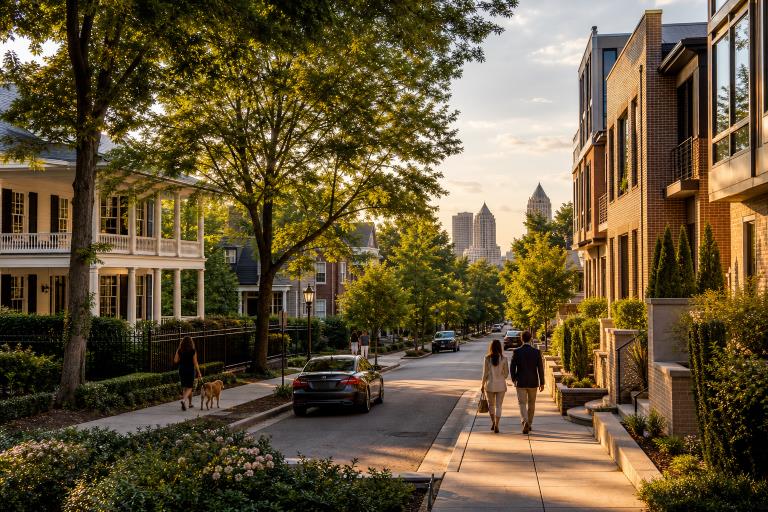
Luxury is no longer limited to traditional estate neighborhoods. Buyers can choose historic homes on substantial lots, new construction close to retail districts, high-rise residences with concierge-style convenience, and suburban properties designed around space and privacy. Each option can be compelling, but each creates a different daily experience.
Established areas often offer mature landscaping, recognizable streetscapes, long-standing amenities, and a deeper history of comparable sales. Newer growth corridors may offer more current floor plans, energy-efficient systems, and access to trails or mixed-use destinations. Neither approach is automatically better. New development can add convenience and buyer interest, but it can also bring noise, traffic changes, and a period of uncertainty while nearby projects are completed.
Start With Lifestyle, Not a Neighborhood Name
Before deciding that a neighborhood is the right fit, define what luxury means for the household. A buyer who works from home may value a quiet office, reliable parking, and outdoor space. A frequent traveler may prioritize direct routes to Hartsfield-Jackson Atlanta International Airport. A buyer seeking a more social routine may place a premium on restaurants, parks, fitness studios, and sidewalks within easy reach.
Questions to Ask First
- How often will household members commute, and at what times?
- Is walkability more important than lot size?
- Would a detached home, townhome, or condominium better suit the desired maintenance level?
- Are school assignments a current priority, a future consideration, or not a deciding factor?
- How much privacy, storage, outdoor living space, and parking are needed?
- Will the home serve as a primary residence, part-time home, or move-up purchase?
Compare Neighborhoods by Five Practical Factors
- Daily Travel
Test routes during real conditions, not just on a quiet afternoon. Drive to work, school, grocery stores, fitness routines, and the airport. Check access to major roads, MARTA stations, and employment centers. Ten minutes added to a daily drive can feel very different after several months.
- Property Character
Compare more than bedroom counts. Look at lot placement, floor plan flow, ceiling height, storage, garage capacity, outdoor areas, and the condition of major systems. In older homes, character and mature landscaping may come with renovation needs. In newer homes, modern finishes may be paired with smaller lots or closer neighboring construction.
- Walkability and Amenities
Visit on weekdays and weekends to see whether the area functions as expected. Distance matters, but so do sidewalk quality, lighting, parking, noise, and the comfort of the walk itself. The continued growth of the Atlanta BeltLine trail network illustrates how infrastructure can reshape access between neighborhoods, parks, businesses, and recreation. Still, buyers should distinguish completed amenities from plans that remain years away.
- Public Investment and Nearby Change
Review active construction, approved plans, road changes, zoning activity, and nearby redevelopment before making an offer. A new park, trail connection, or retail project may strengthen convenience and interest. It may also create temporary disruption, alter traffic patterns, or affect privacy and views. Ask whether a project is proposed, approved, funded, under construction, or complete. Those stages carry very different levels of certainty.
- Resale Appeal
Consider the next buyer as well as your own needs. Flexible offices, updated systems, appealing outdoor areas, functional parking, and a practical layout often support a broader resale audience. Distinctive homes can be rewarding, but highly specialized design choices or difficult locations may require more patience when selling.
Established Areas and Newer Growth Areas: Different Trade-Offs
Established luxury areas can offer clear advantages: familiar community identity, mature trees, long-running retail and dining destinations, and a larger body of past sales to study. Buyers should also plan for potential costs related to aging roofs, plumbing, electrical systems, landscaping, and renovation restrictions.
Newer areas may deliver open floor plans, smart-home features, lower early repair needs, and proximity to emerging destinations. The trade-off can include construction activity, less predictable traffic, smaller lots, and a neighborhood character that is still evolving. Future momentum can be valuable, but it should not replace a careful evaluation of the home and block as they exist today.
How to Check a Neighborhood Before Making an Offer
- Visit at three times.Stop by during morning traffic, evening hours, and on weekends.
- Review comparable sales.Match homes by location, age, condition, square footage, lot size, and updates.
- Inspect the block.Notice drainage, road noise, sidewalks, nearby construction, street parking, and neighboring property conditions.
- Verify public information.Confirm school assignments, taxes, permits, zoning, and planned road work through the appropriate agencies.
- Estimate total ownership costs.Include insurance, utilities, landscaping, security, HOA fees, repairs, and likely improvements.
- Test the routine.Make the drives that will shape everyday life before committing to the location.
Questions to Ask a Real Estate Professional
- Which recent sales are the closest matches for this property?
- What features are buyers requesting most often in this price range?
- How do similar homes perform when listed for sale?
- What nearby projects could affect traffic, views, noise, or demand?
- Which repairs or updates would matter most for future resale?
- How does this property compare with nearby alternatives at the same price?
Conclusion
Atlanta’s luxury neighborhoods offer very different versions of a well-lived life. The right choice may be a quiet estate, a character-filled home near established amenities, a modern townhome, or a convenient condominium. Buyers who look beyond a neighborhood label and evaluate daily travel, property condition, public investment, ownership costs, and resale appeal will be better positioned to choose a home that works now and continues to make sense later.