Key Takeaways
- Implant candidacy depends on oral health, jawbone support, medical history, and daily habits.
- Treatment can involve planning, preparation, surgery, healing, and a final crown, bridge, or denture.
- Recovery schedules vary, so it is important to plan for follow-up visits and temporary diet changes.
- Consistent home care and regular dental visits help protect the implant, restoration, gums, and nearby teeth.
- A consultation should include a clear discussion of risks, costs, alternatives, and long-term maintenance.
Replacing a missing tooth can improve everyday comfort, speech, and chewing. People exploring dental implant options Walnut Ridge, AR should begin with a thorough evaluation rather than assuming one treatment approach fits every smile.
Dental implants are designed to replace missing tooth roots and support a realistic-looking restoration. They can be used for one missing tooth, several teeth, or, in some cases, a full arch, but the right approach depends on the condition of the gums, bone, bite, and remaining teeth.
What Are Dental Implants?
An implant restoration generally has three parts: a small implant body placed in the jawbone, a connector called an abutment, and the visible replacement tooth. The final restoration may be a crown, bridge, or implant-supported denture. Unlike removable dentures, implants are anchored in the jaw. Unlike a traditional bridge, an individual implant may avoid the need to place crowns on neighboring healthy teeth.
Who May Qualify for Treatment?
Many adults with one or more missing teeth may be candidates. A dental professional will usually consider whether jaw growth is complete, whether the gums are healthy, whether enough bone is present or can be rebuilt, and whether the patient can keep the area clean. Age alone does not determine eligibility. Overall health, healing ability, and commitment to follow-up care are more meaningful factors.
Health Factors That Can Affect Candidacy
A complete medical and dental review helps identify issues that may need attention first. Active gum disease should be treated before surgery. Bone loss can require grafting or a modified plan. Smoking may interfere with healing, while poorly controlled diabetes can raise concerns about healing and infection. Blood thinners, steroids, and certain bone-related medicines also need to be discussed with the treating clinician. Teeth grinding can place damaging pressure on the restoration, so a nightguard may be recommended.
Because implant surgery can involve several stages and individual risk factors, the preparation and recovery process should be reviewed carefully before treatment begins.
What Happens During Treatment Planning?
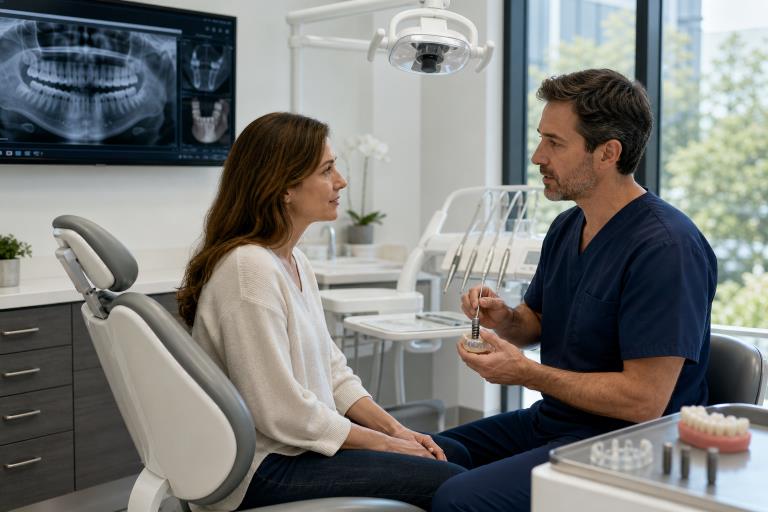
Planning usually starts with a conversation about goals, health history, medications, and past dental treatment. The dental team examines the teeth, gums, bite, and jaw, then may take X-rays or three-dimensional images. Patients should receive a personalized treatment plan that explains the proposed restoration, the expected number of visits, the healing stages, and the estimated cost.
It is also wise to ask whether the estimate includes extractions, bone or gum treatment, temporary teeth, sedation, follow-up appointments, and the final crown, bridge, or denture.
A Typical Treatment Timeline
There is no universal timetable. Some patients can receive treatment more quickly, while others need months of preparation and healing.
- Consultation:The team reviews oral health, bone support, and treatment goals.
- Preparation:Infection control, extraction, gum treatment, or grafting may be completed first.
- Implant placement:The implant body is placed in the planned position.
- Healing:Bone and tissue recover and stabilize around the implant.
- Restoration:The final crown, bridge, or denture is attached when the site is ready.
- Follow-up:Visits confirm comfort, bite, cleaning habits, and tissue health.
Recovery and Daily Care
During the First Few Days
Follow the postoperative instructions provided by the dental team. Soft foods, cold packs as directed, prescribed or recommended pain relief, and gentle cleaning can support early recovery. Avoid smoking, vigorous rinsing, and chewing directly on the treated area unless the clinician says otherwise.
After Initial Healing
Implants still need daily care. Brush twice a day with a soft toothbrush, clean between teeth and around the restoration as instructed, and attend routine examinations and professional cleanings. Avoid chewing ice, hard candy, pens, or other hard objects. Helpful long-term habits include keeping implants and the surrounding gum tissue clean so concerns can be identified early.
Risks and Warning Signs
Every surgical procedure carries some risk. Temporary soreness, swelling, bruising, and minor bleeding may occur after placement. Less common concerns can include infection, nerve irritation, sinus issues involving upper-jaw implants, or problems with implant stability, bite, or restoration fit.
Contact a dental professional promptly for worsening pain or swelling, fever, pus, a persistent bad taste, ongoing numbness or tingling, bleeding that does not slow with proper pressure, or an implant or restoration that feels loose.
Questions to Ask Before Treatment
- Which tooth-replacement options are appropriate for my situation?
- Do I need gum treatment, bone grafting, or an extraction first?
- How many visits and healing stages should I expect?
- Will I have a temporary tooth during treatment?
- Which symptoms are normal, and which require an urgent call?
- What home cleaning tools and routines are recommended?
- What is included in the written estimate?
When Other Options May Be Better
Implants are not the only solution. A traditional bridge may replace a gap without removable parts. Partial dentures can replace several teeth and are removable for cleaning. Complete dentures may be appropriate for an entire arch when fixed treatment is not suitable. Some people may also choose to delay replacement while discussing the functional and oral-health effects with their dentist.
Final Thoughts
Successful implant care starts well before surgery. A detailed evaluation, a realistic timeline, a transparent cost discussion, and a steady home-care routine can make the process easier to manage. Reviewing all reasonable options with a qualified dental professional helps patients choose a plan that supports their health, comfort, and long-term goals.