Repairing a deck involves addressing structural damage, replacing rotted wood, or reinforcing weakened components. Regular maintenance also helps preserve the deck’s structural integrity. Without proper attention, damaged foundational elements may deteriorate further, potentially creating safety concerns such as instability or collapse. Here are a few steps for effective deck repair:
Structural Framing Inspection
Professionals inspect a deck’s structural framing for safety hazards and evaluate its load-bearing connections. An inspector looks for wood decay and checks the overall stability of the frame. This assessment helps identify underlying problems before they worsen, reducing the risk of structural failure. During the inspection, specialists look for missing or inadequate hardware, sagging rim joists, and corroded joist hangers. They also examine the ledger board, which connects the deck to the building, because improper flashing around the ledger allows water to reach the framing. If the main joists show significant splitting or other structural damage, the damaged areas are repaired or replaced according to the extent of the damage.
Rotted Wood Removal
Rotted wood removal involves cutting away lumber that has been weakened by decay. Fungi grow in damp conditions, so inspectors look for areas of wood that feel soft or crumble under pressure. A screwdriver probe provides a simple way to check suspicious areas, but it does not replace a thorough assessment of the surrounding framing.
Severely deteriorated wood should be removed. Because prolonged moisture supports fungal decay, professionals also address the source of the moisture before installing replacement lumber. After the damaged wood is removed and the area is dry, replacement lumber is installed and secured to match the existing structure. Where appropriate, a borate treatment is applied to exposed wood as part of a broader approach to controlling fungal decay and wood-destroying insects.
Loose Hardware Tightening
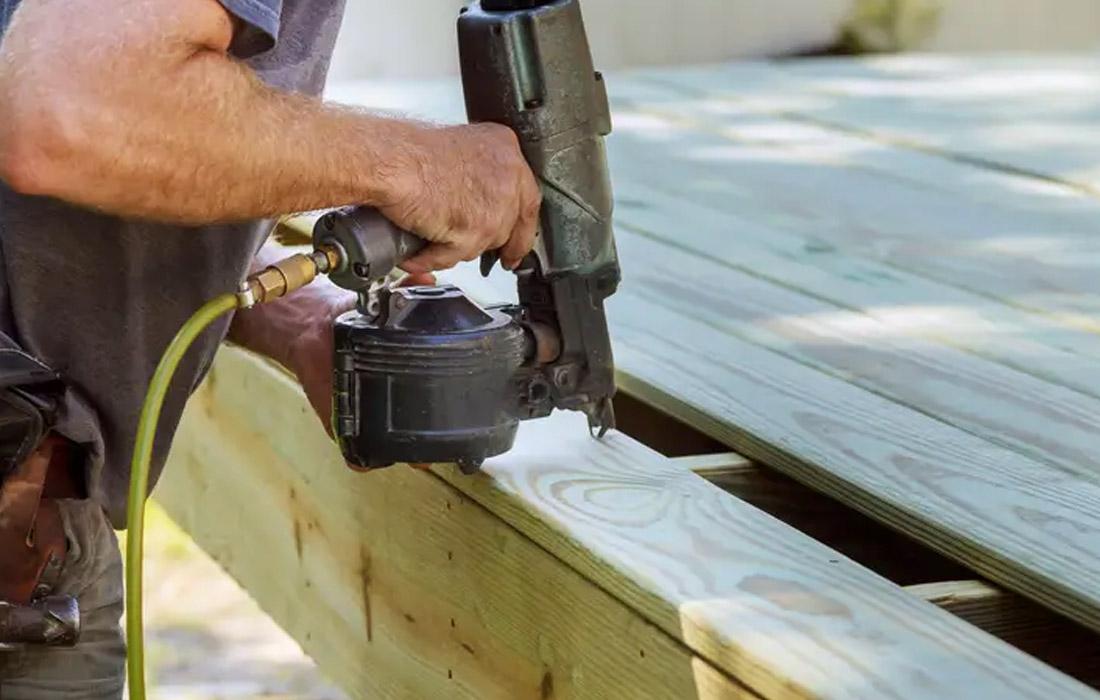
During a deck repair, professionals replace corroded fasteners and tighten loose connections to improve structural stability. Seasonal temperature changes cause wood to expand and contract, while repeated use places stress on fasteners and connections. These factors contribute to loose connections, which often result in movement or squeaking in the deck.
Repair crews also inspect and reinforce joist hangers, post caps, and other components within the deck’s framing. Because excessive tightening damages wood fibers and reduces the effectiveness of a connection, professionals tighten fasteners according to the requirements of the specific hardware. If the wood around a connector is crushed or deteriorated, repair or replace the damaged material before restoring the connection.
Guardrails require secure connections because they resist lateral forces when people lean against them. Through-bolts or other approved structural fasteners provide stronger connections than ordinary deck screws when they are installed according to the applicable requirements. If testing reveals movement in a guardrail post or its supporting frame, professionals reinforce the connection and address any weakness in the underlying framing.
Learn More About Deck Repair Solutions
Deck restoration starts with an inspection of the framing, fasteners, posts, and decking to identify damage that requires repair. Professionals replace deteriorated structural components and install new decking where necessary. Contact a handyman services company to learn more about what they offer.