Key Takeaways
- Casinos and hotels may be responsible when unsafe conditions cause foreseeable injuries.
- Evidence often centers on notice, inspections, maintenance, warnings, and surveillance footage.
- Liability may involve a resort owner, tenant business, security contractor, maintenance vendor, or product manufacturer.
- Prompt medical care, incident reporting, and documentation can help preserve important facts.
- Visitors may still have a claim even if they were distracted or had consumed alcohol, although their conduct can matter.
Las Vegas casinos and hotels bring together busy gaming floors, restaurants, theaters, pools, parking areas, nightclubs, and guest towers. When someone is injured in one of these spaces, the central question is often whether the property owner, operator, or another responsible party failed to take reasonable steps to address a dangerous condition. Visitors considering their next steps may benefit from speaking with Las Vegas casino premises liability lawyers about the facts of a particular incident.
Premises liability is not an automatic payment system after an accident. A person can be seriously hurt without the casino or hotel being legally responsible. The outcome generally depends on what caused the injury, whether the hazard was known or reasonably discoverable, what precautions were taken, and whether the injured visitor’s actions contributed to the event.
What Premises Liability Means In Las Vegas
Premises liability is a type of negligence claim based on unsafe property conditions. In a Las Vegas resort setting, it can arise when a guest is harmed by a hazard in an area open to visitors, such as a lobby, buffet line, casino floor, elevator bank, parking garage, pool deck, or hotel room.
The issue is usually not whether a property can eliminate every possible risk. Instead, the inquiry often concerns reasonable care under the circumstances. A spill that appeared moments before a fall may create different questions from a leak that employees had repeatedly observed, or a damaged handrail that had gone unrepaired.
Common Casino And Hotel Hazards
The pace and layout of Las Vegas properties can create risks that are easy to overlook. Low lighting, patterned carpets, crowded walkways, beverage service, late-night activity, and frequent cleaning all make careful property management important.
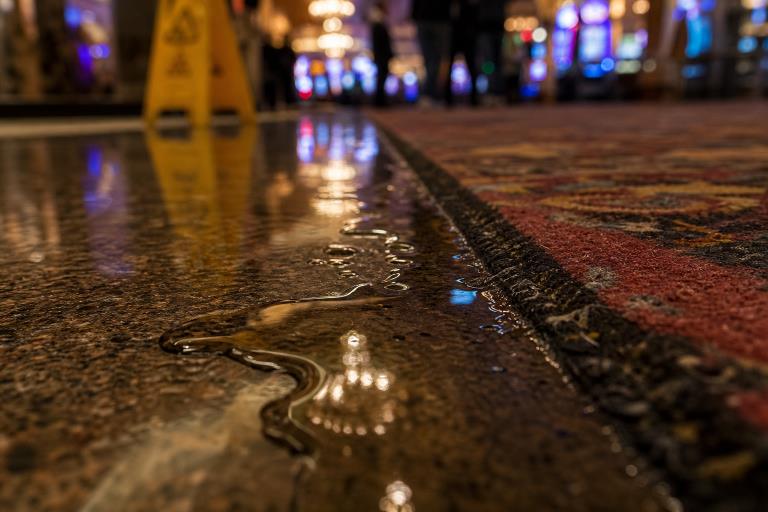
- Wet floors caused by spills, mopping, leaking ice machines, or pool traffic.
- Broken chairs, loose carpeting, uneven flooring, defective doors, or damaged railings.
- Poorly lit stairs, parking areas, hallways, and walking paths.
- Escalator, elevator, automatic-door, or revolving-door incidents.
- Pool, spa, cabana, and slip hazards around wet deck surfaces.
- Assaults, theft-related injuries, or inadequate security concerns.
- Foodborne illness, burns, or exposure issues connected to restaurants or hotel amenities.
What An Injured Guest May Need To Show
Every case is fact-specific, but a premises liability claim commonly examines four connected issues: a duty of reasonable care, a breach of that duty, a link between the breach and the injury, and legally recoverable damages. Medical records, lost income information, and evidence of how the injury changed daily activities may all become relevant.
Notice is often a major dispute. An injured guest may need evidence that the responsible party created the hazard, knew about it, or should have found it through reasonable inspection and maintenance. For example, cleaning logs, prior complaints, employee observations, and video footage may help establish how long a condition existed.
Who May Be Responsible For The Property Condition?
The name on the resort sign does not always identify every potentially responsible party. A casino resort may lease space to an independent restaurant, use an outside security company, hire a maintenance contractor, or operate an event with separate vendors.
- The hotel or casino owner or operator.
- A restaurant, nightclub, retail store, or entertainment tenant.
- A janitorial, maintenance, security, valet, or parking contractor.
- An event organizer or vendor controlling a specific area.
- A manufacturer or distributor, when defective equipment contributed to the injury.
How Comparative Fault Can Affect A Claim
Nevada follows a comparative-negligence framework. This means an injured person’s own conduct can be considered alongside the conduct of the parties being sued. A visitor’s distraction, decision to ignore a clear warning, footwear, or intoxication may be raised as an issue, but none of those facts automatically decides responsibility.
Under Nevada law, recovery may be barred if the injured person’s negligence is greater than the combined negligence of the defendants. When recovery is allowed, the person’s percentage of fault can reduce damages. That is why factual details, rather than assumptions about fault, are so important.
Evidence That Can Matter After A Resort Injury
Casino and hotel conditions can change quickly. Staff may clean a spill, repair an item, or move furniture shortly after an incident. Guests should preserve what they can without putting themselves at further risk.
- Photographs or video of the exact location, hazard, lighting, warning signs, and visible injuries.
- An incident report number and the names of security officers, managers, or employees who responded.
- Witness contact details and notes describing what each person saw.
- Medical records, prescriptions, bills, transportation receipts, and missed-work documentation.
- The shoes and clothing worn at the time were kept in their post-incident condition when possible.
- A written request that the property preserve relevant surveillance footage and reports.
What To Do After An Injury At A Casino Or Hotel
Health comes first. Call 911 or seek urgent medical care for severe pain, head injuries, breathing trouble, loss of consciousness, possible fractures, or symptoms that worsen. Report the incident to hotel security or management when possible, but keep the account factual and avoid guessing about the cause.
Not every injury is immediately obvious. For instance, some illnesses can appear after a visitor returns home. The CDC explains that Legionnaires’ disease symptoms usually develop two to 14 days after exposure, and respiratory symptoms, fever, or other concerning signs should be discussed promptly with a medical professional. Tell the provider about relevant hotel, spa, pool, restaurant, or water exposure.
Deadlines And Considerations For Out-Of-Town Guests
Many Las Vegas visitors leave Nevada within days of an accident. Before traveling, obtain copies of medical paperwork, save reservation and receipt records, photograph injuries as they heal, and arrange follow-up care near home. A prompt report and a clear timeline can be especially valuable when treatment continues in another state.
Deadlines can apply even while someone is still recovering. Nevada’s general limitation period for many personal injury actions is addressed in the state’s limitations statute, but exceptions and claim-specific rules can change the analysis. Acting early helps preserve evidence and allows the injured person to evaluate the appropriate deadline for the circumstances.
Conclusion
An injury at a Las Vegas casino or hotel may involve far more than a simple accident report. The condition of the property, the actions of employees and contractors, available warnings, surveillance footage, medical evidence, and each person’s conduct can all shape a premises liability claim. Careful reporting, timely treatment, and thorough documentation provide the strongest foundation for understanding what happened.