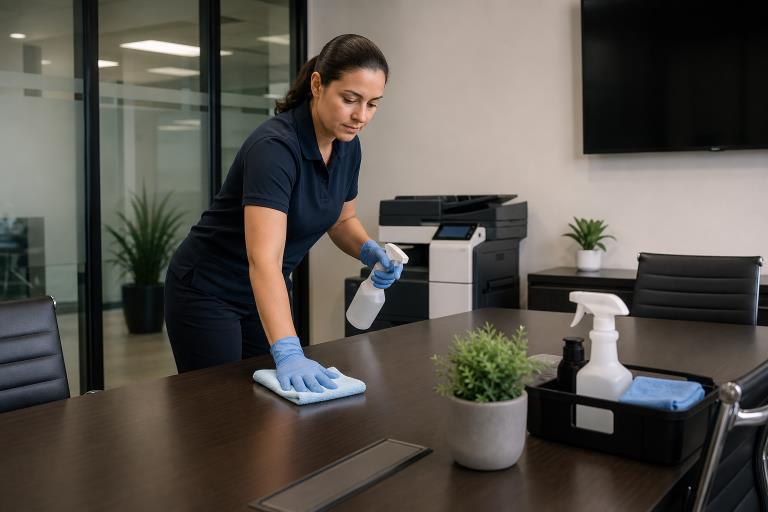
A clean office is more than a presentable lobby or freshly emptied trash bin. It is a practical system for keeping shared spaces comfortable, organized, and ready for work throughout the day. Big League Clean provides commercial office cleaning services built around on-site scopes, recurring schedules, high-touch care, restrooms, breakrooms, floor care, and flexible service times. With office coverage in markets including Denver, Colorado, and San Diego, California, the company’s approach reflects an important facility-management principle: cleaning plans work best when they are tailored to how each workplace operates.
Appearance matters, but visible cleanliness does not tell the whole story. A lobby may look spotless while conference-room tables, appliance handles, elevator buttons, and breakroom counters receive heavy use between scheduled visits. A stronger plan considers where people enter, gather, eat, work, and share equipment, then assigns the right task and frequency to each area.
Why Office Cleaning Plans Should Be Based On Use
There is no single cleaning schedule that fits every workplace. A small professional office with limited visitors has different needs than a busy corporate floor, medical-adjacent office, coworking location, or customer-facing business. The goal is to match service levels with actual use rather than treating every room as if it receives the same traffic.
Start by assessing the factors that create cleaning demand:
- Employee headcount, visitor volume, and daily foot traffic.
- Shared desks, phones, keyboards, printers, and collaboration tools.
- Breakrooms, kitchens, coffee stations, and food storage areas.
- Restrooms, elevators, lobbies, and exterior entry points.
- Office hours, shift changes, meetings, and available cleaning windows.
- Special work zones that may have additional access, safety, or hygiene requirements.
The Five Zones Every Office Cleaning Plan Should Cover
Dividing the workplace into zones prevents a generic checklist from overlooking the spaces that matter most. Each zone should have assigned tasks, a frequency, and a clear standard for completion.
- High-touch areas: Include door handles, light switches, elevator buttons, faucets, shared phones, copier controls, and refrigerator handles.
- Workstations: Cover desk surfaces, chairs, partitions, monitors, keyboards, and shared office supplies. Personal desks may require employees to clear clutter before service.
- Shared rooms: Include conference rooms, training rooms, lounges, and collaboration spaces that need resetting after meetings.
- Food and restroom areas: Focus on sinks, counters, toilets, appliance surfaces, dispensers, and supply stations.
- Floors and entryways: Include mats, carpets, hard floors, elevators, vestibules, and lobby surfaces that collect dirt from foot traffic.
Set Daily, Weekly, And Periodic Tasks
Separating work by timing makes a plan easier to manage and inspect. It also helps teams address routine needs without waiting for a large cleanup.
Daily Tasks
- Empty trash and recycling, especially in food areas and conference rooms.
- Clean frequently touched shared surfaces.
- Clean restrooms and replenish soap, paper products, and liners.
- Wipe breakroom counters, sinks, and appliance handles.
- Vacuum, sweep, or spot-clean high-traffic flooring.
- Reset shared rooms after scheduled use when needed.
Weekly And Periodic Tasks
- Clean interior glass, partitions, blinds, vents, shelving, and low-use surfaces.
- Detail edges, corners, baseboards, and practical areas beneath movable furniture.
- Schedule carpet extraction, upholstery cleaning, hard-floor restoration, wall washing, or post-event cleaning as conditions require.
Prioritize High-Touch Surfaces Correctly
Not every surface requires the same attention at the same time. Create a simple map of common touchpoints on each floor, then identify the items used by the greatest number of people. Shared equipment, restroom fixtures, breakroom handles, and meeting-room controls usually deserve more frequent attention than low-contact shelves or wall décor.
Cleaning and disinfecting are related but different steps. The difference between cleaning and disinfecting is important for office teams to understand: cleaning removes dirt and debris, while disinfecting products must be used according to their labels to address germs on suitable surfaces. Clean visibly soiled surfaces first, follow the required contact times, and avoid using products on materials that they may damage.
Support Indoor Air Quality And Dust Control
Dust control is not limited to what people can see on desks. Ledges, blinds, vents, carpeted areas, upholstered seating, and hard-to-reach surfaces can all collect particles over time. Routine vacuuming with appropriate filtration, damp dusting where suitable, and prompt attention to leaks or damp materials can help maintain a more comfortable workplace.
Cleaning teams should coordinate with building maintenance staff on filter changes, ventilation concerns, and moisture issues. The Environmental Protection Agency explains that indoor air quality is influenced by pollutant sources, ventilation, and other building conditions. Lower-odor products and fragrance-free options may also be worthwhile when occupants are sensitive to strong scents.
Choose Products And Methods With Care
Product selection should balance effectiveness, surface compatibility, staff safety, and occupant comfort. A product is only useful when it is appropriate for the task and used as directed. Before adding a chemical or method to the cleaning program, ask:
- Is it intended for the surface and soil being addressed?
- Are safety data sheets available, and are staff trained in storage and dilution?
- Does the label provide clear directions for safe use and contact time?
- Could the method harm electronics, flooring, furniture, finishes, or indoor comfort?
- Can color-coded tools help prevent cross-use between restrooms, kitchens, and general office areas?
Schedule Cleaning Around The Workday
Timing affects both cleaning quality and employee experience. After-hours service can reduce interruptions during meetings and focused work, while early-morning cleaning gives staff a fresh start. Midday support can be especially useful for busy restrooms, breakrooms, spills, and meeting rooms. Weekend service often provides a practical window for deeper floor care and detailed work.
The best schedule may combine several options. For example, an office could use nightly routine cleaning, midday restroom checks, and quarterly carpet or hard-floor service. Match the plan to occupancy patterns, access rules, noise limits, and the times when common areas receive the most use.
Measure Quality Without Overcomplicating It
A cleaning plan should be reviewed by results, not just by whether a visit occurred. Keep a short inspection checklist and look for trends. Record missed tasks, repeat complaints, supply shortages, odors, floor conditions, and rooms that frequently need attention. Ask employees which shared spaces concern them most, then compare that feedback with traffic patterns and service frequency.
When selecting a cleaning partner, look beyond the lowest quote. A useful proposal should provide a written scope of work, clear frequencies, responsibility for supplies and equipment, service windows, communication procedures, insurance information, training practices, and a process for correcting missed work.
Common Questions About Office Cleaning Plans
How Often Should An Office Be Cleaned?
Frequency depends on occupancy, traffic, shared spaces, and the type of work performed. Many offices benefit from service several times per week, while high-traffic facilities may need daily cleaning and daytime support.
What Areas Need The Most Attention?
Restrooms, breakrooms, entryways, elevators, conference rooms, floors, and shared equipment generally need the closest attention because they receive frequent contact or traffic.
Can Companies Reduce Costs Without Lowering Standards?
Yes. Use traffic data to focus labor where it is needed, prevent supply waste through inventory checks, address leaks and flooring damage early, and review the scope when office layouts or schedules change.
Final Checklist For A Smarter Cleaning Plan
- Map high-touch and high-traffic areas.
- Assign daily, weekly, and periodic tasks.
- Schedule cleaning around actual office activity.
- Use products according to their labels and intended surfaces.
- Track missed work, complaints, and supply issues.
- Review the plan after moves, renovations, staffing changes, or new work patterns.
A practical office cleaning plan is flexible, visible, and easy to improve. When cleaning reflects the way people actually use the building, it can support a more comfortable workplace, reduce avoidable distractions, and help daily operations run more smoothly.