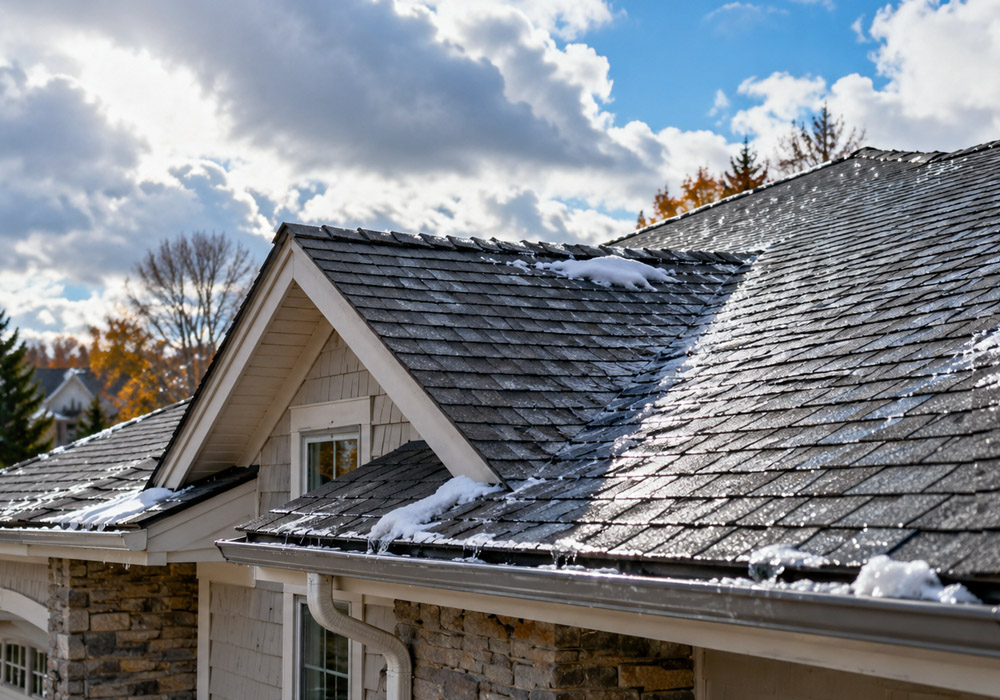
Your roof gets maybe four good years out of every decade. That is not a typo, and it is not pessimism. It is what happens when a house sits at the western tip of Lake Erie, where the same structure absorbs lake-effect snow, spring windstorms, and more freeze-thaw cycles than almost anywhere else in Ohio. I have watched perfectly sound shingles on Toledo-area homes get pried loose by a single March gust. So if you are new to Lucas or Wood County,
understanding what the weather does to an exterior system is the cheapest maintenance you will ever perform.
The good news: most of the damage is preventable, and most of the signs show up long before the leak does. If you ever need roofing and siding in Toledo, OH, the goal is to find a contractor who understands the local climate rather than one who just knows how to swing a hammer. Here is what to watch, what to budget, and what to ask before you sign anything.
Why Northwest Ohio Beats Up Roofs
Position matters. Toledo sits at the mouth of the Maumee River, and that geography is the reason your shingles take a beating. Lake-effect moisture rolls in during winter, then spring windstorms sweep across flat terrain with nothing to slow them down.
The freeze-thaw cycle is the quieter problem. Water gets into a tiny gap during a mild afternoon, then freezes overnight and expands. Repeat that a few dozen times a season and a hairline crack becomes a lifted shingle. According to the National Weather Service, the Great Lakes region regularly experiences significant temperature swings during winter and early spring, which is exactly the pattern that stresses roofing materials.
Asphalt shingles handle it fine when they are new. Once they hit the ten-year mark, the granules start shedding and the mat underneath dries out. That is when a normal Ohio winter starts doing permanent work.
Five Warning Signs You Should Not Ignore
You do not need to climb a ladder. Most of what matters is visible from the ground or the attic.
- Granules piling up at the bottom of downspouts, which looks like coarse black sand
- Curling or lifting shingle tabs, especially on the south and west slopes
- Daylight coming through the roof boards when you look up in the attic
- Stains on ceiling drywall after a heavy rain, or a musty smell in upper rooms
- Gutters pulling away from the fascia, which usually signals water sitting where it should not
One item on that list is a nuisance. Two or three at once means you are probably past the repair window. In my experience, homeowners who wait one more season usually end up paying for decking replacement too, because the plywood underneath rots once water gets past the shingles.
How Long Should a Roof Actually Last Here?
National averages are useless in a lake-effect market. A three-tab roof rated for twenty years might give you twelve near the lake. Architectural shingles do better, and metal holds up best of all, but the installation quality matters more than the product label.
Proper attic ventilation and ice-and-water shield along the eaves are the two details that separate a roof that lasts from one that fails early. Ask about both before you compare prices.
And while the crew is up there, think about siding. Exterior systems fail together in this climate. According to the U.S. Census Bureau, roughly two thirds of the occupied housing units in this country are single-family homes, and most of that housing stock was built before modern exterior standards, which is a polite way of saying a lot of siding is due. New siding changes how a house sheds water, and pairing it with a roof replacement usually saves money on labor.
What Storm Damage Claims Usually Come Down To
Ohio gets its share of hail and straight-line wind, and insurance carriers are strict about documentation. Whether a claim gets approved rarely depends on how bad the damage looks to you. It depends on whether you filed in time and whether someone documented the condition of the roof before the storm.
That is the argument for an annual inspection, even when nothing seems wrong. A dated report with photos is worth more than any argument you can make after the fact. Here is the framework I use for any exterior decision: document, decide, deploy.
Document means get the condition in writing. Decide means set a budget and a timeline instead of reacting. Deploy means hire once, hire right. Insurance departments publish consumer resources on the process, and the National Institute of Standards and Technology does broader work on building performance standards that shapes how materials get rated in the first place.
How to Vet a Contractor Before You Sign
This is the section that saves people the most money. Run these checks in order.
- Confirm the license and insurance certificate yourself, not just verbally.
- Ask for the physical local address. A post office box and a cell number are a warning.
- Get a line item estimate. One lump sum is not an estimate, it is a guess.
- Read the warranty to see what is covered and what voids it.
- Ask who actually does the work. Subcontracted crews cycle through.
- Never pay the full amount up front. A deposit is normal, a full payment is not.
Storm chasers show up after every major system and vanish before the warranty matters. A company that has been installing in the same county for years has something to lose, and that is worth paying a little more for.
The Bottom Line
Great Lakes weather is not going to get gentler, so the practical move is to stop thinking about your roof as a one-time purchase and start treating it like a system you maintain. Inspect in spring, clean the gutters before winter, and fix small things before February decides the matter for you.
If you have not looked at your attic since you moved in, this week is a good time to start. What you find up there will tell you more about next winter than any forecast can.