Your pet is home, the procedure is over, and now the hard part starts. You are watching every step, every nap, every skipped bite of food, wondering what is normal and what means something is wrong. That tension is real. Most pets recover well, but the first few days after surgery can feel long because so much depends on what happens at home. If you have concerns, contact a veterinarian in Beaumont, TX.
The good news is that recovery usually comes down to a handful of clear habits. Rest matters. Medications matter. The incision matters. Food and water matter. So does knowing when to call the clinic. If you follow those basics closely, you lower the risk of infection, swelling, pain, and a return trip for a problem that could have been prevented.
Restricted activity protects healing tissue after pet surgery
One of the biggest mistakes after a procedure is assuming your pet feels better, so normal activity is fine. Healing tissue is weak before it is strong. A dog that races up the stairs or jumps off the couch can pull at internal sutures even if the skin looks fine. A cat that darts across the room can turn a routine recovery into a swollen, painful setback.
That is why vets keep repeating the same point. Keep activity low, even if your pet seems restless or annoyed. Leash walks for bathroom breaks are usually safer than free play. Running, roughhousing, stairs, furniture jumping, and off leash outings can wait. Post operative pet care often feels boring, but boring is exactly what helps the body repair itself.
If your pet had a spay or neuter, the same rule applies. Spay and neuter aftercare guidance often stresses restricted movement because too much activity can lead to bleeding, swelling, or a reopened incision.
Pain medication only works when you follow the schedule exactly
Your pet does not need to cry out to be in pain. Some animals hide discomfort by sleeping more, avoiding stairs, panting, pacing, or simply looking at you with that worn out expression that says something is off. Once pain builds, it is harder to control. Staying on schedule matters more than waiting for obvious signs.
Give every medication exactly as prescribed. Do not stop early because your pet seems fine. Do not double up if you miss a dose unless your vet tells you to. Never give human pain medicine. Drugs like ibuprofen and acetaminophen can be dangerous or fatal to pets.
This is one of the most overlooked parts of pet surgery recovery tips. Families get busy, a dose gets missed, the pet starts licking at the incision because it hurts, and then a second problem begins. A phone alarm and a written chart on the counter can save a lot of stress.
Incision care is simple, but it needs daily attention
You do not need to stare at the incision all day, but you do need to check it at least once or twice daily. Mild redness, slight bruising, and a small amount of swelling can be normal, especially in the first day or two. Thick discharge, bad odor, increasing redness, bleeding, missing sutures, or skin pulling apart are not normal.
Keep the area clean and dry. Do not bathe your pet unless the vet says it is allowed. Do not apply ointments, peroxide, alcohol, or home remedies unless you were told to use them. Those products can delay healing or irritate the skin.
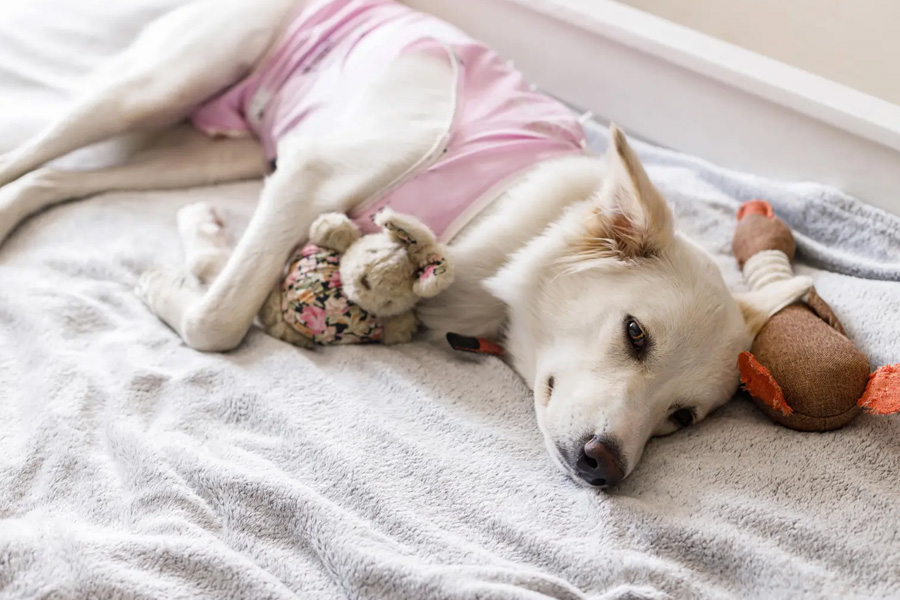
The cone, recovery suit, or inflatable collar is not optional if your pet keeps licking. Licking feels harmless until the incision becomes wet, inflamed, or infected. For more detailed post surgical aftercare instructions, it helps to review a trusted veterinary source and compare it with your own discharge sheet.
Food, water, and bathroom habits reveal how recovery is going
Many pets are a little sleepy or mildly nauseated after anesthesia. A smaller meal the first night is common. What you are watching for is direction. Is your pet drinking some water, keeping food down, and gradually returning to normal, or are things getting worse?
Vomiting more than once, refusing water, straining to urinate, severe diarrhea, or no interest in food beyond the expected window should get your vet involved. A dog that has not urinated after surgery may be painful or developing a problem. A cat hiding and not eating can slide into trouble faster than people expect.
Pets recovering from more advanced procedures, including cancer related operations, may need closer monitoring because surgical complexity can affect appetite, pain control, and activity limits. The University of Florida offers a helpful overview of surgical oncology care that shows why home observation matters so much after discharge.
Normal recovery signs and warning signs are not the same thing
| What You May See | Often Expected | Call Your Vet |
| Energy level | Sleepy for 24 to 48 hours | Extreme weakness, collapse, or worsening lethargy |
| Appetite | Smaller appetite the first evening | No eating beyond the advised period, repeated vomiting |
| Incision | Mild redness, mild swelling, light bruising | Gaping wound, discharge, bad odor, active bleeding |
| Movement | Slow walking, careful posture | Limping that worsens, crying out, inability to stand |
| Bathroom habits | Minor delay after anesthesia | Straining, no urination, severe diarrhea, constipation with distress |
After surgery care for pets is often about spotting the change between mild and worsening. If your gut says your pet is not following a normal pattern, that instinct is worth listening to.
Three steps you can take today to support general veterinarian aftercare
Set up a recovery zone. Pick one quiet area with soft bedding, easy access to water, and no jumping hazards. Limit traffic, noise, and other pets if they tend to play too hard.
Create a medication and symptom log. Write down dose times, meals, bathroom trips, and incision changes. When you are tired and worried, memory gets fuzzy fast. A simple log keeps you accurate.
Call early instead of waiting too long. Small concerns are easier to manage than big complications. If the incision looks worse, your pet will not eat, or the pain seems stronger instead of better, contact your veterinary clinic.
You do not need to do everything perfectly. You do need to stay consistent, keep things calm, and pay attention to changes. That is what gives your pet the best chance at a smooth recovery. If something feels off, reach out to your veterinarian and ask for guidance right away.