Most grooming problems don’t start at the groomer. They start on a Tuesday night when you notice a mat behind your dog’s ear, the nail clippers are buried in a drawer, and you’ve got forty minutes before bed.
I’ve watched this play out with my own dog more times than I’d like to admit. The fix wasn’t a fancier brush or a bigger budget. It was seven small habits, done often enough that they stopped feeling like chores. Each one fits inside a coffee break. Together, they turn grooming from an emergency into background noise.
Here’s the mental shift that matters: grooming is a maintenance system, not an event. Treat it like brushing your teeth, and it gets easy. Treat it like a biannual appointment, and it stays a headache. The habits below work whether you handle everything yourself or lean on a pro like the team at Dog Grooming Herriman for the heavy lifting.
Why does grooming feel hard when it shouldn’t?
Because you’re doing it in bursts. A two-hour marathon session every eight weeks beats up your dog’s patience and yours. Short, frequent touches do the opposite. A five-minute brush on a random Wednesday prevents the kind of mat that takes an hour to break apart.
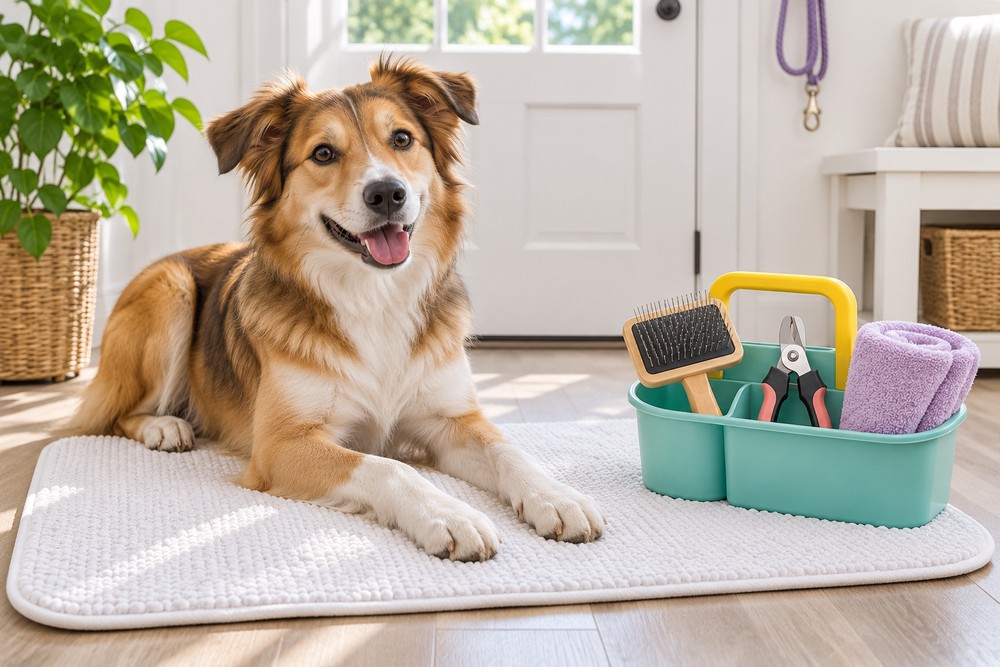
The other trap is tool chaos. If your brush lives in a closet behind the vacuum, you’ll skip it. Keep a single grooming caddy by the door you actually use. That one change alone gets more people brushing consistently than any tutorial. The ASPCA lays out the general dog care basics that any routine should rest on, and giving it a skim before you set yours up pays off.
The seven habits, ranked by how much grief they save you
I’m ranking these by payoff, not by how pleasant they are. Begin with the first one and add the next as it sticks. Nobody needs the full set in week one.
- Handle the paws daily. Ten seconds. That’s the entire job. Hold each paw, press gently on the pads, then let go. Dogs that get daily paw handling fight less when it’s time for a real trim. This is the highest-return habit on the list, and almost nobody does it.
- Brush before the mat forms, not after. Two or three minutes, three or four times a week, depending on coat. A slicker brush for most dogs, an undercoat rake if you’ve got a double coat. Mat removal hurts. Prevention doesn’t.
- Keep a grooming caddy where you’ll trip over it. Brush, nail clippers, ear wipes, a towel, treats. One container. Visible. If it’s out of sight, it’s out of your routine.
- Team up handling with a reward your dog goes wild for. A smear of peanut butter on a lick mat while you brush does more for cooperation than any training video. You’re not bribing. The treat and the brush become one good thing in your dog’s head.
- Inspect ears and eyes while you’re already snuggling. Your hands are on your dog anyway. Glance at the ears for redness or odor, and wipe the eye corners with a damp cloth. Small problems caught on a random Tuesday stay small.
- Do one nail per day instead of all four paws at once. Sounds ridiculous. Works brilliantly. One nail, one treat, and you’re finished. In a week, you’ve handled the whole set with zero wrestling matches.
- Book the professional visit before you need it. Full grooms and baths are easier to schedule when you’re not desperate. Put a recurring reminder in your phone and treat it like a dentist appointment.
A habit is only as good as the week it survives
Here’s where most routines collapse. You plan a beautiful Sunday grooming session, life happens, and by Wednesday the plan is dead. So build the habits into moments you already have, not moments you have to create.
Walking your dog? That’s a paw check when you get home. Watching TV? That’s brushing during the second episode. Morning coffee? That’s when you glance at the ears. The LA County walking toolkit treats the regular walk as the anchor for a lot of pet care, so piggyback on it instead of inventing new slots in your day.
What to hand off and what to keep
You don’t have to do everything. My honest take: keep the daily touches, hand off the heavy stuff. Nail grinding, de-shedding treatments, and anything involving clippers near sensitive areas are worth paying for. You’ll do a worse job, your dog will tolerate it less, and the stress isn’t worth the savings.
What you should never outsource is the daily handling. That’s the part that makes the professional visits go smoothly, because a dog used to being touched is a dog that doesn’t panic on the table. Your groomer will spot the change in how your dog behaves, and your dog will feel it too.
One more thing worth saying plainly: if your dog snaps, freezes, or trembles during handling, stop and get help. That’s not a grooming habit problem. That’s a comfort problem, and pushing through it makes everything harder later. Research on grooming barriers notes that owners often delay care for reasons that have nothing to do with the dog’s coat, so be honest with yourself about what’s actually getting in the way.
Start with one habit this week
Pick the paw touch. Ten seconds a day for a week, and you’re done with the first step. Once that sticks, add the brush. Then the caddy. Habits stack, and by the end of a month you’ll have a routine that runs itself.
The goal isn’t a show-ready coat. It’s a dog that lets you check its ears without a fight, and an owner who isn’t scrambling the night before an appointment. Which of the seven are you starting with?