Key Takeaways
- Trenchless methods can limit disruption to lawns, driveways, patios, sidewalks, and established landscaping.
- Traditional excavation may be necessary when a sewer pipe has collapsed, has a serious slope problem, or needs a new route.
- A camera inspection should guide the choice, not assumptions based on symptoms alone.
- Total cost includes more than pipe work. Surface restoration, permits, access, and cleanup matter.
- The right approach depends on the pipe’s condition, depth, layout, and long-term plans for the property.
For Salt Lake City homeowners, a sewer repair decision can affect much more than plumbing. A line may run under a driveway, garden, patio, basement addition, or mature trees. Comparing excavation with trenchless sewer line repair in Salt Lake City helps property owners weigh reliable drainage against the amount of disruption a project may create.
Neither method is automatically better. Some damaged lines can be rehabilitated or replaced with limited digging, while others require direct access to remove failed pipe and correct underlying problems. The best choice starts with a clear view of what is happening below ground.
Why Sewer Repair Choices Matter in Salt Lake City
Salt Lake City properties include older homes with aging sewer laterals as well as newer homes with finished yards and hardscape improvements. When a sewer line begins backing up, leaking, or draining slowly, homeowners must consider the pipe itself and everything above it. A repair that looks less expensive on the first estimate may become more costly once concrete, irrigation, landscaping, or fencing must be restored.
Winter weather, access limitations, utility locations, and permit requirements can also affect scheduling. A thoughtful repair plan accounts for the pipe’s condition, the property layout, and whether the existing route will still serve the home well in the future.
How Traditional Excavation Works
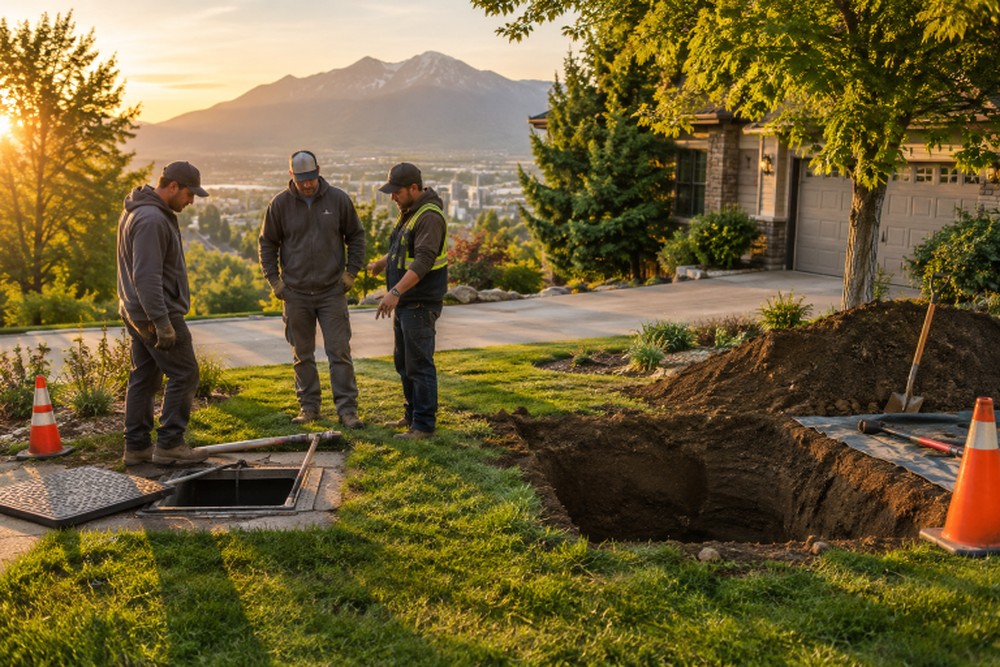
Traditional excavation, often called open-trench repair, involves digging down to expose the sewer line. Crews can then remove a damaged section, install new pipe and fittings, verify the connection, backfill the trench, and restore the affected surface. The general open-trench excavation process follows this same practical sequence.
This approach gives full visibility of the sewer route. It can be useful when a line has collapsed, when the pipe has shifted enough to create a major belly, or when the route needs to change. Excavation can also make sense for a shallow line in an open side yard where restoration is relatively simple.
How Trenchless Sewer Repair Works
Trenchless repair uses existing access points or smaller excavation areas instead of opening a continuous trench across the property. It is not always completely dig-free, but it can substantially reduce the amount of surface disturbance.
Two common methods are pipe lining and pipe bursting. Pipe lining creates a new interior pipe within an existing line that remains suitable for rehabilitation. The cured-in-place pipe process generally involves inserting a resin-saturated liner and curing it to form a continuous inner surface. Pipe bursting replaces the old pipe by pulling new pipe through its existing path while breaking apart the old line outward.
Trenchless vs. Traditional: A Practical Comparison
The following comparison shows why an inspection is more useful than choosing based only on price or convenience.
| Consideration | Trenchless Repair | Traditional Excavation |
|---|---|---|
| Surface disruption | Usually limited to access points | Often requires a continuous trench |
| Best pipe conditions | Existing route is usable and accessible | Collapse, severe grade issue, or route change |
| Restoration needs | Often lower, but still possible | Can include major landscape or hardscape repair |
| Direct visibility | Limited | Full access to exposed pipe |
Surface Disruption and Project Time
Trenchless work may help preserve grass, planting beds, driveways, sidewalks, and patios because it avoids a long open trench. However, access pits, cleanout work, or connection excavations may still be needed. Traditional digging creates more visible disruption, but it gives crews room to correct problems that cannot be addressed from inside the line.
Active pipe work may be brief for either method, yet the total timeline can be longer because of inspections, permits, utility coordination, weather, testing, and restoration. Ask for the expected project schedule in writing, including when the final surface repairs will be completed.
Total Cost and Service Life
Compare full project costs rather than only the plumbing portion of an estimate. A trenchless proposal may carry a higher pipe-work price but avoid extensive concrete, landscape, or irrigation restoration. Conversely, excavation may be the more sensible investment when it solves a major structural issue that lining cannot correct.
Service life depends on the selected material, installation quality, soil movement, connections, and future maintenance. Homeowners should ask what product will be installed, what conditions the warranty covers, and whether the quote includes testing after the work is complete.
When Trenchless Repair May Be a Good Fit
- The pipe has cracks, leaking joints, root entry, or internal deterioration.
- The existing sewer route still has an acceptable path and slope.
- The line is open enough for inspection and equipment access.
- The sewer runs below valuable landscaping, pavement, or finished outdoor areas.
- The goal is to reduce soil disturbance and restoration work.
When Traditional Excavation May Be the Better Choice
- The pipe is fully collapsed or cannot be reliably accessed from within.
- The line has severe settling, standing water caused by poor grade, or a major belly.
- The sewer route must move to avoid an obstacle or improve the layout.
- The pipe needs a larger diameter to support planned changes.
- Several damaged connections need direct access.
Why a Camera Inspection Should Come First
A sewer camera inspection can identify pipe material, cracks, root intrusion, offsets, separated joints, standing water, and collapsed areas. It can also help locate the damage in relation to the house, cleanout, street connection, driveway, or landscaping.
Request recorded footage or clear images, then ask these questions:
- Where is the damage, and how much pipe is affected?
- Can the existing pipe support lining or pipe bursting?
- Is there a grade or routing problem?
- What digging, cleanup, and restoration are included?
- What warranty and testing are provided?
Final Guidance for Salt Lake City Homeowners
Trenchless sewer repair and traditional excavation both have a place in Salt Lake City. Trenchless methods may be an excellent fit when the existing route is workable and protecting finished surfaces matters. Excavation may be the more dependable choice when the pipe has failed structurally, or the drainage path itself must change.
Start with a camera inspection, compare complete written estimates, and include restoration in the decision. The strongest repair plan is the one that restores reliable flow while fitting the actual pipe condition, your property layout, and your long-term goals.