Basic Information
| Field | Details |
|---|---|
| Full Name | Lew Eric Jones |
| Birth | November 23, 1956, Seoul, South Korea |
| Adoption | Circa 1958, by Jim Jones and Marceline Jones |
| Death | November 18, 1978, Jonestown, Guyana |
| Parents | Jim Jones (adoptive father); Marceline Jones (adoptive mother) |
| Spouse | Terry Carter Jones |
| Child | Chaeoke Warren Jones (born April 4, 1977; died November 18, 1978) |
| Arrival in Guyana | March 29, 1977 |
| Roles | Mechanic, baker, musician, diesel repair, Jonestown security |
| Affiliation | Peoples Temple; member of the Jones “Rainbow Family” |
| Burial | Earlham Cemetery, Richmond, Indiana |
Early Years: From Seoul to the “Rainbow Family”
Born on November 23, 1956, in Seoul, South Korea, Lew Eric Jones entered a world in flux. Around age two, he was adopted by Jim and Marceline Jones, founders of the Peoples Temple, and pulled into a family designed as a living emblem of racial unity—what Jim Jones called his “Rainbow Family.” The household moved with the momentum of the church itself: from Indiana to Northern California in the 1960s, eventually settling in Redwood Valley, where temple life infused daily routines.
The family’s diversity was deliberate and public. Adoption was not merely private compassion; it was political theater and personal creed. For Lew, the implications were profound. His home life, friendships, education, and beliefs were all braided tightly with the Temple’s ambitions, and his personal story became inseparable from its rise and fall.
A Timeline in Sharp Relief
| Date | Event |
|---|---|
| November 23, 1956 | Born in Seoul, South Korea |
| Circa 1958 | Adopted by Jim and Marceline Jones |
| 1960s | Childhood in Indiana and California within Peoples Temple |
| Early 1970s | Marries Terry Carter; deepens involvement in Temple life |
| March 29, 1977 | Arrives in Guyana to join Jonestown |
| April 4, 1977 | Son, Chaeoke Warren Jones, born in Jonestown |
| November 18, 1978 | Dies in Jonestown alongside wife and son |
Numbers mark turning points: two years old at adoption; 21 at death—years compressed by communal demands, travel, and the tightening orbit of Jonestown.
Life in Jonestown: Work, Duty, and Silence
When Lew arrived in Guyana on March 29, 1977, he stepped into the daily grind of a frontier utopia. He repaired diesel engines, baked bread, played music, and served on Jonestown security. It was manual, essential work—the kind that keeps a remote settlement breathing. Yet the labor took place under a canopy of surveillance and fear. In a place built to free members from American racism and inequality, discipline could be brutal, and privacy was rare.
Lew’s economic life mirrored the collective: members pooled resources, surrendered personal assets, and received what they needed through the communal system. There were no bank accounts to speak of, no résumés, no independent accolades—only roles inside a closed world. His contributions mattered daily, but his voice after 1978 is lost to time. Unlike surviving siblings who have reflected publicly, Lew left no memoirs, no interviews, no letters that could carve a space for his own perspective.
Marriage and Parenthood: Personal Joys in a Controlled Community
In the early 1970s, Lew married Terry Carter, a fellow Temple member and sister to Tim and Michael Carter. Their son, Chaeoke Warren Jones, was born on April 4, 1977, a bright note in a settlement that cherished children as symbols of the future. Family rituals unfolded inside the Temple’s schedule. Love existed—quietly and stubbornly—even as the community’s ideology dictated much of daily life.
The tragedy of November 18, 1978, erased an entire branch of the Jones family at once: Lew, Terry, and their one-year-old son all died that day. In a single sweep, private bonds and future hopes vanished.
The Jones Family: A Wider Circle
Lew’s life intersected with a complex network of siblings and relatives, many of whom were adopted to reflect the Temple’s vision of racial harmony.
| Name | Relation | Notes |
|---|---|---|
| Jim Jones | Adoptive father | Peoples Temple founder; died in Jonestown |
| Marceline Jones | Adoptive mother | Nurse and Temple advocate; died in Jonestown |
| Lynetta Putnam | Grandmother (paternal via Jim) | Influenced Jim’s early life |
| James Thurman Jones | Grandfather (paternal via Jim) | Father of Jim Jones |
| Jim W. Jones Jr. | Adoptive brother | Born 1960; survived Jonestown while in Georgetown |
| Stephan Gandhi Jones | Adoptive brother | Born 1959; survived; has spoken publicly |
| Agnes Pauline Jones | Adoptive sister | Born 1943; died in Jonestown |
| Timothy Glenn Tupper “Tim Day” Jones | Adoptive brother | Born 1959; died in Jonestown |
| Suzanne Jones | Adoptive sister | Adopted; survived outside Jonestown |
| Stephanie Jones | Adoptive sister | Adopted from Korea; died in a 1959 car accident |
| Terry Carter Jones | Wife | Died in Jonestown |
| Chaeoke Warren Jones | Son | Born 1977; died in Jonestown |
Surviving sons Jim Jr. and Stephan were in Georgetown as part of a basketball team when the massacre unfolded. Their later reflections offer fragments of insight into the family’s internal dynamics—love tempered by fear, loyalty knotted with control.
Public Memory: Afterimages and Occasional Mentions
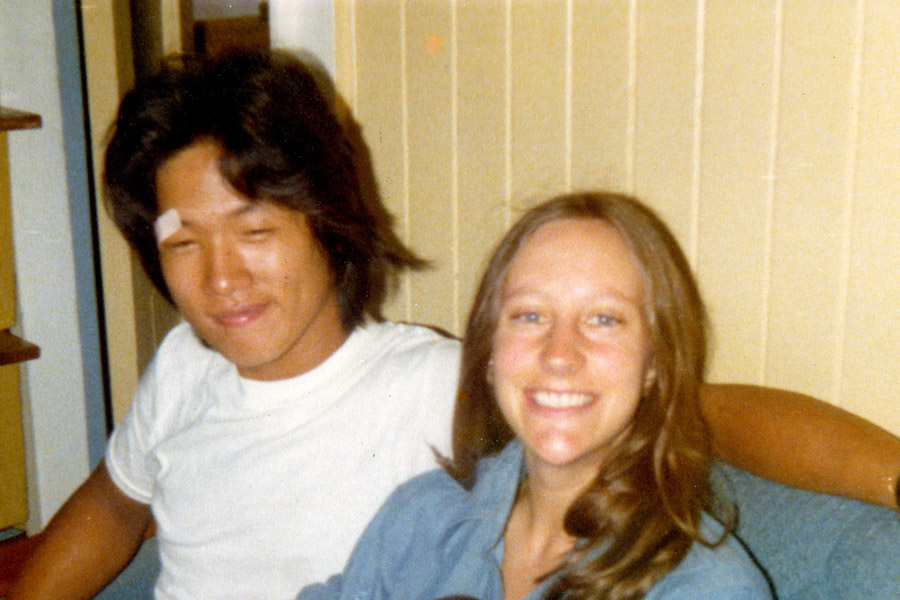
Since Lew’s death in 1978, no new chapters have emerged—only reinterpretations. His name surfaces in documentaries, retrospectives, and online discussions that revisit the Jones family history. In recent years, occasional posts have shared archival photos or asked why so little is known about him. The answer is both simple and devastating: he died young in a closed society, and the paper trail is thin.
There is no social media, no personal website, no career portfolio—only an entry in the long ledger of Jonestown. Lew’s grave rests in Earlham Cemetery, Richmond, Indiana, an earthly anchor for a story more often told in whispers and film reels.
Roles and Responsibilities: What He Did, Day to Day
Lew’s responsibilities in Jonestown were practical and varied:
- Mechanics and diesel repair: keeping generators and equipment functioning.
- Baking: contributing to the settlement’s daily food supply.
- Music: participating in cultural activities that gave the community rhythm and morale.
- Security: a role that carried both authority and burden within the Temple’s rigid structure.
These are not the accomplishments of a man chasing career milestones; they are the tasks of someone living inside a sealed ecosystem where work equated to survival.
The Human Cost: A Life Inside the Temple
Lew’s story shows how one person’s identity can be shaped by an institution’s ambitions. Adoption gave him family, home, and community. It also put him in the eye of a storm. The Peoples Temple promised racial equality, care for the poor, and a society free of American hypocrisy. For a time, it delivered food, shelter, and dignity. But the dream narrowed, the rules hardened, and the exit door drew shut.
In that tightening world, Lew grew up, loved, worked, and became a father. His arc, compressed between 1956 and 1978, is an ember glowing in the larger fire of Jonestown—small, radiant, and deeply human.
FAQ
Who was Lew Eric Jones?
He was a South Korean-born adoptee of Jim and Marceline Jones and a member of the Peoples Temple “Rainbow Family.”
When was he born?
He was born on November 23, 1956, in Seoul, South Korea.
How did he die?
He died in the Jonestown mass suicide/murder on November 18, 1978.
Did he have a family of his own?
Yes, he married Terry Carter and they had a son, Chaeoke, who was born in Jonestown in 1977.
What was his role in Jonestown?
He worked in mechanics and diesel repair, baked, played music, and served in settlement security.
Did any of his siblings survive?
Yes, Jim W. Jones Jr. and Stephan Gandhi Jones survived as they were in Georgetown on the day of the tragedy.
Where is he buried?
He is buried at Earlham Cemetery in Richmond, Indiana.
What is the “Rainbow Family”?
It refers to the diverse, largely adopted children of Jim and Marceline Jones, symbolizing the Temple’s commitment to racial harmony.
Did he have personal wealth or a separate career?
No; Temple life was communal, and his work was primarily inside Jonestown.
Is there recent social media or public activity related to him?
No active accounts exist; occasional archival mentions appear in retrospectives and discussions.