Designing with the Land, Not Against It
Good outdoor events start with land reading. Walk the site throughout your event’s duration. Sun angles, shade lines, wind direction, drainage paths, and visitor movement should be noted, adds PMI Central Oregon, a trusted provider of property management in Redmond. Map the views to frame and hide. Create seating or staging layers on a sloped terrain. Use a tree grove as a lounge or ceremony canopy. Not pushed, the venue should feel discovered.
Keep foot traffic and service trucks off the ground. Temporary floor panels, ground protection mats, and worker walkways prevent mud and turf damage. Create a no-trace load plan. Truck parking, turning, and trash departure without crossing guest spaces? Site plans that respect the terrain save money and improve guest comfort.
Structures that Flex: Tents, Pavilions, and Hybrid Builds
Architecture now includes tents. Modern clearspan frames offer spacious, column-free interiors with elegant lines. Stretch and sailcloth tents are perfect for seaside light and sunset ceremonies since they look hand-drawn against the sky. Hybrid builds combine hard walls, transparent roof panels, and fabric liners to mix indoor polish with outdoor air.
Think beyond shelter. Vestibules decrease air loss, glass walls capture views without wind chill, and blackout liners for projection mapping or high-impact reveals. Pair cloth liners with acoustic barriers and soft furnishings to reduce sound. Anchor choices matter. Open fields benefit from stakes. Ballast weights guard restricted-staking places. In salty bayfront areas like Southern Maryland, clearspan frames with ballasted anchoring and wind-rated sidewalls are needed.
Climate systems should consider volume, not simply square footage. Heaters that burn indirectly warm interiors without emissions. In hotter climates, high-velocity fans with spot coolers or silent evaporative devices can circulate air while preserving conversation. Place unobtrusive dehumidifiers on humid evenings to protect finishes and prevent glassware from sweating.
Power, Sound, and Light as a Unified System
Think of electricity, audio, and illumination as one. Create a load schedule that lists devices by wattage or amperage. Audio-visual power should be separated from catering and HVAC to avoid hums and flickers. Headroom should be 20–30% for each distribution leg. Keep cable runs off sidewalks and safeguard crossings with accessible ramps.
Outside sound travels differently. Maintain volume front-to-back with line arrays or scattered speakers. A cardioid subwoofer directs low frequencies toward the audience and away from neighbors. Install real-time SPL monitoring at the perimeter to comply with local noise laws.
Lighting affects emotion and movement. Add layers. Safety is handled with pathway markings and lantern posts. Tree and architectural uplights set the mood. Pin spots and wash lights enhance dining and flowers. Clean and brighten bar and kitchen task lighting. Warm 2700K to 3000K in dining areas and neutral 3500K to 4000K at workstations. Show-related scenes from arrival glow to dinner closeness to late-night enthusiasm.
Weather Contingencies That Do Not Kill the Vibe
Weather plans should be hidden until required. Clearly define forecast threshold and time stamp decision triggers. If rain likelihood exceeds a particular % by an hour, switch to Plan B. Install gutters between tent bays, drip edges at entrances, and mats where grass meets flooring. Set up weighted sidewalls that roll down rapidly without disturbing décor.
Wind is more dangerous than planners think. Before event day, follow manufacturer wind ratings and establish evacuation or sidewall deployment criteria. Lightning requires a shelter-in-place plan including communication, safe zones, and performance pauses. Keep event captains updated on weather via headsets. Raindrops are turned into moments with umbrella baskets, towel bins, and comfortable wraps.
Guest Flow and Accessibility
Choreographed map arrival. The parking or shuttle drop sequence should greet, orient, and thrill. Separate check-in and bar lines and serve small snacks away from doors to avoid congestion. Put water station #1 near arrival to start a welcoming mood.
No compromise on accessibility. Use 1:12 sloped temporary ramps with edge protection. Choose sturdy wheelchair- and heel-friendly flooring. Make seats with arms easy to stand on. Provide a quiet lounge for sensory breaks and a discreet lactation tent for families. Clear, high-contrast directional signs guide everyone without asking.
Sustainable Standards That Guests Can See
Sustainability is no longer hidden. Make it obvious. Choose durable rentals or certified compostables over single-use plastics. Station staff garbage sorting pods with pictograms to guide guests. Reusable bottles and glasses are normalized by water refill stations.
Select regional cuisines with seasonal vegetables to cut food miles. Work with reuse-minded florists and donate flowers following takedown. Use biodiesel or hybrid batteries when practical. Share a simple impact card at exit after measuring waste diversion, water use, and miles driven. After seeing the improvement, guests participate proudly.
Culinary and Beverage Experiences Outdoors
Food behaves differently outside. Heat makes sauces runny and cold canapés stressed. Menus should thrive in ambient conditions. Imagine grilled skewers, sturdy greens, cooled grains, and mousses over delicate creams. Prep kitchens should provide sun and wind protection, safe handwashing, and a stable cold chain. Timed service windows and temperature logs prevent lingering.
Bars should be many and agile. Satellite bars with shorter queues disseminate people over the venue. To accelerate service and preserve consistency, batch trademark cocktails. Give low- and no-alcohol options equal care. Be vigilant about pebble or block ice for show and gradual melting, as well as drink ice. Instead of pesticides, use covered displays, sealed containers, and fan air curtains. Set clear perimeter distances and place fire extinguishers and water buckets at each station when cooking over fire.
Interactive Entertainment That Belongs Outdoors
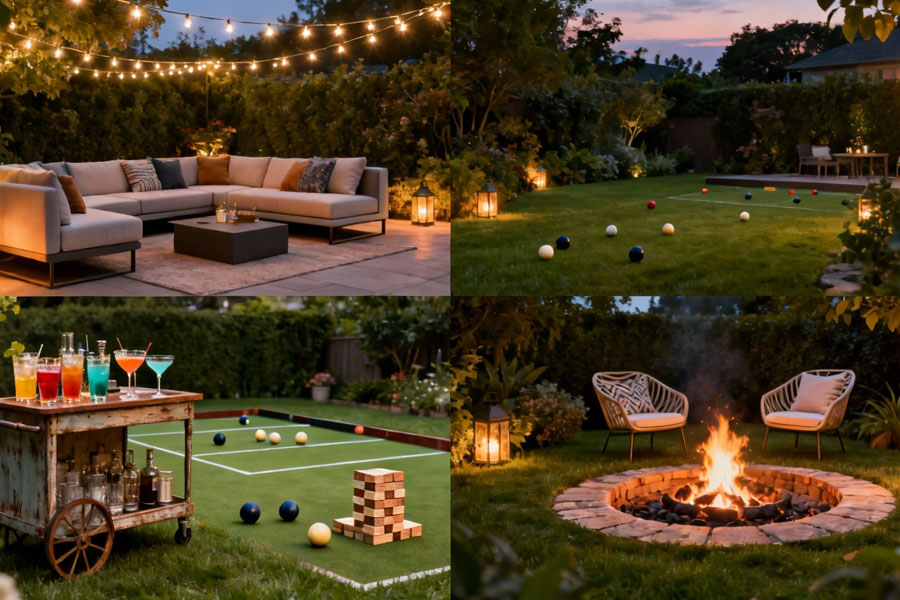
Play is encouraged outdoors. Curate curiosity-boosting areas. Visitors can screen print totes or construct herb bundles in the maker corner. An outdoor strategy lounge with giant Carrom, Kubb, and Petanque. A local astronomer can lead telescopic sky tours or constellation stories at night.
Silent discos keep legs moving near homes without waking them. Tent sides can become living canvas with projection mapping. For a natural installation, try a sound garden with chimes and wood blocks. Create a wellness space for chair massage, breathwork, and short stretches between beats. Top activities take into account the landscape and day.
Operations Blueprint
Operations make the magic repeatable. Draft a scaled site plan with color-coded zones for guest areas, back of house, egress, and emergency access. Designate load-in lanes, staging yards, and a marshaling plan so vendors do not gridlock each other. Radios need channel discipline with a clear call tree and a common language for locations.
Each task on a master timeline for permits, insurance, and inspections has who owns what. Every vendor must provide insurance certificates and verify jurisdictional coverage. A production office crisis response plan should include the nearest hospital, storm shelter techniques, and utility company contacts. Create a strike checklist to restore the location to pre-event settings and schedule neighbor courtesy checks in residential areas.
FAQ
How do I estimate tent size for my guest count?
Start with function. Plan 8–10 square feet per visitor for a cocktail reception. Seating at round tables requires 12–14 square feet per visitor. Create dance floors, stages, bars, buffets, and circulation sections. Sketch the layout to scale to see spacing required when in doubt.
What is the best way to plan event power outdoors?
List each wattage or amperage device’s load. Zone-by-zone load distribution to dedicated circuits. Catering and HVAC should be distributed separately from audio-visual. Boost capacity by 20–30% for spikes. Use weatherproof distribution, raised cable runs, and ramp covers at crossings.
How can I keep guests comfortable if the forecast shifts suddenly?
Prepare sidewalls, store umbrella baskets at entrances, and stock hand warmers and wraps. Fuel or power-ready stage heaters or fans. You can activate contingencies without last-minute confusion by setting radar and wind triggers. Fast-acting comfort things feel like hospitality, not emergency action.
Do I need flooring, or can we keep grass underfoot?
Flooring keeps shoes clean, enhances accessibility, and prevents chair legs from sinking. Use it minimally in dining, dance floors, bars, kitchens, and restrooms. If the weather is dry and the soil is stable, ground protection mats or tightly cut, well-drained turf can work for the rest.
How many restrooms should I rent for an outdoor event?
A common baseline is one standard restroom per 50 guests for up to four hours. If alcohol is served or the event is longer, increase to one per 35 to 40 guests. Include accessible units, add handwashing stations, and position them with privacy, lighting, and short, direct paths from guest zones.
What is a smart way to manage sound in neighborhoods with strict noise rules?
Increase speakers at lower volumes and target audience zones. Use cardioid subwoofers to reduce bass bleed. Set and monitor outer decibel restrictions and schedule loudest times earlier in the evening. Silent disco kits are great late-night options when limits tighten.
When should I book core rentals like tents, lighting, and power?
For peak seasons, reserve significant infrastructure 4–6 months in advance, earlier for holiday weekends or coastal areas with strong demand. Clear tops, special floors, and custom liners take longer. Before booking vendors, check venue install and strike windows.