Rivers of Grass: The Betta’s Native Map
Wild bettas live in floodplains, paddies, and ditches. Thailand, Cambodia, Laos, and Vietnam are their major habitats. Imagine rice fields, peat marshes, roadside canals, and palm-shaded streams. Though slow, water runs. It settles in shallow sheets, creeps through grasses, and pools under roots where light tints.
These are not postcard lagoons. They are living, shifting edges where land and water trade places through the seasons. In the monsoon, a field becomes a lake. In the dry months, the same basin fractures into a necklace of shrinking puddles. Bettas read this calendar with their bodies, timing courtship, nest building, and foraging to the pulse of rain.
Tea-Stained Worlds: Water Chemistry and Microhabitats
Tea-colored wild betta water is common. Falling leaves produce tannins that soften and color water. Acidic pH, low hardness, and low dissolved minerals are common in many environments. Mats of floating plants, root tangles, and stranded branches form a maze of shelter in the still water.
Microhabitats matter. Men may stake out the shaded nook under a palm frond where the surface film is calm enough to anchor a bubble nest. A juvenile creeps among insect-filled emergent grasses. A female hunts drifting prey between leaf litter in mid-water. More texture in the habitat gives fish more exits and vantage locations.
Air-Breathing Architecture: Inside the Labyrinth Organ
Bettas’ labyrinth organ, a highly vascular, foldable structure that directly absorbs oxygen from air, is their signature adaption. Bacteria feasting on rotting plants can deplete dissolved oxygen in warm, quiet waters. Most fish choke. Bettas rise like periscopes, breathe, and continue.
Surface access is required. It is essential for eating, courting, and parenting. Males create bubble nests for eggs and fry at the water-air border. Bettas start without full labyrinth function. It takes weeks for the organ to mature from gill dependency to surface breathing. Wild survival increases with humid air above the water level and calm surfaces.
Meals on the Wind: The Wild Betta Diet
Wild bettas are ambush artists. They take what the water and wind deliver. Mosquito larvae dangle just beneath the surface, a perfect strike zone. Tiny crustaceans flicker through the weeds. Ants, termites, and beetles tumble in from overhanging vegetation, becoming sudden feasts.
This carnivore is motion-sensitive. Food arrives in weather-related pulses. An twilight midge hatch. Dry weather thins the pantry. Betta metabolisms reflect scarcity and surprise. They may speed briefly and exploit the opportunity when insects fall again.
Territory, Ritual, and Courtship
Male bettas are not brawlers by default. They are proprietors. Each selects a slice of cover near the surface, patrols its edges, and broadcasts with color, fin spread, and gill flares. Display is language. It says I am occupied, keep your distance. In tight quarters it can escalate to contact, but vegetation density and sight breaks let fish disengage. In the wild, line of sight is rarely a straight hallway.
Courtship choreographs. Males create bubble nests under leaves and stems and court receptive females with quivers and arcs. Quick and precise embrace. Male becomes diligent guardian as eggs rise into nest. He looks for stray eggs, fixes bubbles, and patrols the perimeter until the fry leave. He anchors his breath-stitched nest to the quietest patch.
Seasons of Feast and Famine
Monsoons fill not only basins. Set the stage for breeding. Nesting often follows rising water temperatures and barometric shifts. Floodwater brings many insects, a feast for courting adults, and fast-growing fry. The globe shrinks as water recedes. Bettas hide in channels, deeper nooks, and shaded culverts where humidity is high and predators are sparse.
This seasonality shapes behavior. Territory compression can increase aggression, then decrease it when the map broadens. Wet seasons boost young. Dry season survivors have scars and enhanced reflexes. Over a year, ditch population density might vary greatly.
Predators and Survival Tactics
Bettas live undercover. Birds observe from wires. Edge-scouring water snakes. When floods join ecosystems, larger fish patrol deeper linkages. The weeds hold dragonfly larvae like traps. Bettas react with stillness, color variation, and rapid shadows. Wild forms wear iridescent greens and blues over earthy browns, which fracture light and merge with leaf stain.
The surface is both lifeline and hazard. Rising to breathe carries risk, so bettas pick vantage points under cover and ascend in tight arcs. Every sip of air is a calculation.
Wild and Domestic: Two Divergent Paths
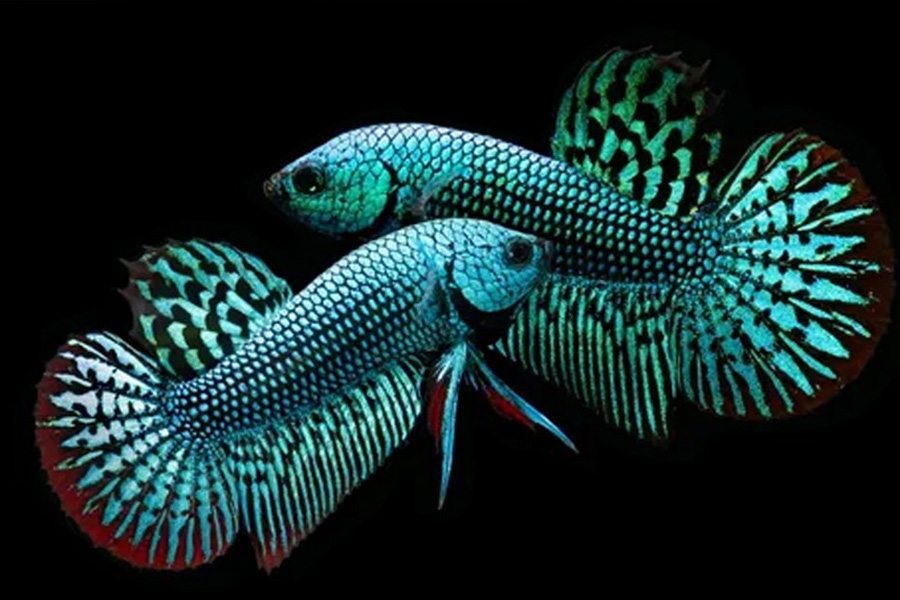
Most people see the domesticated Betta splendens, with its bright colors and elaborate fins. Wild Betta splendens and similar relatives like Betta imbellis and Betta smaragdina have shorter fins and subtler colors that function better in weeds and current. Domestic lines sometimes exchange performance for show, which would not work in a ditch full of reeds and competitors.
Behavior diverges too. Selective breeding can amplify reactivity and territorial intensity, while the wild context tempers conflict with space and complexity. The instincts are shared, but the stage changes the script.
Human Footprint and Conservation Notes
People have made and lost betta nation. Bettas inhabited extensive seasonal wetlands created by rice production, but herbicides and similar channels today remove cover. Urbanization turns soft banks into concrete and channels warm runoff and trash into narrow canals. Domestic fish can contaminate local wild fish DNA.
Yet wild populations persist where leaf litter piles, where banks are soft, where water lingers in dappled light. Corridors between seasonal pools, patches of emergent plants, and reduced chemical load keep the web intact. The betta’s resilience is remarkable, but it is not infinite.
Reading Behavior Through Habitat
Watch a wild betta and you see design in motion. The pause under a floating leaf before a breath. The lateral slip that turns a glare line into camouflage. The short burst after a raindrop knocks an ant into play. Behavior is not random temperament. It is a ledger of tradeoffs written by water depth, oxygen, cover, and neighbors.
In complex habitat, conflict is brief and ritualized. In bare stretches, confrontations last longer. Food arrivals change patrol routes. A sudden drop in water level flips priorities from courting to survival. The fish is a compass needle swinging to the environment’s magnet.
FAQ
Are wild bettas found only in rice paddies?
No. Rice fields are one habitat among many. Wild bettas also live in peat swamps, marshes, drainage ditches, floodplains, and slow streams. They favor shallow, warm, plant-dense waters with gentle flow and frequent access to the surface.
Do wild bettas really live in tiny puddles by choice?
They can survive in shrinking puddles during dry spells, but it is a seasonal constraint, not a preference. In the wet season they range through larger, connected waters where feeding and breeding opportunities expand.
How warm is the water in their natural habitats?
Temperatures are typically warm, often in the mid to upper 70s Fahrenheit and commonly into the 80s during hot periods. Shallow waters can heat quickly during the day and cool at night, so bettas are adapted to modest daily swings.
What triggers breeding in the wild?
Shifts tied to the monsoon often set the stage. Rising water levels, stable warm temperatures, increased insect activity, and a drop in barometric pressure commonly precede nest building and courtship.
Do female bettas hold territories too?
Yes. While males are the most visible territorial actors, females also stake and defend space, especially in complex habitats where resources like cover and feeding lanes can be partitioned.
What do fry eat after hatching in nature?
Newly free-swimming fry graze on microfauna. Infusoria, tiny crustaceans, and other planktonic organisms bloom in leaf-rich, warm waters, providing the first rations before larger prey become accessible.
Are wild bettas less aggressive than pet bettas?
Context matters. Wild fish often display and disengage thanks to abundant cover and broken sight lines. Domestic lines may show heightened reactivity, and sparse environments can magnify conflict. In habitat that offers exits, aggression tends to diffuse faster.
Do wild bettas use strong currents or open water?
They avoid strong currents and prefer slack edges and still pockets. Open water offers fewer ambush points and less refuge from predators. Most activity hugs structure, from floating leaves to root mats.
Can wild and domestic bettas interbreed?
Yes, and in some areas released domestic fish can hybridize with local wild forms. This can alter traits and dilute the distinctiveness of wild lineages over time.
Why are wild bettas more subdued in color?
Functional camouflage. Earthy tones with iridescent highlights break up outlines under leaf-stained light and among plants. Shorter fins reduce drag and snagging, a practical advantage in the tangled architecture of their homes.