Key Takeaways
- Space maintenance is an active process that requires diagnosis, appliance selection, monitoring, and timely removal.
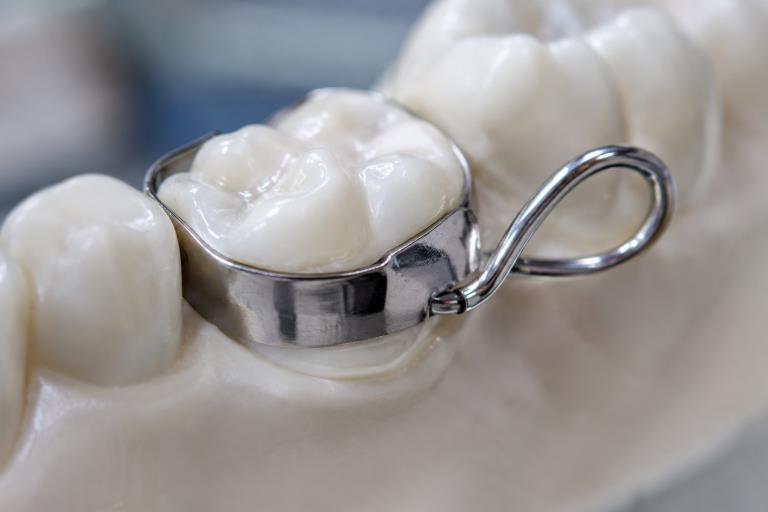
- Band-and-loop appliances are often used for a single missing primary molar.
- Distal shoes may help guide a permanent first molar after early loss of a second primary molar.
- Lingual arches can provide bilateral mandibular support when permanent molars and incisors are suitable abutments.
- Cement loss, breakage, plaque retention, soft-tissue irritation, and eruption interference should be checked at every review.
Premature loss of a primary tooth can alter the available arch space and affect the eruption path of permanent teeth. However, space maintenance is not an automatic response to every extraction. The right approach depends on the lost tooth, the child’s dentition stage, the successor’s development, the current occlusion, and the ability to return for follow-up care.
Custom space maintainers can support pediatric treatment planning when they are designed around the specific clinical situation. Orthodenco Orthodontic Lab, a North Lauderdale, Florida laboratory that fabricates orthodontic appliances for dental practices, provides space-maintainer support that underscores the importance of accurate band placement, appliance fit, and clear prescription details for pediatric cases.
Why Space Maintenance Is a Clinical Question
Space maintenance preserves an existing space. It is different from active space regaining, which attempts to recover space already lost through tooth movement. The distinction matters because a passive appliance cannot correct every developing arch-length problem.
Before treatment, clinicians should determine whether a permanent successor is present, how far it has developed, whether adjacent teeth have drifted, and whether the space supports the broader occlusal plan. The American Academy of Pediatric Dentistry’s guidance on the development of dentition and occlusion emphasizes diagnostic records, treatment timing, and individualized management decisions.
The Pre-Placement Assessment
A short, consistent assessment can prevent an appliance from becoming a substitute for diagnosis. Review the extraction date, reason for tooth loss, available space, occlusion, caries risk, oral hygiene, and cooperation from both child and caregiver.
Records and Questions to Review
- Clinical examination, periodontal condition, and status of prospective abutment teeth.
- Appropriate radiographic information about the permanent successor and the erupting first molar.
- Arch symmetry, eruption sequence, mesiodistal space, and signs of early drift.
- Whether one tooth is missing or whether several spaces need support.
- Whether the permanent first molar has erupted sufficiently to serve as an abutment.
- Whether appliance hygiene and scheduled reviews are realistic for the family.
Choosing an Appliance by Clinical Situation
Band-and-Loop Appliances
A band-and-loop appliance is commonly considered after the premature loss of one primary molar when a sound adjacent tooth can support a band. Its focused design can make it useful for a clearly defined unilateral space. The loop should maintain the intended contact without impinging on tissue, altering occlusion, or blocking eruption.
Common concerns include loose bands, cement failure, loop distortion, recurrent caries around the abutment, and plaque accumulation. A crown-and-loop design may be considered when the selected abutment requires full coronal restoration.
Distal Shoe Appliances
A distal shoe may be considered when a second primary molar is lost before the eruption of the permanent first molar. Its intra-alveolar extension is intended to guide the erupting molar, which makes design accuracy and monitoring particularly important.
These appliances require assessment of healing, soft-tissue response, and the relationship of the extension to the erupting molar. They are not permanent solutions. Once the first permanent molar is in place, the treatment plan should be reassessed and the appliance removed or converted as indicated.
Lingual Arch Appliances
A passive mandibular lingual arch may be appropriate when bilateral primary molar spaces require support and permanent first molars provide stable abutments. It may also be used when preserving leeway space is part of the orthodontic plan.
The wire should remain passive unless tooth movement is deliberately prescribed. At review visits, check that it is clear of gingival tissue, does not press on incisors, and does not interfere with erupting premolars. Poor hygiene, solder failure, and eruption interference can limit success.
Common Failure Modes and Prevention
- Cement loss: Improve isolation, confirm band adaptation, check occlusion, and investigate caries or abutment breakdown before recementation.
- Wire or solder breakage: Evaluate whether the appliance was distorted during placement, subjected to repeated biting forces, or inadequately supported.
- Eruption interference: Reassess loop position, lingual wire clearance, and distal-shoe status as permanent teeth develop.
- Biological complications: Monitor for gingival inflammation, decalcification, caries, and soft-tissue trauma around bands and wires.
- Planning errors: Avoid placing a passive appliance when active correction is needed, and define the expected endpoint before delivery.
A Safer Clinical and Laboratory Workflow
- Document the missing tooth, arch, side, extraction date, and reason for loss.
- Confirm the eruption plan through examination, imaging when indicated, space analysis, and occlusal evaluation.
- Select the appliance according to the number of missing teeth, the eruption stage, and the abutment condition.
- Send complete records, including scans or models, prescription details, bite information when needed, and clearance instructions.
- At delivery, verify seating, occlusion, tissue comfort, cement control, and the anticipated eruption path.
- Give caregivers clear instructions about brushing, diet, appliance protection, and what to do if the appliance loosens.
Follow-Up, Repair, and Removal
A space maintainer should be reviewed against the child’s eruption plan rather than left in place until it fails. At each visit, inspect band stability, cement integrity, wire position, solder joints, soft tissue, hygiene, caries risk, space width, and eruption progress.
Repair, replacement, or removal may be necessary when the appliance loosens, fractures, irritates tissue, blocks eruption, no longer fits the abutment tooth, or no longer serves the original treatment goal. Timely removal is as important as timely placement.
A Practical Closing Checklist
Before prescribing a space maintainer, confirm the diagnosis, the permanent successor, the eruption stage, the abutment health, the available space, the hygiene expectations, and the follow-up schedule. A well-selected appliance can support developing dentition. A well-monitored appliance is more likely to continue doing so safely as the child grows.