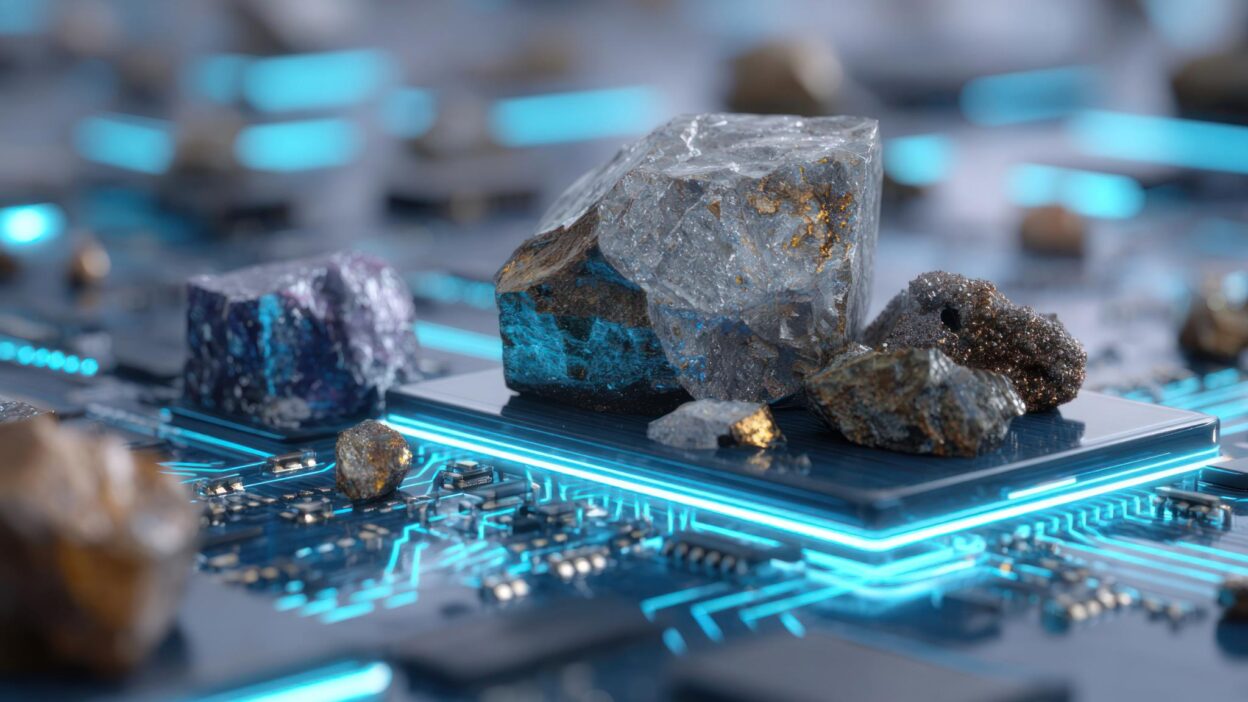
A printed circuit board is not just a simple sheet of fiberglass and copper; underneath the circuitry, it has a much bigger job than just holding components together. The material of PCB construction affects how quickly signals travel, how much energy is lost, how well heat remains away from components and how reliably the board performs after years of use.
That becomes even more important as electronics become smaller and more powerful. A basic consumer device may perform perfectly well with conventional FR-4, while an automotive radar system, a high-speed communications product, or an industrial power application may require a very different laminate.
This is why knowing about PCB materials is so important for electronic design. There is no single material that works for every circuit, but the right choice depends on the electrical, thermal, and mechanical demands placed on the finished board. On the other hand, a heat-resistant mica sheet can similarly be used where electrical isolation and resistance to high temperatures are required.
What is a PCB made from?
A PCB is made from several materials. Copper gives the conductive paths, while the substrate and dielectric layers provide insulation and mechanical support. Depending on the design, the board may also have solder mask, surface finishes, prepreg and other specialized materials.
For rigid circuit boards, FR-4 is the most familiar material system. It combines woven glass reinforcement with an epoxy resin and provides a balance between cost, strength, electrical insulation and manufacturability.
But FR-4 is just one option. Polyimide, PTFE-based laminates, ceramic-filled materials, hydrocarbon-based laminates and other specialty substrates are used when standard materials cannot give the required performance.
The differences do matter because properties such as dielectric constant, dissipation factor, thermal conductivity, coefficient of thermal expansion and moisture absorption can all affect the behavior and reliability of a PCB. IPC technical literature shows substantial differences between conventional FR-4 and high-frequency substrate technologies in both electrical and mechanical properties.
FR-4: The Workhorse of PCB Manufacturing
FR-4 is likely to be the answer if asked about the most familiar PCB material. It has become the standard choice for a huge range of rigid printed circuit boards. It does many things reasonably well without making the board very expensive.
FR-4 uses glass fabric reinforcement within an epoxy resin system. That construction gives the board good mechanical strength and electrical insulation. And remains compatible with established PCB manufacturing techniques.
It is commonly found in computers, consumer electronics, industrial equipment, control systems and many other products.
The appeal of FR-4 is in its balance. Designers do not necessarily need an exotic laminate when the circuit is operating at moderate frequencies and temperatures. In those situations, paying considerably more for a specialized high-frequency material may provide little practical benefit.
There are limits, though. As signal frequencies rise, the substrate’s dielectric characteristics and loss become more important. Thermal demands can also push conventional laminates beyond what is appropriate for a particular application.
Polyimide: When Flexibility and Heat Matter
Polyimide attracts customers with a different need in the PCB market. It is widely used in flexible circuits rather than for conventional rigid boards.
A flexible PCB do what a standard FR-4 board cannot, and that is bend. In applications where the circuit needs to fit into a tight space, move with a mechanical assembly or follow a curved surface, the substrate needs to withstand that movement without cracking or losing electrical integrity.
Polyimide works well for this type of construction and is also valued for its thermal performance. That’s why it is seen as useful in demanding applications, including aerospace, automotive and industrial electronics.
In other words, polyimide is not a “better” version of FR-4. It solves a different set of engineering problems.
PTFE-Based Materials for High-Frequency Electronics
Once a circuit moves into RF and microwave territory, PCB material selection is key.
PTFE, or polytetrafluoroethylene, is used in specialized high-frequency laminates because of its electrical characteristics and relatively low dielectric loss. In these applications, the PCB substrate’s electrical properties become part of the circuit design itself.
The dielectric constant affects how electromagnetic signals propagate through the board, while the dissipation factor indicates how much energy is lost in the dielectric.
The downside is that PTFE-based materials can be more expensive and more difficult to process. Moreover, PTFE is relatively soft, and the proportion of glass reinforcement can affect both its physical and electrical characteristics.
Ceramic-Filled PCB Materials
Ceramic-filled laminates are PCB materials used in demanding electronics.
Adding ceramic fillers to a resin system can change its dielectric, thermal and dimensional properties. These materials are used for RF, microwave, antenna and other applications where predictable electrical performance matters..
PCB Materials and Thermal Management
Electrical performance is just part of the story. Heat can be just as important.
Modern electronic assemblies can pack considerable processing power into relatively small spaces. If heat generated by components cannot escape effectively, temperatures rise and reliability can suffer.
Thermal conductivity is therefore an important consideration when it comes to choosing certain PCB materials. Conventional FR-4 has relatively low thermal conductivity compared with specialized thermal materials.
Specialized materials can offer higher thermal conductivity. Some are designed specifically to improve heat spreading and reduce localized hot spots.
The coefficient of thermal expansion, or CTE, also matters. When a board repeatedly heats and cools, differences in expansion between the PCB, copper, solder joints and components can create mechanical stress.
That is one reason material selection becomes particularly important in products expected to experience frequent thermal cycling.
Why Dielectric Constant Matters
Dielectric constant is one of the most important properties when designing high-speed or high-frequency circuits.
It influences signal propagation and impedance. If the material’s dielectric characteristics are not properly accounted for during PCB design, the finished board may not behave as expected.
The issue becomes more noticeable as frequencies increase. A substrate that works perfectly well in a basic digital circuit may not be suitable for a microwave application where small changes in electrical properties can affect signal behavior.
Specialized laminate manufacturers therefore publish Dk values for their materials, although engineers also need to consider how the value is measured and how it changes with frequency and processing.
Dissipation Factor and Signal Loss
Dissipation factor, often referred to as loss tangent or Df, provides another piece of the puzzle.
Every dielectric material dissipates some electromagnetic energy. In low-frequency applications, the effect may be relatively unimportant. In high-frequency circuits, however, dielectric loss can become a significant part of overall signal attenuation.
This is why low-loss laminates are widely used in RF equipment, antennas, microwave circuits and high-speed communications hardware.
Mica as a Specialized Insulation Material
Mica deserves a separate mention because it plays a different role from the main dielectric laminates normally used to manufacture PCBs.
Mica is known for its electrical insulation properties and resistance to high temperatures. In electrical equipment, mica-based products can be used where insulation needs to remain stable close to heat-generating components.
For example, mica insulation sheets can provide an insulating barrier in applications where ordinary polymer-based materials may not be suitable for the surrounding thermal conditions.
These products should not be confused with the primary laminate of a conventional PCB. Mica is generally a complementary insulation material rather than a direct substitute for FR-4 in ordinary circuit-board construction. Its value comes from solving specific insulation and thermal challenges within a larger electronic or electrical assembly.
How to Choose the Right PCB Material
Choosing between different types of PCB materials starts with the application.
Engineers generally need to consider:
- Operating frequency
- Signal integrity requirements
- Dielectric constant and dissipation factor
- Maximum operating temperature
- Thermal conductivity
- Coefficient of thermal expansion
- Mechanical strength
- Flexibility requirements
- Moisture absorption
- PCB thickness and layer structure
- Manufacturing compatibility
- Expected service life
- Overall cost
For a conventional control board or consumer electronic product, FR-4 is often the sensible choice because it provides a strong combination of performance and affordability.
For flexible electronics, polyimide may be more appropriate. RF and microwave designs may call for PTFE-based, ceramic-filled or hydrocarbon-based laminates. High-temperature insulation problems may require additional materials such as mica.
The point is not to choose the most sophisticated material available. It is to choose the material that fits the actual job.
The Role of PCB Materials in Electronic Performance
The substrate is easy to overlook because most of the attention during PCB design goes to components, copper traces and circuit layout. Yet the material underneath those traces can influence nearly every aspect of the board’s behavior.
It affects signal loss, impedance, heat management, dimensional stability and long-term reliability. In high-frequency applications, those effects become even more pronounced.
That is why PCB materials have become an increasingly important part of electronics engineering. As devices continue to become faster, smaller and more power-dense, the margin for material-related performance problems becomes smaller.
FR-4 will continue to be an extremely important PCB material because it offers a practical combination of cost, strength and performance. But it is no longer the answer to every design challenge.
Polyimide, PTFE, ceramic-filled laminates, advanced low-loss materials and specialized insulation products each have their place. The best-performing electronic products are often the result of choosing the right material for the right operating environment—not simply choosing the most expensive option.
Ultimately, understanding the material of PCB construction gives designers another way to control performance before a board ever reaches the production line. That decision can influence everything from the first signal transmitted through the circuit to how reliably the finished product continues working years later.