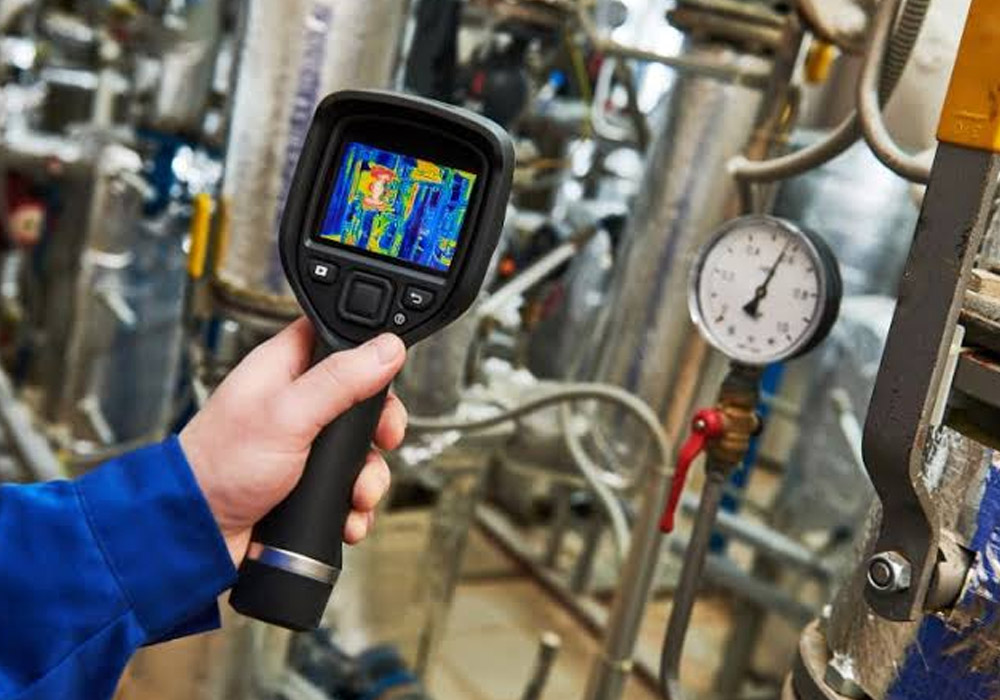
A frozen line in a chemical plant isn’t just an inconvenience, it’s a pressure event waiting to happen. Heat tracing is often treated as a comfort system in many facilities, something that is installed with insulation and forgotten until winter. However, in classified hazardous areas, that’s the wrong approach. Heat tracing should be treated with the same importance as pressure relief valves and emergency shutdown systems: a barrier that prevents a routine process upset from becoming a release.
Why Freeze Protection is a Safety System, Not a Convenience
Within refineries, chemical plants, and pharmaceutical processing plants, a congested line not only stops production but, probably more important, allows pressure to build up in places where it shouldn’t. A frozen instrument line can mask the true reading from a control system. A cooled, solidified, viscous product can allow pressure to remain trapped behind a valve. In natural gas service, hydrate formation can be an almost uncontrollable solidifying of a portion of the product stream in a line.
Heat tracing on these processes maintains the temperature of the solution above the level where these problems will initiate. We then talk about process temperature maintenance and freeze protection in the same breath, and for a detailed breakdown of these systems in specific industrial settings, see the overview at heat-trace.com. In a classified area, both carry safety weight that goes well beyond keeping the water running.
Certification Isn’t Optional in Classified Areas
One detail that many facility managers overlook is the fact that the heating cable must be suitable for the specific environment it will be installed in. This is not a choice. Depending on the classification of hazardous areas (Class I Div 1/2 or Zone 1/2), certain products are not only recommended but are also your only legal options.
A non-rated cable exposed to vapor or gas in the air is not a neutral element. It’s a fire or explosion waiting to happen since there’s the potential for the cable to become an ignition source. ATEX and IECEx certifications are in place specifically to guarantee that the given heating cable, sensor, or control panel will not become a hot spot. In North America, you have NEC Article 500 and API RP 500. This extends to the rest of the heating cable system. Thermostats, sensors, and control boxes also have to be rated as fitting the hazardous location they’re in, for example.
Self-Regulating Cable and Why Hot Spots Matter
Self-regulating heating cable actually detects changes in temperature along its length. It has a conductive core which gets less resistive and generates less heat as it gets warmer. This keeps the cable from going over a set temperature, regardless of its surroundings. How exactly this works varies by manufacturer, some use a conductive polymer, and others a carbon-impregnated core.
Because the core of the heating element becomes less resistive, the cable actually “demands” less electricity as it gets warmer. This is why you can’t overload most self-regulating cable, it heats up, becomes less resistive, heats up less, and self-limits to the designed temperature differential.
For a real-world perspective, imagine a long tank with a mix of water and a flammable organic solvent. The water needs to stay warm. A condensation issue demands that you keep more heat at the bottom of the tank than the top. A straight 30-watt constant-wattage circuit is going to be overloaded at the bottom, and waste electricity at the top. A self-regulating circuit can run up the column to the temperature control, staying hidden alongside.
Insulation and Moisture Sealing Carry Equal Weight
Even if the heating cable is perfectly specified, a line may remain unprotected if the insulation is damaged, or the termination is poorly sealed. In the latter case, water will creep in, remain in contact with the pipe wall, and significantly increase the rate of corrosion under insulation. This is a common cause of failure leading to unscheduled shutdowns and, in the worst situations, to product leaks. The cable and insulation must be considered as a system. Selection even varies by industry: a refinery using steam tracing on high-temperature process lines has different requirements from a pharmaceutical plant employing a low-temperature buffer line.
Steam tracing still has a place in some high-temperature applications, but electric tracing generally gives tighter control and avoids the uneven heating that steam systems can produce in a classified area.
Inspection is Where Most Failures Actually Start
A failed trace circuit going unmonitored is a slow-moving disaster. No one knows until the line is completely blocked or a pressure alarm goes off. Insulation resistance, continuity, and ground-fault testing must be regularly scheduled, not on an “as needed” basis when something already seems amiss. Corrosion under insulation and freeze damage are collectively a major portion of the estimated $2.5 trillion global corrosion-related costs cited in the NACE IMPACT study (2016), a figure that underscores how much of this damage was easily preventable with routine maintenance.
Give Heat Tracing a Seat at the HAZOP Table
Most process hazard reviews cover relief systems, shutdown logic, and ventilation in detail. Heat tracing often doesn’t get the same scrutiny, even though a failed trace can directly cause the overpressure or blockage scenario the HAZOP is trying to catch in the first place.
A good freeze-protection design starts with a heat trace HAZOP and a group of engineers ready to interrogate the heat-trace system design with the same intensity as the shutdown logic is usually reviewed. Then they move on to the calculations. For some reason, these tend to get a free pass from the level of engineering rigor that a PHA implies. Stick with the same gut check, is this number realistic? – that would apply to any other safety system.
Plants that get this right stop thinking of heat tracing as insulation’s sidekick. It’s a safety-critical system with its own certification requirements, its own failure modes, and its own maintenance schedule. Treat it that way, and it does exactly what it’s supposed to: keep the line running exactly as designed, even when the weather, or the process, isn’t cooperating.