By a welding industry contributor.
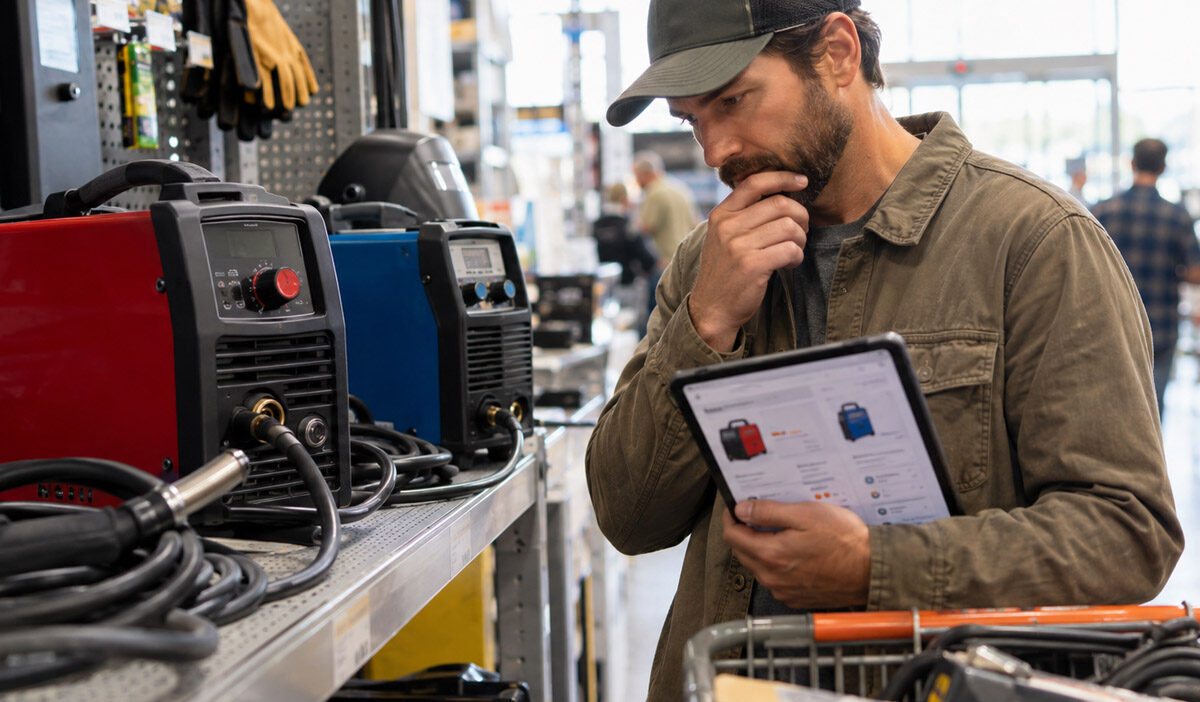
Choosing a new MIG welder used to be simple. You bought the heaviest transformer-based machine you could afford and cleared space for it in the corner of the shop. That machine would likely outlive you. Today, the landscape is completely different. The technology has shifted so dramatically that buying based on old assumptions can lead to expensive mistakes and profound frustration.
The biggest change is the move from heavy, copper-wound transformers to lightweight inverter-based power sources. This isn’t just about portability. Inverters offer cleaner arc characteristics, better power efficiency, and advanced controls that were once exclusive to high-end industrial equipment. Exploring the current range for a miller mig welder reveals options with features like pulsed MIG and multi-process capabilities that were unthinkable for a small shop or hobbyist just a decade ago. This wider choice, however, creates new ways to get it wrong, highlighting the ongoing need for robust safety protocols and awareness of potential health hazards, a topic extensively covered by NIOSH.
A common pitfall is focusing only on maximum amperage without considering your shop’s electrical service. Buying a powerful 250-amp machine is useless if you only have a 30-amp breaker. You will constantly trip the circuit long before you reach the welder’s potential. The right choice balances power, features, and the reality of your workspace.
Quick answer: Modern MIG welders are lighter, more efficient, and more versatile due to inverter technology. The key to a good purchase is matching the machine’s duty cycle, input power needs, and specific features to the materials and thicknesses you work with most often, not just buying the highest amperage you can find.
What’s inside
- Why Have Welders Changed So Much?
- How to Correctly Read a Duty Cycle Spec Sheet
- Is Higher Amperage Always the Right Answer?
- Frequently Asked Questions
- Beyond the Spec Sheet: Choosing a Welder That Works
Why Have Welders Changed So Much?
The shift is driven by inverter technology, which uses high-frequency electronics to create a lighter, more power-efficient, and vastly more controllable welding arc than older transformer-based machines.
Think of a traditional welder as a brute-force tool. It uses a massive, heavy transformer, essentially a large block of iron and copper, to convert high-voltage, low-amperage wall power into low-voltage, high-amperage welding power. This process is simple and reliable, but it is also inefficient and heavy. An inverter welder takes a more sophisticated approach. It first converts AC wall power to DC, then uses digital switches to turn it back into very high-frequency AC before sending it through a much smaller, lighter transformer.
This high-frequency switching is the key to everything. Because the transformer operates at thousands of cycles per second instead of just 60, it can be dramatically smaller and lighter. This is why a modern 200-amp machine might weigh 40 pounds while its predecessor weighed 200. This portability changes how and where you can work. Beyond weight, inverters are significantly more energy-efficient. They draw less power from the outlet to produce the same welding output, which can lead to tangible savings on electricity bills in a production environment.
The adoption of this technology has been swift across the industry, fundamentally changing the economics of fabrication and repair work. The efficiency gains are not trivial. For a small shop, reducing power consumption means lower overhead and the ability to run more powerful equipment on existing electrical service. For a mobile welder, it means a smaller, more fuel-efficient generator can power the same machine.
The most important benefit, however, is control. The fast electronics in an inverter can adjust the welding output thousands of times per second. This allows for precise manipulation of the arc that is impossible with a transformer. This is what enables advanced functions like pulsed MIG, a process that alternates between a high peak current and a low background current. This “pulse” lets you weld thin materials like aluminum or stainless steel with beautiful results and minimal heat distortion, a task that would be extremely difficult with a standard MIG machine.
❝ A good way to test the real-world benefit of a modern inverter is to ask for a demo on thin-gauge aluminum. An older transformer machine will struggle to produce a clean bead without burning through. A quality inverter with pulse capability can lay a stack-of-dimes bead with minimal heat distortion. The difference is immediately obvious.
This level of control also makes the machines smarter. Many inverters feature synergic controls, where you simply input the material type and thickness, and the machine automatically sets the optimal voltage and wire feed speed. For a less experienced operator, this dramatically shortens the learning curve and reduces setup time. For an expert, it provides a reliable starting point for fine-tuning.
How to Correctly Read a Duty Cycle Spec Sheet
The duty cycle tells you how long a welder can operate at a given amperage within a ten-minute period before its thermal overload protection kicks in. Understanding this specification is crucial because it directly relates to productivity and machine longevity.
A rating like “30% at 180 amps” means that in a 10-minute window, you can weld continuously for three minutes at 180 amps. The machine must then cool for the remaining seven minutes. It is not a measure of the welder’s total lifespan. This rating is not linear. The same machine might offer a 60% or 100% duty cycle at a lower amperage, which is often more relevant for lighter fabrication or tack welding.
The key is to look for the standard used for the rating. Professional-grade equipment is typically rated according to the International Electrotechnical Commission’s IEC 60974-1 standard, which tests machines at a challenging ambient temperature of 40°C (104°F). Many budget or hobbyist machines are rated at a much lower, less realistic temperature. A high duty cycle rating that was measured in a cool room is not comparable to an IEC-rated machine tested for a hot industrial environment.
❝ Ask the vendor or check the manual for the ambient temperature used in the duty cycle test. If they cannot provide it, or if it is rated at a low temperature like 25°C (77°F), you should assume the real-world performance in a warm shop will be significantly lower than what is printed on the box. This is one of the most common ways specifications can be misleading.
Matching the duty cycle to your work is the goal. If you primarily do short repairs or build small projects, a machine with a 20% or 30% duty cycle at your target amperage is likely sufficient. You will probably stop to reposition parts or chip slag long before the machine overheats. However, for production work involving long, continuous beads, like welding a trailer frame or heavy pipe, you need a machine with a 60% to 100% duty cycle to avoid constant interruptions. Pushing a light-duty machine past its thermal limits is a primary cause of premature component failure.
Is Higher Amperage Always the Right Answer?
No. Buying a welder based solely on its maximum amperage is a common and costly mistake. The right machine has an effective amperage range for the work you do most often, not just a high peak number. Amperage is the primary driver of heat and penetration, and using too much is just as bad as using too little.
Welding power has two main components: amperage (current) and voltage. In MIG welding, amperage controls the melting rate of your wire and how deeply the weld penetrates the base metal. Voltage controls the shape of the arc and the resulting weld bead’s width and profile. For a given material thickness, there is an optimal amperage window. If your amperage is too low, you get a “cold” weld with poor fusion. The bead might look acceptable, but it is just sitting on top of the metal and has no structural integrity. If your amperage is too high, you will blow through the material, creating a hole instead of a joint. This is especially true on thinner metals like auto body panels or sheet metal.
The goal is to choose a machine whose “sweet spot” aligns with your daily tasks. Most welders perform best in the middle of their rated amperage range. A 250-amp machine might be capable of welding thick plate, but it may produce an unstable, spattery arc when turned down to the 30 or 40 amps needed for thin-gauge sheet metal. A smaller 140-amp machine, by contrast, would be operating in its ideal range for that same task, delivering a much cleaner and more controllable result.
❝ A critical question to ask yourself is what thickness of metal you will be welding 90% of the time. Buy the machine that is designed to live in that range. A machine that is constantly running at its maximum or minimum output will be less efficient and produce lower-quality welds than a machine operating comfortably in its mid-range.
Finally, high-amperage machines demand significant input power. A welder capable of 250 amps or more will almost certainly require a dedicated 240-volt circuit with a 50-amp breaker. If your workspace only has standard 120-volt wall outlets, that powerful machine is unusable without an expensive electrical upgrade. Always check the machine’s input power requirements against your available service before making a purchase.
Here is a general guide for steel thickness and the required amperage:
| Material Thickness | Required Amperage (Approx.) |
| 24 Gauge (~0.024 in) | 30 to 40 Amps |
| 16 Gauge (~0.060 in) | 60 to 75 Amps |
| 1/8 inch (0.125 in) | 120 to 140 Amps |
| 1/4 inch (0.250 in) | 170 to 190 Amps |
| 3/8 inch (0.375 in) | 220 to 250 Amps |
This table illustrates why a machine’s entire operating range, not just its peak, is what matters for versatile, high-quality work.
Frequently Asked Questions
What is the difference between MIG and flux-cored welding? MIG (Metal Inert Gas) welding uses a separate cylinder of shielding gas, typically a mix of argon and CO2, to protect the molten weld pool from atmospheric contamination. Flux-cored arc welding (FCAW) uses a hollow wire filled with a flux agent that creates its own protective gas shield as it burns. This makes flux-core ideal for welding outdoors where wind would blow away a shielding gas, but it produces more smoke and spatter, requiring more cleanup than MIG.
Can I run a modern MIG welder on a generator? You can, but you must use the right kind of generator. The sensitive electronics in inverter-based welders require “clean power” with low Total Harmonic Distortion (THD), which is a measure of electrical noise. A standard construction site generator produces “dirty” power that can damage the welder’s circuit boards. You need a generator specifically rated for sensitive electronics, often called an inverter generator, that specifies a THD of less than 5% or 6%.
What does a spool gun do and when do I need one? A spool gun is a handheld MIG torch that holds a small, one-pound spool of welding wire directly on the gun itself. It is essential for welding with soft wires like aluminum. Aluminum wire is too soft to be pushed reliably through a standard 10 or 15-foot MIG gun cable without kinking or “bird-nesting” at the drive rolls. The spool gun solves this by having its own motor, shortening the wire’s travel distance to just a few inches.
How important is the wire drive system’s construction? The drive system is critical for a stable, consistent arc. It is the mechanism that pushes the wire through the gun. Lower-cost machines often use plastic drive assemblies, which can flex and provide inconsistent tension, leading to erratic wire feeding. Look for a machine with a cast aluminum drive system. It provides a much more rigid and reliable platform, ensuring smooth wire feeding, which translates directly into higher-quality welds with less spatter.
Is 100% CO2 a good shielding gas for steel? While 100% CO2 is the cheapest shielding gas option and provides very deep penetration, it also produces a less stable arc and significantly more spatter than a mixed gas. For most non-industrial work on mild steel, a mix of 75% argon and 25% CO2 (often called C25) is the better choice. It costs more but delivers a smoother arc, a flatter bead profile, and far less spatter, which saves considerable time on post-weld cleanup.
Beyond the Spec Sheet: Choosing a Welder That Works
Selecting the right welder has moved beyond a simple comparison of amperage and price. With modern inverter technology, the defining factors are now arc quality, efficiency, and precise control. A machine’s true value is not its maximum output, but its ability to deliver a stable, clean arc on the materials you use most. The numbers on the box are only the beginning of the story.
The most effective way to filter your options is to focus on the work that will occupy 90% of your time. A machine designed to excel at welding 1/8-inch steel is a better investment than a high-amperage unit that struggles with that common task. Matching the machine’s operational sweet spot to your daily projects is the most critical part of the decision.
Ultimately, you are buying a productive tool, not just a list of specifications. By understanding how duty cycles are rated and how amperage range affects performance, you can look past the marketing. This approach helps you invest in a welder that will support your work for years, not one that simply looks good on paper.
About the author
Welding Supplies From Ioc is an authorized online dealer for major brands including Miller Electric, Lincoln, and ESAB. They provide a comprehensive selection of MIG, TIG, and Stick welders, as well as plasma cutters and safety equipment through their e-commerce platform. The company focuses on supplying equipment for a range of users, from beginners and hobbyists to professional fabrication shops, offering technical specifications and resources to help customers match the right machine to their specific application.