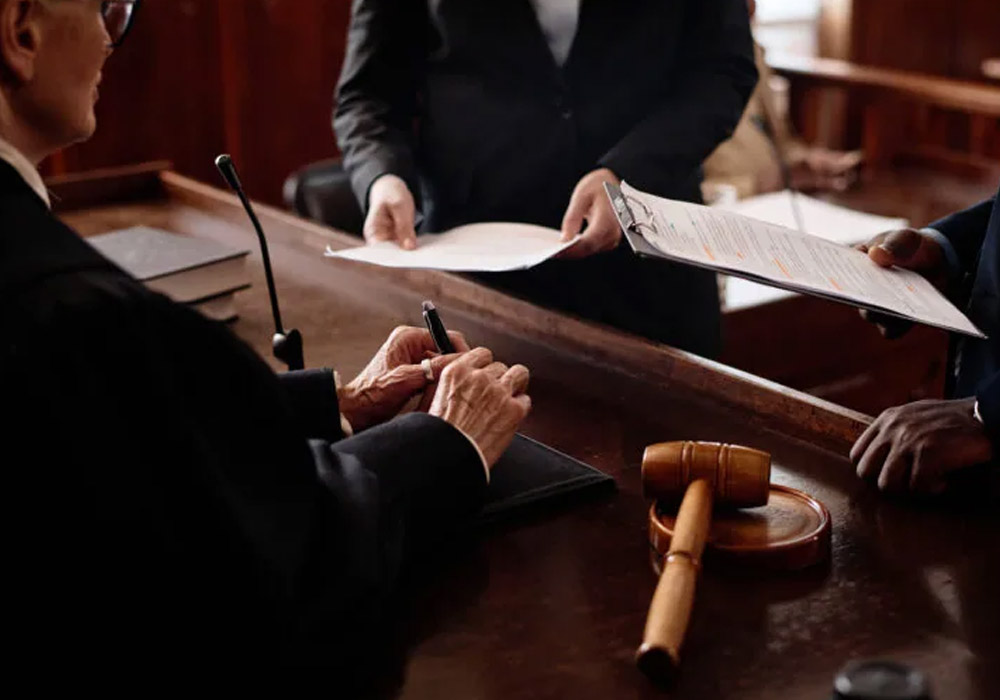
Getting arrested sets off a chain of events that most people never see coming, and neither do the people who love them. There’s a process here – booking, arraignment, bail, release – and each stage has its own rules and its own clock. Knowing what that process looks like, before you’re in the middle of it, changes how you handle it.
The Booking Process: What The First Hours Look Like
The clock starts ticking from the moment of arrest. The arresting officers are going to take the defendant to a detention facility, where booking begins. That means fingerprinting, a photograph (the mugshot), an inventory of personal property, and a check against existing warrants. Any personal items – phone, wallet, keys – are all logged and stored.
Booking is not just a formality. This is exactly the information that is going to be fed into the criminal record. This is exactly what the judge is going to review later. This is when the actual charges are entered formally into the system. In some cases, there’s a brief medical screening.
The absolute constitutional limit on this period – and almost no one knows about this – is the County of Riverside v. McLaughlin case, and it says that a judicial officer has got to make a probable cause determination within 48 hours of your arrest. So, it’s not 48 hours and you’re out, but it is at least 48 hours and you have cleared that threshold.
Stay Quiet And Get A Lawyer: Not Just Standard Advice
As soon as an individual is in custody, their Miranda rights are applicable. The right to remain silent and the right to an attorney should not be things that are “brought up once things start to look bad”. They are immediate, and the way to use them is before talking with the police at all.
Here our natural instincts work against us. Most defendants believe that giving their side of the story will help. It almost never does. Those statements can and will be used in ways that damage even an innocent person’s case. It’s important to let the right to remain silent work for you. It’s a part of your rights; it’s not any kind of admission, and it doesn’t harm your position.
The same applies to requesting an attorney. If you can’t afford one, a public defender will be appointed, and they are an integral part of the process. They can challenge the arrest, argue bail issues, and instruct you when police and prosecutors work in ways that don’t respect your rights. But they can only do that if they are involved from the start.
Arraignment: The First Formal Appearance
An arraignment is the first time a defendant appears before a judge and formally hears the charges against them. It generally occurs within one to two days of their arrest if they are in custody, but the timing can vary greatly depending on when and where they were arrested and the seriousness of the alleged crime.
At the arraignment, defendants are asked to enter a plea – guilty, not guilty, or nolo contendere (no contest). In practice, a plea of not guilty is almost always entered at this stage – it leaves all options on the table as the case develops. What makes the arraignment so important for someone in custody is that bail is determined at this hearing.
The court has three options: the judge can deny bail, which means the defendant stays in jail, the judge can set bail at a specific dollar amount, or the judge can release the defendant on their own recognizance (which is known as ROR) without requiring payment. In some cases, the judge can release the defendant with conditions, regardless of whether it’s with or without a financial bond.
In some serious cases – if the defendant is considered a flight risk or a danger to the community or the charges are especially severe – bail will be denied. An attorney can argue at this hearing for ROR, for reduced bail, or for specific conditions that make staying out of jail more manageable.
How Bail Amounts Get Set
Judges are not just throwing dice to set bail. They consider lots of information, then weigh the risks and make a decision.
Flight risk is determined by how likely the defendant is to skip town. Prior record is a risk factor: how many times have they failed to appear? How easy would it be for this person to just vanish: do they have housing, a job, strong ties to the community, or a passport and some foreign cash in the closet?
The risk analysis, whatever the charge, is balanced against the interests in favor of bail. The first is simple fairness: people should not be held in cages till they are proven guilty. The second is public safety: would this person walking out of court put others at risk of harm? The Eighth Amendment sets the outer boundary here: bail cannot be “excessive” in relation to the purposes it’s meant to serve. That’s a constitutional protection, though courts interpret it with significant discretion.
A skilled defense attorney can present evidence on all of these points. Character references, proof of employment, documentation of community roots, and a clean prior record can move a bail number down substantially – or push a judge toward ROR.
Cash Bail vs. Surety Bonds: What Release Actually Costs
Once bail is set, cash bail is a straightforward concept: Go straight to the court and hand over the full amount. If the defendant doesn’t skip town, that money is returned at the end of the case. The problem, of course, is needing to come up with sometimes tens of thousands of dollars and simply give it to the legal system.
A surety bond is more palatable: A licensed bail bondsman posts the full bail amount with the court in exchange for the defendant’s appearance. In return, the defendant or – far more commonly – their family or friends pay a non-refundable premium, usually about 10% of the total bond amount. So on a $25,000 bond, you’re out $2,500 no matter the outcome of the case.
There may be collateral as well: If the premium isn’t considered as enough of a security measure, the bondsman may require a lien against a car, house, or other physical property. If the defendant bolts, the bondsman is legally entitled to recover those assets.
Choosing a bondsman isn’t just about finding someone who’ll take your call at midnight. Licensing, local experience, and clear communication about what the paperwork obligates you to all matter. An East Indianapolis bail bond resource that walks through licensing requirements and the actual forms step by step can save a family from agreeing to terms they don’t fully understand.
The Co-Signer’s Real Exposure
The co-signer, the indemnitor who signs for the defendant, is likely the least informed person in the entire bail process. Families step in to help and often have no idea the legal exposure they’ve taken on.
If a defendant skips town, the co-signer is on the hook for the entire amount of the bond. Not the 10% premium – the whole bond. If the bail was $30,000, the co-signer owes $30,000. Any collateral pledged can be seized. There’s no partial credit for the time the defendant did comply.
This needs to be spelled out right before anyone signs on the dotted line. The bondsman should say it. The attorney should confirm it. And any family member thinking of co-signing should ask, directly: “What am I on the hook for if this goes south?”
Co-signers also have the legal right to withdraw from the agreement under some circumstances. This will vary from place to place, but it’s worth being aware that you do have that option and understanding when that might be the case.
What Happens If A Court Date Is Missed
Failing to appear in court when expected can lead to severe consequences.
First, a bench warrant is issued for the defendant’s arrest. It happens immediately and automatically. Secondly, bond forfeiture is activated, meaning that the court will appropriate the entire bail amount. The bondsman is informed and usually has a period of time, perhaps 90 to 180 days depending on the location, to locate the defendant and present them before the forfeiture is confirmed.
Sometimes, there’s a short timeframe. If for instance, there was a real emergency – hospitalization, or a proven miscommunication – an attorney may be able to request the bond to be reinstated and the warrant to be rescinded. It’s a long shot, but it can happen.
Ultimately, if a defendant absolutely knows they can’t be in court, the best course is to let the bondsman and attorney know beforehand. It doesn’t solve everything, but it does keep things from going completely off the rails in most cases. Going AWOL results in forfeiture and a warrant.
Conditions Of Release: The Rules Don’t Stop At The Door
Being released on bail doesn’t mean that the pre-trial process is stopped. However, in almost every situation, release comes with conditions, and it’s not treated lightly if they are broken.
What conditions you’re given depend on the charges and the judge’s determination of risk. However, common conditions can be checking in regularly with a pretrial services officer, no travel, giving up a passport, no-contact terms with specific people, attending mandatory drug or alcohol treatment, regular and random testing, or electronic monitoring. House arrest is also an option for some people.
The most important thing for you to know is that all it takes to get locked up again is violating the conditions. You don’t have to get arrested for a new crime. If you’re not supposed to be in contact with the alleged victim, and you send a text, you may be taken back into custody. You are expected to comply, and that’s the expectation you need to live up to.
Why Speed Matters More Than People Think
There’s a practical urgency to getting released quickly that goes beyond the obvious discomfort of being in a cell. More than 70% of people held in local jails are awaiting trial and haven’t been convicted of anything (Prison Policy Initiative). They’re pretrial detainees, not sentenced inmates. Many of them remain jailed simply because they can’t meet the bail amount – not because a judge found them dangerous or a proven flight risk.
Every day spent in pretrial detention carries real costs. Jobs don’t hold indefinitely. Rental agreements lapse. Child custody situations can shift in ways that are difficult to reverse. Relationships deteriorate. These consequences land before a single verdict is reached, and they make it harder to build a stable life regardless of how the case resolves.
Acting quickly – reaching a bondsman fast, getting an attorney into the arraignment, understanding the conditions before signing anything – limits the damage the process itself can do.
The Preliminary Hearing And What Comes Next
Once someone is let out and in compliance with conditions, the case proceeds. This is the stage where prosecutors present to a judge their belief that there is enough evidence to go to trial – a probable cause showing. It’s separate from the arraignment and occurs later in the process.
It’s an important checkpoint. Evidence can be thrown out, charges can sometimes be reduced, and defense gets their first view of what the prosecutor’s case looks like.
The same bail deal is in place. The bondsman’s responsibility – and the co-signer’s – lasts until the case ends, whether that’s in dismissal, plea, or trial.
This is not a quiet phase in a courtroom. It’s a phase with work, and the work has repercussions.