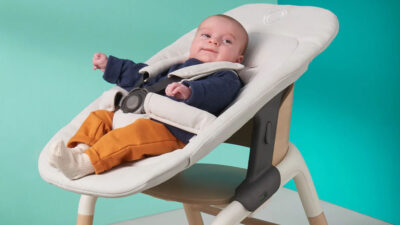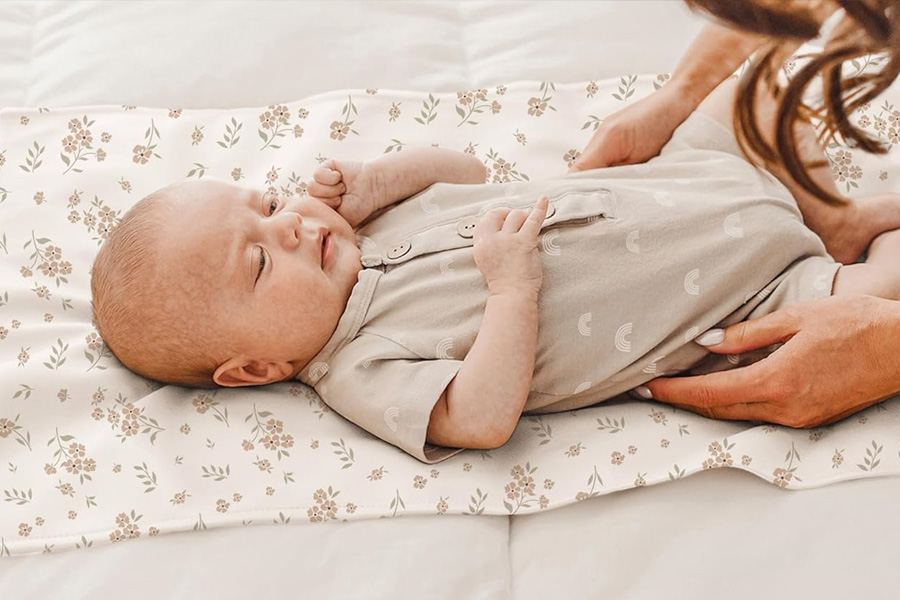
A changing mat is where you’ll spend a surprising chunk of your day for the first year. Ten to twelve nappy changes a day isn’t rare in the newborn stage. That adds up to thousands of changes before your baby even walks. Falls from changing surfaces send babies to hospital more often than most parents realise, and the mat you pick plays a real part in preventing that. For children under one, falls account for over half of emergency department admissions in that age group. A soft changing mat with the right shape and grip does more than cushion a squirmy baby, it actually helps keep them where they should be.
Why A Concave Shape Beats A Flat One
A flat mat lets a baby roll straight off the edge the moment they gain enough strength to push with their legs. A concave mat, one that dips slightly in the middle, keeps a baby centred without you doing all the work yourself. It won’t stop every wriggle. Nothing does. But it buys you a second or two of extra safety margin, and that second matters.
I wouldn’t buy a completely flat mat again if I were starting over. The difference sounds small until you’re one hand short reaching for a wipe.
The Foam Underneath Matters As Much As The Cover
Cheap mats use thin foam that flattens within months and stops cushioning anything. Look for foam with real thickness, something that springs back after you press it with your palm. A mat that’s gone flat doesn’t just feel uncomfortable for your baby, it also loses its grip on whatever surface it’s sitting on.
The cover matters too, obviously. Wipeable vinyl or PU leather beats fabric for actual daily cleaning. Fabric holds smells and stains no matter how often you wash it.
One Hand On The Baby, Always
Around 2.3 million infants were treated in emergency departments for unintentional falls between 2000 and 2018 in the United States alone, and changing surfaces are a repeat offender in those numbers. No mat, however well designed, replaces keeping a hand on your baby at all times. That’s not the mat’s job to fix.
Straps help, but a lot of parents skip using them because they seem unnecessary for a newborn who can barely lift their head. Fair enough for the first few weeks. Not fair enough once rolling starts, which happens faster than most people expect.
Portable Mats Versus Fixed Changing Stations
A portable mat travels with you, folds down small, and works on a bed, the floor, or a car boot in a pinch. A fixed station stays put and usually offers a wider surface with raised edges built in. I’d get both if budget allows. Use the fixed one at home and the portable one for everywhere else.
Raised edges on either type aren’t a gimmick. They’re a physical barrier between your baby and the drop, even if that barrier is only a few centimetres tall.
What To Check Before You Buy
Press the foam. Check the cover seams for loose stitching. Look at the edge height and whether it slopes up or stays flat. Ask whether the cover comes off for a proper wash, because spot cleaning only gets you so far after a particularly messy change. A mat that ticks these boxes will earn its keep for the full stretch until your child is out of nappies.
Size matters more than people admit too. A mat that’s too small forces you to hold a baby’s legs in place the entire time, which frees up fewer hands than you actually have. Go slightly bigger than you think you need.