Most plumbing disasters start as whispers. A faint musty smell under the sink. A water bill that crept up $30 last month and another $25 this month. A soft spot on the bathroom floor that you’ve been stepping around for two weeks. On the mainland, those whispers might stay quiet for years. On Maui, the island’s climate turns them into shouts — fast.
Maui’s environment puts a specific kind of pressure on home plumbing that most homeowners aren’t prepared for. Salt air corrodes metal fixtures from the outside while hard mineral-rich water attacks pipes from within. High humidity keeps moisture trapped in wall cavities, accelerating mold growth long before a leak becomes visible. And the volcanic soil in many upcountry areas shifts with every heavy rain, stressing underground lines in ways that would never happen on flat, stable ground.
Catching a problem early is the difference between a $150 repair and a $15,000 restoration project. Here’s what to watch for.
The Salt-Humidity-Soil Triangle: Why Maui Is Especially Hard on Pipes
Before you can spot warning signs, it helps to understand why they happen more often here than almost anywhere else in the country. Think of it as three compounding stressors working at the same time.
Salt air oxidizes copper fittings, stainless faucet hardware, and exposed metal supply lines. You’ll see it as greenish-blue crust around joints or white chalky buildup near the shutoff valves under your sink. That corrosion is cosmetic at first. Let it go long enough and the joint fails.
High humidity means that even a very slow seep behind drywall never fully dries between events. On the mainland, a small drip might dry out on its own during a dry stretch and give you months of grace. In Wailuku or Haiku, it stays damp, mold takes hold within days, and by the time you smell anything the remediation scope is already bigger than the original plumbing repair.
Volcanic and clay soils shift with rainfall. In upcountry areas especially, underground supply lines and sewer pipes are subjected to ground movement that causes joints to separate gradually. You won’t see it happening. You’ll see the result — a persistently soggy patch of yard, or a water meter that keeps spinning after every fixture in the house is off.
These three forces don’t take turns. They all work on your plumbing system at once, every single day.
Warning Signs Inside the House
The most reliable early indicator is your water meter. Shut off every faucet, appliance, and irrigation valve in the house, then check the meter. If the dial or digital indicator is still moving, water is going somewhere it shouldn’t. That test takes about five minutes and costs nothing.
Past the meter test, look for these specific signals:
- Water bill spikes without explanation. The average household’s leaks can account for more than 9,300 gallons of water wasted every year, according to the U.S. EPA’s WaterSense program, and nine percent of homes have leaks that waste 50 gallons or more per day. A $40 monthly bill increase is a reasonable sign you’re in that category.
- Low water pressure in a single fixture. If one faucet runs weak while the rest of the house is fine, you likely have a localized blockage or a pinhole leak on that supply line.
- Discolored water at startup. Brown or rust-tinted water when you first turn on a faucet points to corrosion inside the pipes. It usually clears after a few seconds, which is why homeowners ignore it. Don’t.
- Ceilings or walls with soft spots, bubbling paint, or visible staining. Any discoloration shaped like a water ring is active or recent moisture. Painting over it is not a fix.
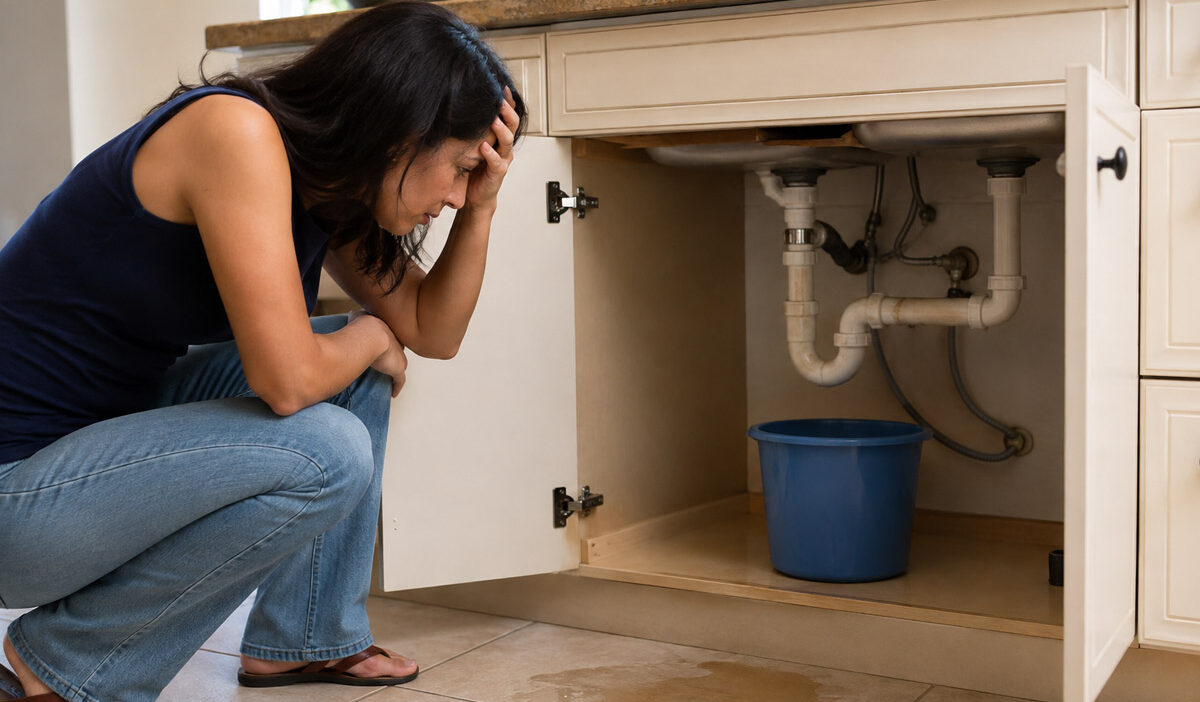
- A persistent musty or sewage odor. Musty smells in cabinets under sinks almost always mean slow seepage. A sewage smell that appears and disappears usually means a dry or cracked p-trap, or a sewer line problem developing underground.
Warning Signs Outside the House
Your yard tells a story too. A section of lawn that stays green and lush when the surrounding area is drying out is suspect, especially if you haven’t run irrigation there recently. That’s the classic sign of an underground supply line leak feeding the soil continuously.
Check the ground around your home’s foundation after a dry week. If the soil stays damp or you can feel moisture when you press your hand into it near the house perimeter, you may have a slab leak. Slab leaks in Hawaii are common because many homes here were built on concrete slabs, and the combination of hard water minerals and soil movement causes pipes embedded in or under the slab to fail over time.
Look at any exposed outdoor fittings, hose bibs, and irrigation connections for the blue-green oxidation that signals salt-air corrosion. A faucet that leaks when you disconnect a hose is already compromised at the seat and will fail completely soon.
What Ignoring It Actually Costs
Here’s a scenario that plays out regularly on Maui. A homeowner in an older upcountry home notices the wood floor near the kitchen island feels slightly springy. They assume it’s just the age of the house and leave it for three months. When a plumber finally opens the wall, there’s a pinhole leak in a copper supply line that has been seeping behind the drywall since before the floor ever changed texture. By that point, the repair involves not just fixing the pipe but tearing out drywall, replacing insulation, mold remediation, and refinishing the floor. A $200 pipe repair turns into a project that runs past $8,000.
The average private homeowners insurance claim for water damage is $13,954, according to iPropertyManagement’s analysis of insurance industry data. Water damage and freezing is the second-most common type of home insurance claim in the country, which tells you the upcountry scenario above isn’t unusual. It’s standard. And that’s before you factor in that insurers typically exclude gradual leaks caused by deferred maintenance, meaning slow hidden leaks are often not covered at all.
The math is blunt. Catching a leak when it starts costs you a service visit. Catching it six months later costs you six figures’ worth of headaches and thousands out of pocket even with insurance.
A Practical Checklist for Maui Homeowners
Run through this list at least once every six months, and any time you notice something that feels off:
- Do the meter test with all fixtures off. Check after 30 minutes if you want to catch a very slow leak.
- Pull everything out from under your kitchen and bathroom sinks and look at the supply lines, shutoff valves, and the drain connection with a flashlight. Look for corrosion, moisture rings, or mineral deposits.
- Check your water heater for rust-colored drips, sediment buildup at the base, or the smell of sulfur near the unit. Hawaii’s hard water accelerates mineral buildup inside tanks significantly faster than national averages suggest.
- Walk your property perimeter and look for unexplained wet spots or unusually green patches after a dry period.
- Flush every toilet and watch the bowl for 10 minutes after the tank refills. A running toilet is one of the most water-wasting and easiest-to-miss household leaks.
- Look at exposed outdoor fittings for the blue-green salt corrosion described above.
If any of these checks turn up something you can’t identify on your own, the right call is to bring in someone who knows Maui’s specific conditions. The maui plumbers at All Aloha Plumbing serve the full island and offer leak detection as a standalone service, so you don’t have to wait until a problem becomes a crisis to make the call.
The Moment to Act Is Earlier Than You Think
Nobody wants to spend money on a plumbing call when nothing is visibly wrong. But Maui’s environment means visible is almost always late. The salt, the humidity, and the soil are working on your pipes right now. Your job is to pay attention to the quiet signals they leave behind, because the longer those signals sit unanswered, the louder and more expensive the conversation gets.
Check your water meter this week. It’s the easiest thing you can do today, and it’s the one check most homeowners never bother with until they’re already staring at a damaged wall.