Outdoor lighting can have a noticeable effect on how a home looks and functions after sunset, points out the Upper Management Realty team. A dark driveway can make it difficult to judge its edges, an unlit walkway may be uncomfortable for visitors, and a front yard that looks welcoming during the day can disappear almost completely at night.
Wall lights around the entrance solve part of the problem, but they cannot always provide useful illumination farther away from the house. This is where freestanding outdoor lighting can become particularly helpful.
A well-positioned light post can identify an entrance, define a driveway, illuminate a garden path, or provide a visual connection between the street and the front door. The key is choosing the right height, style, placement, and amount of light rather than simply installing the brightest fixture available.
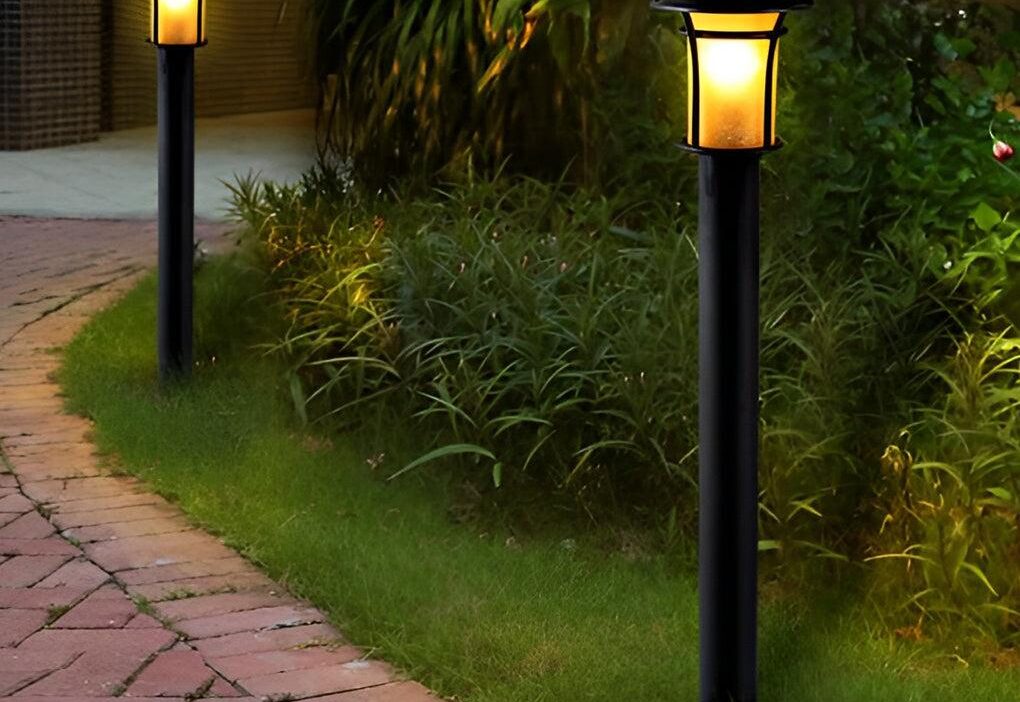
A carefully positioned light post can help define an entrance and guide movement between the driveway, walkway and front door.
Start With the Areas Beyond the Porch
Most homes already have some lighting near the front door. The bigger question is what happens between that illuminated entrance and the street or driveway.
Walk through the property after dark and look for places where existing wall lights no longer provide useful visibility. Common examples include the end of a long driveway, a walkway that curves through landscaping, a gate positioned away from the house, or a section of yard where guests have difficulty understanding which direction to take.
These are the locations where freestanding lighting can be most useful.
The objective is not necessarily to illuminate the entire distance continuously. A few visual reference points may be enough to make the route easier to understand.
Use a Light Post to Mark the Driveway Entrance
Driveway entrances can become difficult to identify at night, particularly on streets where neighboring properties have similar landscaping or where the driveway sits some distance from the front door.
A light post near the entrance creates a vertical reference point that remains visible from the road. It can also help define where the driveway begins without requiring an excessively bright floodlight.
Placement should be considered carefully. The fixture needs to be visible without interfering with vehicles, pedestrian movement, landscaping maintenance, or sightlines when entering the street.
If the driveway is particularly wide, a balanced pair of fixtures may suit the architecture. Smaller residential driveways may only need one well-positioned post.
Choose a Height That Fits the Property
Outdoor post lighting is available in many proportions, and height has a major influence on both appearance and light distribution.
A short fixture may work well beside a garden path but look undersized at the entrance to a large property. A very tall post can have the opposite problem, dominating a compact front yard and sending more light into surrounding areas than necessary.
Before choosing a post lights, compare its complete dimensions with nearby architectural features such as gates, fences, porch columns, garage doors, and mature landscaping.
The fixture should feel like part of the overall property rather than an isolated object placed in the lawn.
Coordinate the Style With the House
Because post lights are clearly visible during daylight hours, their design matters even when they are switched off.
Traditional lantern-style fixtures can complement homes with classic porches, brick, decorative columns, or more traditional architectural detailing. Simpler geometric designs often work well with modern homes, stucco exteriors, dark-framed windows, and contemporary landscaping.
The fixture does not have to match the porch lights exactly. Repeating a finish, material, or general shape may be enough to create visual continuity.
Black and dark metal finishes are particularly versatile because they can relate naturally to gates, door hardware, window frames, and other exterior details.
Think About the Light Pattern, Not Just the Fixture
The appearance of a post light during the day is only half of the decision. Homeowners should also consider what happens when it turns on.
Some fixtures distribute light broadly in several directions. Others use shades or internal structures to direct more illumination toward the ground.
For driveways and walkways, controlled light is often more comfortable because it helps reveal the surface without creating excessive glare at eye level.
A very bright exposed source can actually make surrounding areas feel darker because the eye must constantly adjust between strong light and shadow.
When possible, evaluate how the fixture distributes light rather than selecting it only according to wattage or lumen output.
Use Posts to Support Walkway Lighting
A post light does not need to handle an entire walkway on its own.
For longer paths, it can work as one part of a layered system. A taller fixture might identify the beginning of the route, while lower path lights provide guidance closer to the ground.
This variation in height can create a more visually interesting landscape than repeating the same fixture from the street all the way to the front door.
It also allows each type of light to perform the job it handles best: the post provides a distant visual marker, while smaller fixtures reveal the walking surface.
Do Not Overlight the Front Yard
More outdoor lighting does not automatically make a home safer or more attractive.
If the driveway, path, lawn, trees, walls, and entrance are all equally bright, the property can lose depth. Excessive illumination may also create glare for drivers, neighbors, or people looking through nearby windows.
Allow some darker areas to remain between the illuminated features. This creates contrast and helps the important destinations, such as the driveway entrance and front door, stand out more clearly.
After installing a fixture, view it from across the street as well as from inside the home. These viewpoints can reveal brightness or glare problems that are difficult to notice while standing directly beside the light.
Consider Coastal and Outdoor Conditions
Outdoor fixtures need to tolerate a much more demanding environment than indoor lighting. Rain, humidity, irrigation, strong sunlight, temperature changes, and airborne contaminants can all affect materials and finishes over time.
Homes in coastal environments should pay particular attention to the suitability of exterior materials and finishes because humid and salt-influenced air can be harder on exposed metal components.
Always check that a fixture is intended for outdoor installation and suitable for its specific location.
When comparing options from lighting suppliers such as Dazuma Lighting, consider practical information such as material, dimensions, weather rating, installation method, power source, and light output alongside the appearance of the design.
Keep Landscaping and Maintenance in Mind
Outdoor lighting shares space with plants, lawns, irrigation equipment, and regular yard maintenance.
A fixture installed too close to a fast-growing shrub may eventually become hidden. Lawn equipment can also create problems if posts, cables, or mounting bases are positioned in awkward locations.
Think several years ahead when selecting the installation point. Leave enough space for plants to mature and make sure the fixture remains accessible for cleaning, inspection, and maintenance.
If the light is installed near irrigation, consider how frequently it will be exposed to water.
Consider Automatic Controls
Outdoor lighting is often more convenient when homeowners do not need to operate it manually every evening.
Timers, photocells, compatible smart controls, or other automatic systems can allow lights to operate around sunset and turn off later when they are no longer needed.
Different areas of the property can also follow different schedules. A fixture near the main entrance may remain on longer than decorative landscape lighting.
This approach allows outdoor illumination to support actual use rather than leaving every fixture running through the entire night.
Final Thoughts
Light posts can do much more than decorate the end of a driveway. Used thoughtfully, they can help identify an entrance, guide visitors toward the house, improve visibility along larger outdoor routes, and add another architectural element to the landscape.
The best results come from considering the complete property. Choose a fixture that fits the scale and style of the home, control glare, leave enough darkness for contrast, and position the light around the routes people genuinely use after sunset.
A well-planned outdoor lighting system does not need to make the entire front yard bright. Sometimes one carefully placed post is enough to make the journey from the street to the front door feel clearer, safer, and more welcoming.