By a storm door industry contributor.
That subtle draft you feel near your front door is more than an annoyance. It’s a constant reminder of energy loss, especially during a cold snap or a summer heatwave. Many homeowners assume their main entry door is the only line of defense, but an improperly sealed entryway can also expose that expensive primary door to harsh sun, moisture, and wind, causing it to warp, fade, or fail prematurely.
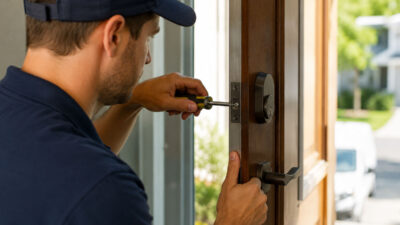
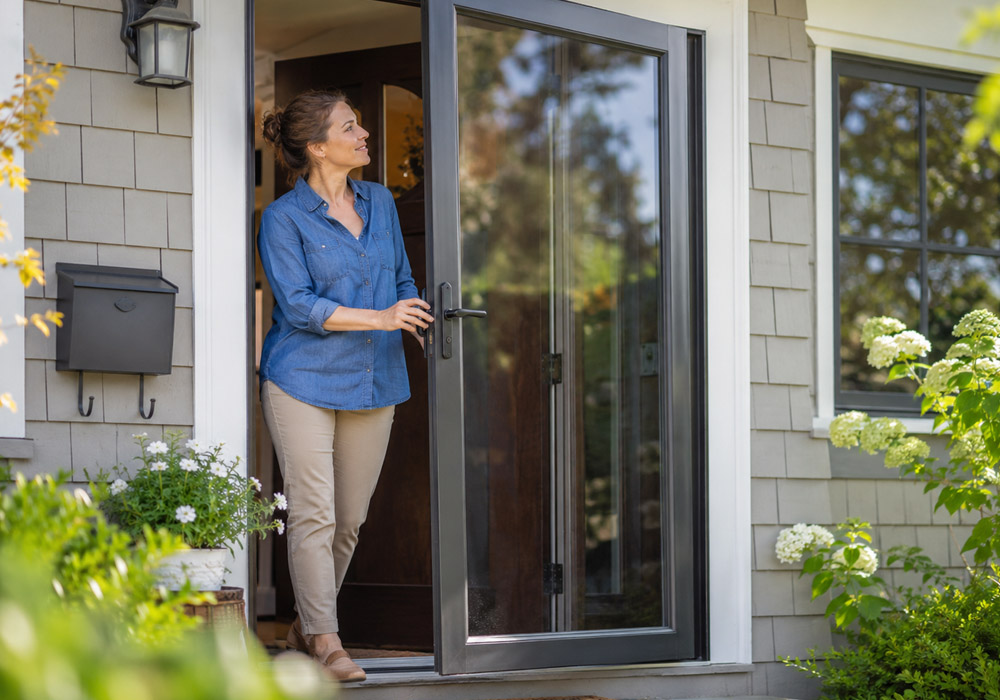
A modern storm door is no longer just a flimsy screen for ventilation. It has evolved into a key component of your home’s thermal envelope, the barrier that separates conditioned indoor air from the outside world. The difference between a door that leaks air and one that seals properly often comes down to the installation. Finding professional storm doors near me services is the first step toward ensuring the frame is perfectly plumb and square, creating an airtight seal that actually delivers on its energy-saving promise.
The federal government even recognizes this role in home efficiency. According to the Internal Revenue Service, homeowners may be eligible for the Energy Efficient Home Improvement Credit, which can cover 30% of the cost for qualified upgrades. While the total annual credit has a higher limit, the specific cap for an exterior door is $250, providing a direct financial incentive to choose a model that improves your home’s performance.
Quick answer: A high-performance storm door is defined by its materials, glass technology, and most importantly, the quality of its installation. It creates an insulating air pocket, protects your main door, and can significantly reduce drafts and energy transfer when properly fitted and sealed.
What’s inside
- How Does a Storm Door Actually Save You Money?
- What Should I Look for in a High-Performance Storm Door?
- How Does Colorado’s Climate Affect Storm Door Performance?
- Frequently Asked Questions
- The Right Question to Ask About Your Entryway
How Does a Storm Door Actually Save You Money?
It saves you money in three ways: by reducing daily energy loss, by protecting your expensive primary door from damage, and by qualifying for potential tax credits. A high-performance door creates an insulating air barrier between your home and the outdoors. This pocket of trapped air dramatically slows the transfer of heat, easing the load on your furnace in the winter and your air conditioner in the summer. This translates directly into lower utility bills month after month.
The second, often overlooked, financial benefit is asset protection. Your main entry door is a significant investment. Direct exposure to sun, wind, and moisture causes paint to fade, wood to warp, and seals to fail. A quality storm door acts as a shield, absorbing the brunt of the weather. This can add years to the life of your primary door, delaying a costly replacement. It is the difference between refinishing your main door every few years versus once a decade.
Finally, the federal government provides a direct financial incentive for making this energy-conscious upgrade. According to the Internal Revenue Service, the Energy Efficient Home Improvement Credit can cover 30% of the cost for certain qualified home improvements. While the overall annual limit for these projects is $1,200, the specific cap for an eligible exterior door is $250. This credit directly reduces the initial cost of a door that meets modern energy standards.
❝ When evaluating a door’s construction, ask the installer about the corners of the frame. Are they held together with simple screws, or are they reinforced with internal, heavy-duty gussets or keys? This small detail is a major indicator of a door’s ability to resist sagging and remain square over decades of use, ensuring its seal remains effective.
What Should I Look for in a High-Performance Storm Door?
You should evaluate three core components: the frame material and construction, the glass package, and the quality of the hardware and weatherstripping. A door can look great on a showroom floor, but its long-term performance is determined by these less obvious details. The goal is to find a door that will remain square, seal tightly, and operate smoothly for years, not just a single season.
Frame material is the first major decision. Each option has distinct trade-offs in terms of strength, maintenance, and insulating properties.
| Material | Key Advantage | Primary Consideration |
| Extruded Aluminum | Maximum strength and rigidity; resists sagging over time. | Typically a higher initial cost; can feel cold to the touch. |
| Vinyl | Low maintenance and resistant to dents and scratches. | Can be less rigid than aluminum; may require internal reinforcement. |
| Wood Core | Solid feel and good insulation; often clad in aluminum or vinyl. | The core can be vulnerable to moisture if the cladding is breached. |
Next, examine the glass. A simple pane of tempered glass provides a basic weather barrier, but modern doors use advanced glazing. Look for Low-E (low-emissivity) glass, which has a microscopic, transparent metallic coating. This coating reflects infrared heat, helping to keep your home warmer in the winter and cooler in the summer. To meet federal efficiency standards, such as those outlined by the ENERGY STAR program, doors often require specific glass coatings and frame construction that limit heat transfer.
Finally, inspect the hardware and seals. The closer, the pneumatic arm that controls the door’s swing, is a critical component. A cheap, single closer may not be strong enough to prevent the wind from catching and damaging the door. Ask an installer if they recommend dual closers for doors on elevations that face prevailing winds. Also, check the weatherstripping. Is it a simple foam strip or a more durable system like a fin seal or magnetic strip? A better seal not only stops drafts but also prevents the door from rattling in its frame on a windy day.
How Does Colorado’s Climate Affect Storm Door Performance?
Colorado’s combination of high altitude, intense sun, and dramatic temperature swings puts unique stress on storm doors, making material durability and installation precision far more critical than in other regions. A door that works perfectly well in a milder, lower-elevation climate can fail quickly here. The environmental forces at play are not just seasonal; they are a daily reality that tests a door’s construction from the moment it is installed.
The mile-high altitude means the atmosphere is thinner, offering less protection from the sun’s ultraviolet (UV) radiation. This intense, year-round sun exposure relentlessly attacks exterior surfaces. Standard paint can fade and chalk within just a few years, and lower-quality vinyl can become brittle and crack under the constant UV bombardment. For this reason, materials with robust, factory-applied finishes like powder-coated or anodized aluminum often provide superior longevity, resisting the color degradation and material breakdown that plagues lesser doors.
The Front Range is also known for its significant diurnal temperature swings, where a 40-degree difference between the daily high and nightly low is common. This constant cycle of heating and cooling causes all building materials to expand and contract. A storm door that is not installed with tight tolerances and a rigid frame can begin to bind in the summer heat or show drafts and gaps in the winter cold. Over time, this movement can compromise the weatherstripping and weaken the frame’s corners, destroying the airtight seal the door was meant to create.
❝ Ask any potential installer how they account for material expansion in their fitting process. A craftsperson familiar with the local climate will understand the need for precise tolerances, enough room for the door to expand without binding, but not so much that it creates drafts when it contracts. This is a detail that separates a lasting installation from one that needs constant adjustment.
Finally, there’s the wind. Downslope winds coming off the Rockies can be powerful and unpredictable. A standard storm door with a single, lightweight pneumatic closer is a frequent point of failure. A strong gust can catch the door as you open it, hyper-extending the closer, tearing it from its bracket, and potentially bending the door frame itself. This is not a rare accident; it’s a predictable outcome for under-specified hardware in this environment. Many local installers recommend dual closers, one at the top and one at the bottom, to provide the necessary resistance against these powerful winds.
Frequently Asked Questions
What is the average cost to replace a storm door? The total cost can vary significantly, from a few hundred dollars for a basic model you install yourself to well over a thousand for a custom, high-performance door with professional installation. Key price drivers include the frame material, the glass package (such as Low-E coated glass), hardware choices, and any custom sizing required. The installation labor is a critical component of the cost, as a precise fit determines the door’s actual energy efficiency.
Can a handyman install a storm door? While a general handyman can mount a pre-hung storm door, achieving a truly airtight and perfectly functional fit often requires specialized expertise. A dedicated door installer is equipped to handle non-square openings, properly shim the frame to be plumb and level, and ensure the weatherstripping creates a complete seal. This precision prevents drafts, binding, and premature wear on the hardware.
What is the difference between installation from a big-box store versus a door specialist? A dedicated door specialist typically offers a wider selection of high-performance and custom-fit models not available in retail stores. They are directly accountable for the measurement, ordering, and installation, creating a single point of contact if any issues arise. Installation services from larger retailers may use subcontractors, and their experience can vary, while their product selection is often limited to standard sizes.
Should I buy the door myself and then hire someone to install it? It is generally recommended to work with a company that provides both the door and the installation. This creates a single point of accountability for the entire project. If an issue occurs, there is no ambiguity about whether it is a product defect or an installation error, which simplifies any warranty claims or necessary adjustments.
Do retractable screens last as long as traditional interchangeable screens? High-quality retractable screens are designed for durability, but their lifespan depends heavily on proper use. The mechanism can wear out if the screen is allowed to slam back into its housing repeatedly. For entryways with very high traffic, children, or large pets, a traditional, sturdy fixed screen may be a more robust long-term choice against physical impacts.
The Right Question to Ask About Your Entryway
Choosing a storm door is no longer a simple decision about screen versus glass. Today, it is an investment in a high-performance building component. The most significant shift in thinking is to move beyond the door itself and evaluate the entire system: the frame’s construction, the glass’s thermal properties, the hardware’s durability, and the precision of the installation. A weakness in any one of these areas can undermine the performance of the others, turning a potential energy-saver into a source of drafts and frustration.
The true value is not found in the initial price tag but in the door’s ability to withstand your specific local conditions year after year. A door that resists warping under intense sun, holds its seal through drastic temperature changes, and stands up to powerful winds delivers a return that far outweighs a lower upfront cost. The most critical question is not simply “which door should I buy?” but “which complete door system is engineered and installed to solve the specific environmental challenges my home faces?” Answering that will lead to a more durable and valuable addition to your home.
About the author
This article is contributed by the team at Denver Storm Door, a Colorado-owned company specializing in the professional installation of storm, security, and French doors. Focusing exclusively on these exterior systems, their approach is tailored to the unique environmental stresses of the Front Range, including high-altitude UV exposure and significant temperature swings. The company serves homeowners throughout the Denver metro area and surrounding communities, emphasizing durable materials and precision fitting for long-term performance and energy efficiency.