By a landscape design industry contributor.
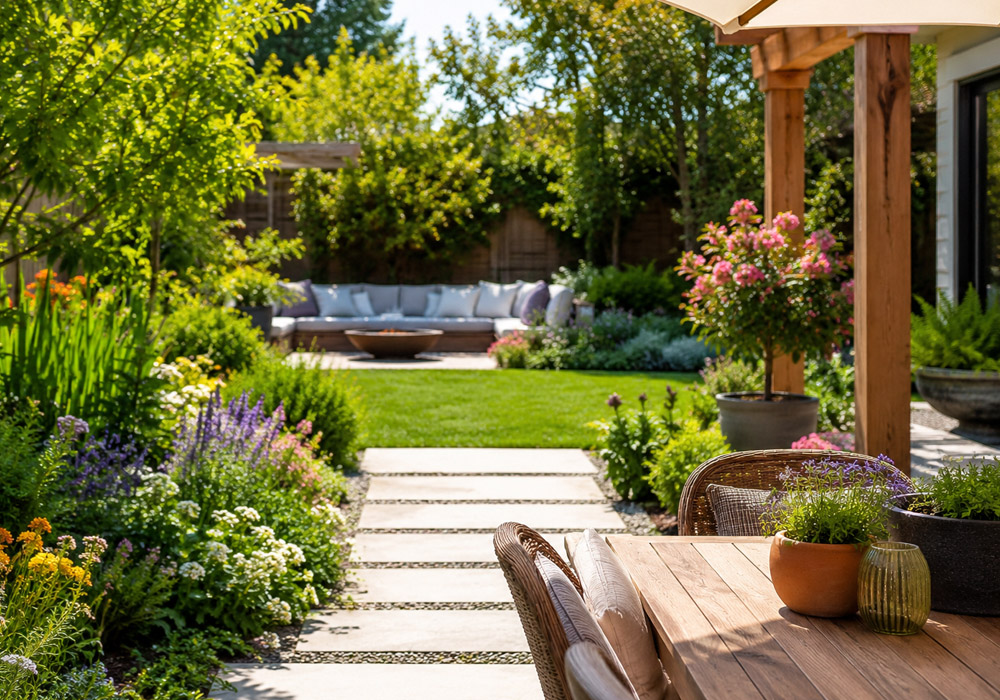
You have the vision: an outdoor kitchen for summer evenings, a stone patio for entertaining, and lush garden beds. But a year after the work is done, the patio has a crack, the plants are struggling, and your water bill is a constant surprise. This gap between the dream and the reality is where many backyard projects falter. The issue often isn’t a lack of ideas, but a lack of a cohesive system that connects those ideas to the realities of your site, your budget, and your climate.
The stakes are higher than just aesthetics. According to the U.S. Environmental Protection Agency, about 30 percent of the average American family’s water is used outdoors. A poorly planned space can waste thousands of gallons and drive up utility costs. A successful project starts long before the first shovel hits the ground. It requires a thoughtful approach to landscaping backyard spaces that treats the entire area as one integrated system, from drainage and irrigation to sun exposure and foot traffic.
Quick answer: A lasting and functional backyard is the result of a structured design and construction process. It prioritizes a master plan that balances your desires with the practical constraints of your property, focusing on proper site preparation, material selection, and long-term maintenance needs.
What’s inside
- What is the difference between landscape design and construction?
- How do I create a realistic budget for a backyard project?
- Which hardscape materials are worth the long-term investment?
- What are the hidden maintenance costs to plan for?
- How can I design a more water-efficient landscape?
- Frequently asked questions
- Your Backyard Is a System, Not Just a Picture
What is the difference between landscape design and construction?
Design is the master plan that solves problems on paper, while construction is the physical work of bringing that plan to life.
Think of landscape design as the architectural blueprint for your backyard. This phase is not just about choosing pretty plants or patio pavers. It is a technical process that analyzes your property’s unique conditions: sun exposure, soil type, water drainage, and existing structures. A designer maps out how people will move through the space, where water will go when it rains, and which materials can withstand your local climate. This is where costly mistakes are prevented before a single stone is laid.
Construction, or landscape installation, is the execution of that blueprint. This phase involves all the physical labor: grading the land, building retaining walls, installing irrigation lines, laying patios, and planting trees and shrubs. When construction crews work from a detailed design, their efforts are efficient and coordinated. Without one, the project can become a series of disconnected tasks, leading to rework, budget overruns, and a final product that doesn’t function as a cohesive whole.
The separation is critical for managing resources, especially water. Residential outdoor use accounts for nearly 8 billion gallons of water each day in the United States, according to the U.S. Environmental Protection Agency. A robust design phase directly tackles this by specifying water-wise plants, grouping them by irrigation needs (a practice called hydrozoning), and planning for efficient watering systems. This forethought turns a potential resource drain into a sustainable asset.
❝ A useful rule of thumb is to budget 10 to 15 percent of your total project cost for the design phase. Investing in a solid plan is the best way to protect the much larger investment required for construction. It ensures the final build is functional, durable, and tailored to your property.
How do I create a realistic budget for a backyard project?
A realistic budget allocates 40 to 60 percent of the total cost to labor and preparation, not just the visible materials.
Many homeowners start by pricing out the “finish” materials like pavers, plants, or a pergola. This often leads to under-budgeting because the bulk of the cost is in the foundational work. This includes demolition, excavation, grading for proper drainage, soil amendment, and installing irrigation and lighting infrastructure. These less glamorous steps are non-negotiable for a project that will last.
A good way to structure your thinking is to break the budget into three main categories:
- Hardscaping (40-50%): This is typically the largest part of the budget. It covers patios, retaining walls, walkways, decks, and outdoor kitchen structures. The cost is driven by the square footage and the material choice.
- Softscaping (20-30%): This includes all the living elements. Think soil, mulch, trees, shrubs, and perennial plants. Larger, more mature plants will significantly increase this portion of the budget.
- Systems & Features (20-30%): This category covers irrigation systems, low-voltage lighting, water features, fire pits, and pergolas. The complexity of these systems dictates the cost.
Remember to also set aside a contingency fund of 10 to 15 percent of your total budget. This covers unforeseen issues, like discovering poor soil that needs extensive amendment or hitting unexpected underground lines. A contingency fund prevents a small surprise from derailing the entire project.
Which hardscape materials are worth the long-term investment?
The best investment balances initial cost with long-term durability, repairability, and suitability for your climate.
The visual appeal of a stone patio or a sleek concrete path is important, but the material’s performance over decades is what determines its true value. Consider the three most common options not just by their price tag, but by how they behave over time. Poured concrete is often the most affordable upfront, but it is prone to cracking. Repairing a crack without a visible patch is nearly impossible. Interlocking pavers cost more initially but offer excellent long-term value because individual units can be replaced if they sink, crack, or get stained. Natural stone is a premium choice known for its durability and unique look.
Here is how they compare on key factors:
| Feature | Poured Concrete | Interlocking Pavers | Natural Stone |
| Initial Cost | Low | Medium to High | High |
| Lifespan | 15-25 years | 25-50+ years | 50-100+ years |
| Repairability | Low (patches show) | High (individual units) | High (individual units) |
| Permeability | Very Low | Varies (can be permeable) | Low |
The key to longevity for any paver or stone patio is not the surface material, but the unseen base beneath it. A patio failure is almost always a base failure. A proper installation involves excavating several inches of soil and building up a layered foundation of compacted aggregate. This base provides drainage and a stable platform that resists soil movement from moisture and freeze-thaw cycles.
❝ The most common point of failure for a patio is an improperly prepared base. A contractor skimping on base depth or compaction saves a little money upfront but guarantees a wavy, uneven surface within a few years. The surface material gets the attention, but the base does all the real work.
Industry bodies like the Concrete Masonry & Hardscapes Association publish technical guidelines for base construction to prevent heaving and settling. When evaluating a contractor, ask if they follow these types of published best practices. A vague answer is a significant red flag. This single question tells you more about their commitment to quality than any photo gallery.
What are the hidden maintenance costs to plan for?
Plan for annual costs related to irrigation, mulch, and sealing, which are often overlooked in the initial project budget.
A new landscape is not a one-time expense. To protect your investment, you need to account for ongoing care. The most significant hidden cost can be water, especially with an inefficient irrigation system. Beyond your water bill, the system itself requires maintenance. This includes winterization in cold climates (blowing out the lines to prevent freezing) and a spring start-up to check for leaks, adjust heads, and reprogram the controller.
Other recurring tasks add up:
- Mulching: Garden beds need a fresh layer of mulch every one to two years to retain soil moisture, suppress weeds, and regulate soil temperature.
- Sealing: Paver and stone patios benefit from being cleaned and sealed every three to five years. This protects them from stains, prevents weed growth in the joints, and can enhance their color.
- Plant Care: Perennials may need to be divided every few years, and trees and shrubs require periodic pruning to maintain their health and shape.
These tasks can be done by a homeowner, but they take time and sometimes specialized equipment. Alternatively, you can hire a maintenance service. Factoring in a few hundred to a few thousand dollars per year for professional maintenance is a realistic way to protect the value and appearance of your new backyard.
How can I design a more water-efficient landscape?
A water-efficient landscape uses smart plant selection, precise irrigation, and healthy soil to deliver exactly what plants need, and no more.
The process starts with grouping plants according to their water requirements, a practice known as hydrozoning. This prevents the common mistake of placing a thirsty plant next to a succulent, which forces you to overwater one to keep the other alive. This strategic grouping is the foundation of xeriscaping, a design philosophy focused on water conservation. It can be used to create lush, vibrant gardens, not just landscapes of rock and cactus.
Next, consider the irrigation technology itself. Traditional pop-up spray heads can lose a large percentage of water to wind and evaporation before it ever reaches the soil. Drip irrigation is a far more efficient alternative for garden beds. It uses a network of tubes with small emitters that release water slowly and directly at the base of each plant. This targets the root zone where water is actually absorbed. For lawn areas where spray is necessary, modern high-efficiency rotator nozzles create heavier water droplets that are more resistant to wind, significantly reducing waste.
❝ The biggest lever for water savings is often changing how you water, not just what you plant. Watering deeply and infrequently encourages plants to develop deeper, more resilient root systems. A shallow, daily watering schedule promotes weak roots that are more vulnerable to heat and drought.
Finally, treat your soil as a water reservoir. In many regions, heavy clay or compacted soil causes water to run off instead of soaking in. The solution is soil amendment. Working several inches of high-quality compost into the existing soil creates a more porous structure. This improved soil acts like a sponge, holding moisture and making it available to plant roots long after the irrigation system has turned off.
Modern irrigation systems can take this a step further. “Smart” controllers connect to local weather stations. They use data like temperature and humidity to calculate evapotranspiration (ET), which is the amount of water plants lose to the atmosphere each day. The system then automatically adjusts watering schedules to replace only the water that was lost, eliminating guesswork.
Frequently asked questions
How long does a typical backyard landscape project take? A comprehensive project often takes several months from the first conversation to completion. The design and planning phase can last four to eight weeks, followed by another few weeks for material procurement and any necessary permits. The construction phase itself can range from four weeks for a simple patio and planting to over three months for complex projects with outdoor kitchens, pergolas, and extensive hardscaping.
Do I need a permit for my landscaping project? You might, depending on the scope of the work. Simple planting or a small patio on grade usually does not require a permit. However, projects involving retaining walls over a certain height (often four feet), decks, pergolas, significant electrical work for lighting, or plumbing for gas fire pits and outdoor kitchens almost always require review and permits from your local building department.
What is the difference between a landscape designer and a landscape architect? A landscape architect is a state-licensed professional who has completed a degree and passed a national exam. They can design and stamp plans for complex projects that involve significant grading, drainage solutions, and structural elements. A landscape designer typically focuses more on the aesthetic and horticultural aspects of a project, such as planting plans and material selection, and may not be licensed to approve major structural or earthwork plans.
Can a large backyard project be phased over several years? Yes, and this is a great way to manage a large budget. The key is to start with a complete master plan that accounts for the entire vision. This ensures that the work done in phase one, like installing a patio, is placed correctly and has the necessary infrastructure (like electrical conduit) run for phase two’s lighting or phase three’s outdoor kitchen.
Is xeriscaping just rocks and cactus? This is a common misconception. Xeriscaping is a set of water-conservation principles, not a specific aesthetic. A well-designed xeriscape can be lush, green, and full of color by using native and adapted plants that thrive in your local climate with minimal supplemental water. The goal is to create a beautiful, resilient landscape that is not dependent on massive amounts of irrigation.
Your Backyard Is a System, Not Just a Picture
A successful backyard transformation hinges less on individual features and more on how those features work together. The most critical components are often the least visible. A patio’s longevity depends on its unseen base. A garden’s health relies on the quality of its soil and the efficiency of its irrigation. Thinking of your landscape as an interconnected system, rather than a collection of pretty objects, is the key to creating a space that is both beautiful and sustainable.
This perspective changes how you should approach planning and budgeting. The most significant long-term value comes from investing in the foundation. Prioritize a properly engineered hardscape base, smart water management, and a comprehensive master plan, even if it means choosing less expensive surface materials initially. A project built on a solid framework will endure for decades and can be enhanced over time. A project that cuts corners on the fundamentals will require costly repairs, turning a dream backyard into a source of frustration.
About the author
This article is contributed by the team at C H Landscaping, a family-owned landscape design and construction company based in Denver, Colorado. Since 2005, the firm has worked with homeowners to create integrated outdoor living environments. Their projects range from initial 3D design and planning to the construction of hardscapes like patios and outdoor kitchens. They also specialize in installing water-efficient irrigation systems and planting schemes suited to the regional climate, serving clients from concept through to final project completion.