Key Takeaways
- Tailor cleaning schedules to each area’s traffic, use, and risk level.
- Use clear zone-based checklists and appropriate cleaning methods.
- Coordinate cleaning with tenants, building operations, and occupancy schedules.
- Track inspections, complaints, supplies, and completed tasks to maintain quality.
- Keep the cleaning plan flexible and update it as building needs change.
Mixed-use buildings bring together people with different routines, expectations, and sanitation needs. A single property may include offices, retail suites, medical tenants, apartment common areas, cafés, loading zones, elevators, parking facilities, and shared restrooms. That variety makes a generic “clean everything once per day” approach unreliable.
When evaluating local support, a Bristol commercial cleaning company such as CNS Cleaning Company can be a useful point of reference. Its Bristol location page describes commercial cleaning support for offices, healthcare facilities, educational buildings, warehouses, industrial sites, apartment communities, and other properties throughout Bristol, Bucks County, and the Greater Philadelphia area. Experience across these different environments matters because each zone needs a schedule and method that fit its actual use.
Why Mixed-Use Buildings Need A Different Cleaning Plan
Mixed-use properties have more than a larger footprint. They have changing traffic patterns, deliveries, waste streams, food odors, public touchpoints, and areas with restricted access. A lobby may be busy throughout the day, while a private office suite is quiet until evening. The best plan matches staffing, frequency, and products to the people using each space, rather than applying the same service to every square foot.
Step 1: Map The Building By Use And Risk
Start by dividing the property into zones. This makes it easier to assign realistic priorities, train staff, and spot gaps before they turn into tenant complaints.
- Public-facing zones:entrances, lobbies, elevators, storefront corridors, and waiting areas.
- Employee zones:offices, conference rooms, breakrooms, copy rooms, and staff entrances.
- Higher-risk zones:food preparation areas, dining spaces, restrooms, locker rooms, and medical suites.
- Service zones:loading docks, warehouses, trash rooms, maintenance corridors, and receiving areas.
- Tenant-only zones:residential halls, laundry rooms, amenity spaces, and package rooms.
For each zone, ask how many people use it daily, when traffic peaks, whether unrelated groups share it, and where dust, spills, odors, moisture, or germ-related concerns could disrupt operations. A risk map should be updated when tenants move in or out, hours change, or construction affects the property.
Step 2: Set Frequencies That Match Real Traffic
Cleaning frequency should follow use, not square footage. Entrances, restrooms, elevators, food areas, and high-touch surfaces may need attention several times each day. Offices, corridors, reception areas, break rooms, and meeting rooms often require daily service. Detailed dusting, vent cleaning, wall-spot removal, and low-use rooms may be weekly tasks, while carpet extraction, upholstery care, high-level dusting, and machine floor work can be monthly or quarterly.
For example, a lobby may require a daytime porter to remove debris, clean glass, restock restrooms, and respond to spills. A private office wing may be cleaned more effectively after closing, when vacuuming and floor care will not interrupt calls or meetings. The schedule should also leave room for move-outs, illness-related requests, unusual odors, and post-construction dust.
Step 3: Build A Zone-Based Checklist
A clear checklist turns a broad scope of work into repeatable daily action. It gives cleaning staff direction and gives supervisors an objective way to inspect service.
Sample Daily Checklist
- Inspect entrances and remove visible debris, litter, and tracked-in soil.
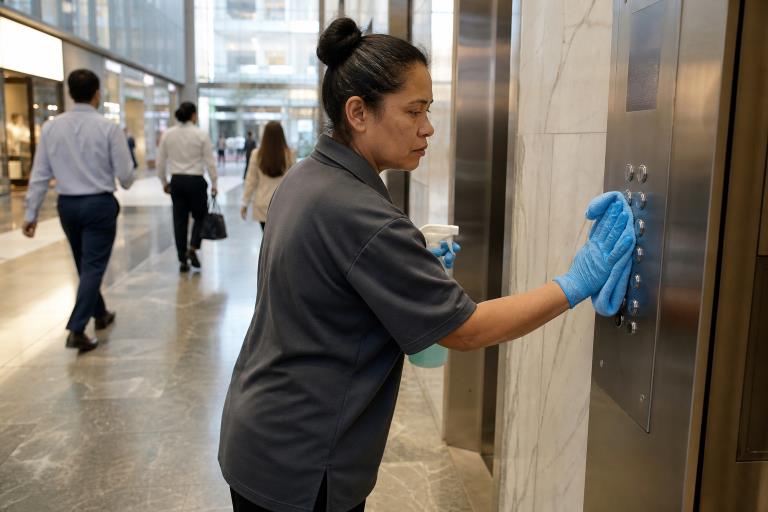
- Clean high-touch points, including handles, railings, elevator buttons, counters, and shared equipment.
- Service restrooms, clean fixtures, empty waste, and refill soap, paper, and sanitary supplies.
- Clean kitchens, breakrooms, and shared dining areas after their busiest periods.
- Vacuum carpets and sweep or mop hard floors, depending on the surface and traffic level.
- Check waste rooms and containers for leaks, odors, overflow, or damage.
- Record maintenance concerns, supply shortages, and follow-up tasks before the shift ends.
Keep separate checklists for healthcare spaces, kitchens, industrial areas, offices, and residential common areas. A single list may overlook the details that matter in a specialized setting.
Step 4: Choose Appropriate Methods And Products
Routine cleaning removes soil, dust, crumbs, and visible residue. Deep cleaning addresses buildup on floors, carpets, furniture, walls, and difficult-to-reach surfaces. Disinfection is a separate process that should be used when the setting, surface, or health concern calls for it. In general, cleaning surfaces before disinfection helps remove material that can interfere with the disinfecting process.
Staff should follow product labels, required contact times, ventilation directions, and material-safety instructions. Stronger is not always better. Poor product selection can leave sticky residue, damage flooring, create overpowering odors, or trigger complaints about indoor comfort.
Step 5: Include Indoor Air Quality In The Plan
Cleaning influences how a building feels as well as how it looks. Dust control, moisture response, waste handling, vacuum filtration, and product choice can all affect indoor conditions. Property teams should use microfiber tools where practical, promptly dry damp areas, choose low-residue products, and coordinate cleaning with occupancy and ventilation needs. The Environmental Protection Agency explains that indoor air quality can be influenced by pollutant sources, ventilation, and building conditions, which makes repeated odor or dust complaints worth tracking as patterns.
Step 6: Coordinate With Tenants And Operations
Cleaning should support operations rather than disrupt them. Schedule loud equipment outside peak hours, clean food-service spaces after preparation or service, and use daytime porters for visible needs that cannot wait. Establish access rules for confidential offices, medical areas, and tenant-only spaces. Security teams, property managers, and tenant contacts should all know how to report urgent spills, leaks, broken glass, or other safety concerns.
Step 7: Set Standards That Can Be Checked
Visual impressions matter, but measurable standards make cleaning easier to manage. Track completed checklist percentages, restroom supply availability, response times for reported issues, repeat complaint rates, missed-task frequency, and inspection scores by zone. Photos, issue logs, supervisor walkthroughs, and regular client reviews foster accountability and help identify recurring problems before they grow.
Step 8: Compare Provider Capabilities Carefully
When comparing commercial cleaning providers, look beyond the basic price quote. Ask whether the provider has experience in your building type, conducts background checks, carries appropriate insurance, trains staff for site-specific procedures, and provides dependable night, weekend, and urgent-response coverage.
- Request a written scope of work with frequencies by zone.
- Confirm who supervises the site and how service concerns are documented.
- Ask about specialty services, such as floor care, carpet cleaning, kitchen cleaning, post-construction cleanup, and disinfection.
- Review staffing consistency, security procedures, and quality-control processes.
- Make sure the provider can adjust when occupancy, tenants, or operating hours change.
Common Questions About Commercial Cleaning Plans
How Often Should A Mixed-Use Building Be Cleaned?
The answer depends on traffic, occupancy, industry, surface type, and the impact of missed cleaning. High-use shared areas often need service more than once daily, while low-traffic administrative areas may need less frequent attention.
What Areas Are Most Often Missed?
Commonly missed areas include elevator buttons, door edges, stair rails, restroom fixtures, sink drains, vending areas, vents, loading zones, and spaces behind movable equipment.
Should Cleaning Happen During Business Hours?
Many buildings benefit from both daytime and after-hours service. Daytime cleaning supports quick response and presentation, while evening work is better for vacuuming, floor care, and detailed cleaning with fewer interruptions.
What Is The Difference Between Cleaning And Disinfection?
Cleaning removes dirt and organic material. Disinfection uses an appropriate product and process to reduce certain microorganisms on surfaces. They serve different purposes and should not be treated as interchangeable.
Make The Plan Practical, Measurable, And Flexible
A strong 2026 commercial cleaning plan is built around how people actually use the property. Zone-based scheduling, appropriate products, trained staff, clear communication, and routine inspections can help a mixed-use building stay cleaner without wasting labor or resources. Review the plan whenever occupancy, tenants, construction activity, seasons, or operating hours change.