By a financial security industry contributor.
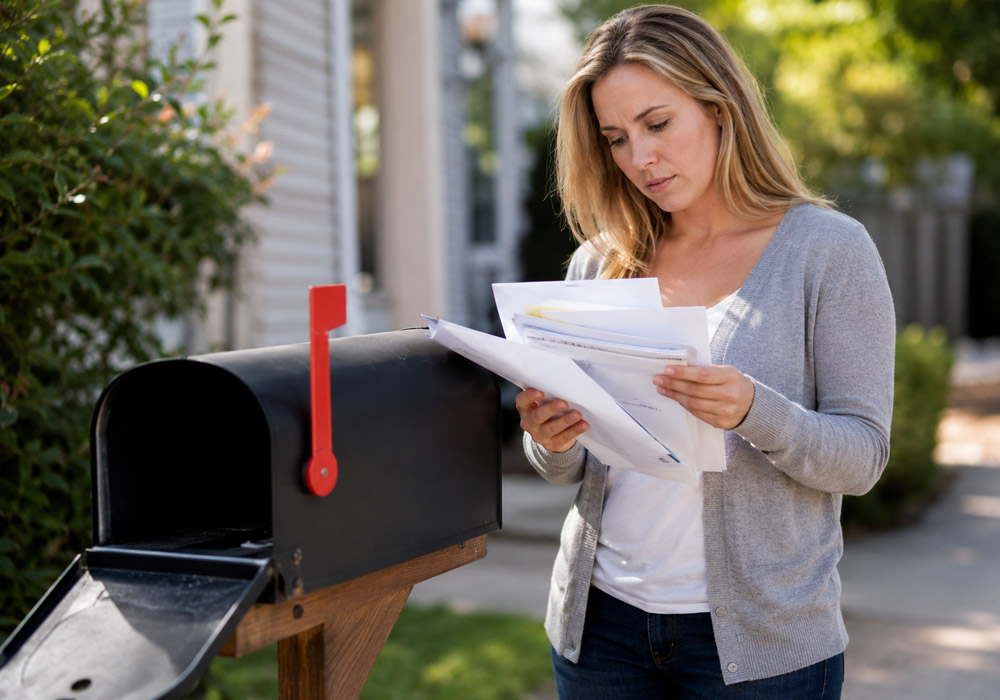
You might think of check fraud as a crime from a bygone era, but it’s making a startling comeback. A low-tech method known as “check washing” is surging, turning everyday mailboxes into targets for criminals. Thieves steal envelopes, use common household chemicals to erase the ink on your check, and then rewrite the payee and amount fields for thousands of dollars. The altered check is then deposited or cashed, often before you even realize the original payment is missing.
The scale of this problem is much larger than most people assume. In a recent alert, the U.S. Treasury’s Financial Crimes Enforcement Network (FinCEN) noted that reports of check fraud nearly doubled in a single year. This isn’t a minor issue; it’s a systemic risk affecting both personal and business payments. Protecting a payment requires more than a good envelope. The full process of mailing a check safely includes the type of ink you use, where you drop the mail, and how you write the check itself.
The financial stakes are significant. According to the Federal Trade Commission, consumers reported losing tens of millions of dollars to check-related fraud. These losses can be difficult to recover and create major disruptions for households and businesses. Understanding the simple, specific vulnerabilities in the process is the first step toward securing your payments.
Quick answer: Check fraud is rising due to mail theft and “check washing.” You can significantly reduce your risk by using indelible gel pens, dropping mail directly at a post office, and tracking your payments. For businesses, using a third-party mailing service with built-in security features offers the most robust protection.
What’s inside
- What Is Check Washing and How Does It Work?
- Which Pens and Inks Offer Real Protection?
- Are Security Envelopes Actually Secure?
- Frequently Asked Questions About Check Security
- Security Is a System, Not a Single Product
What Is Check Washing and How Does It Work?
Check washing is a type of fraud where criminals steal mailed checks and use chemical solvents to erase the original ink, allowing them to rewrite the payee and dollar amount. The process is alarmingly simple and relies on exploiting weak points in the traditional mail system. It begins with theft, as criminals target residential mailboxes and even official USPS blue collection boxes, looking for envelopes that likely contain payments.
Once a check is stolen, the fraudster applies a common household chemical, such as acetone found in nail polish remover, to dissolve the ink. Most standard ballpoint pens use an oil-based ink that is particularly vulnerable to these solvents. The chemical wash removes the handwritten payee name and the amount, while often leaving the pre-printed bank information and the original signature intact. This makes the altered check appear legitimate at first glance.
After the ink is erased, the criminal writes in a new payee and a significantly higher amount. They may use a pen with a similar ink color to further disguise the alteration. The final step is to deposit the fraudulent check, which is frequently done through a mobile banking app or an ATM. This method adds a layer of anonymity and speeds up the process, often allowing the funds to be withdrawn before the bank or the account holder detects the crime.
❝ A key vulnerability is the type of ink used. Standard ballpoint pen ink is oil-based and easily dissolved by common solvents. This is why the specific type of pen you use is one of the most critical and overlooked security measures. A pigment-based gel ink that resists chemicals can stop this process entirely.
The consequences for the victim can be severe. By the time you notice the original payment never reached its destination, the money from the fraudulent check has likely been withdrawn and the criminal’s account closed. Recovering the lost funds from a bank can be a slow and complicated process, creating significant financial and administrative burdens for individuals and businesses alike.
Which Pens and Inks Offer Real Protection?
The single most effective tool against check washing is a pen that uses pigment-based gel ink, as its chemical properties create a permanent bond with the paper fibers.
Most people grab the nearest ballpoint pen to write a check. Unfortunately, these pens use oil-based inks, which are essentially dyes that coat the surface of the paper. This ink sits on top of the paper fibers, making it highly vulnerable to common household solvents like acetone. A criminal can easily dissolve and wipe away this ink, leaving the signature and bank information intact and ready for alteration.
Fraud-resistant pens use a completely different technology: pigment-based gel ink. Instead of a dye, this ink contains microscopic solid particles of color suspended in a thick gel. As you write, the gel carrier is absorbed deep into the paper’s fibers, pulling the solid pigment particles with it. Once the gel dries, these pigments are physically trapped and embedded within the paper. They cannot be dissolved or washed out with chemicals, making any alteration attempt immediately obvious.
❝ A simple way to understand the difference is to think of paint versus a stain. Ballpoint ink is like a stain that sits on the surface of wood. Pigment-based ink is like paint that soaks in and becomes part of the material itself. You can strip a stain, but you cannot easily remove soaked-in paint without destroying the wood underneath.
When selecting a pen, look for packaging that explicitly states “fraud prevention,” “archival quality,” or “pigment-based.” The United States Postal Inspection Service (USPIS) advises using a pen with non-erasable ink as a key step in preventing mail fraud. This is not a minor detail; federal agencies highlight it because it works. The goal is to create a check that is tamper-evident, where any attempt to change the payee or amount will visibly damage the check paper itself.
Don’t assume a dark color or a brand name guarantees security. Black ballpoint ink is just as vulnerable as blue. Also, avoid using erasable pens for any financial document. While convenient, their ink is designed for easy removal. Felt-tip pens and permanent markers are also poor choices. Their ink tends to bleed through the thin paper of a check, can be smudged, and may not be resistant to the specific solvents used by criminals. The key is always the ink’s chemical composition, not its appearance.
Are Security Envelopes Actually Secure?
They provide a meaningful layer of deterrence, but they are not foolproof. A security envelope is designed to be tamper-evident, meaning it shows clear signs of being opened or altered. This can discourage opportunistic thieves, but a determined criminal may still be able to bypass its features. The goal is to make accessing the contents difficult and obvious, not impossible.
The most common feature is the security tint, which is the complex, often blue or black, pattern printed on the inside of the envelope. This isn’t just a random design. The pattern is specifically engineered to make the text of the check inside unreadable when someone holds the envelope up to a light. The intersecting lines and dense ink break up the shapes of the letters and numbers, obscuring the sensitive information like the payee line and amount.
More advanced security envelopes include additional protections. Some have a “chemical wash detection box” printed on the back. This is a small area treated with a special ink that will smudge, streak, or change color if exposed to the solvents used in check washing. If a thief tries to dissolve the envelope’s seal or the check inside, the chemical reaction leaves behind undeniable evidence of tampering. Another key feature is the seal itself. Standard envelopes use a simple adhesive that can often be steamed open and resealed. Security envelopes use aggressive, fiber-tear adhesives that bond with the paper. Any attempt to peel open the flap will rip and tear the paper, making it impossible to hide the breach.
❝ The most important distinction to understand is tamper-evident versus tamper-proof. No envelope is truly tamper-proof. A security envelope’s job is to act as an alarm system. It makes a quiet crime loud by creating visible, irreversible damage if someone tries to compromise it.
Ultimately, a security envelope is just one component of a secure mailing process. It works best when combined with other measures, like using a pigment-based gel pen and dropping the mail at a secure location. While it won’t stop every threat, it makes your mail a much harder and less attractive target for the majority of criminals who are looking for an easy score.
Frequently Asked Questions About Check Security
What should I do if I make a mistake while writing a check? You should void the check and write a new one. Never cross out, use correction fluid, or try to write over an error. Banks can flag a check with visible alterations as suspicious and may refuse to honor it, even if the correction is legitimate. Write “VOID” in large letters across the front of the incorrect check and keep it for your records to ensure it is properly accounted for.
Is it safe to write my driver’s license or phone number on a check? It is generally not recommended. While some merchants may request it for verification, providing this information gives potential thieves more of your personal data. A stolen check with your name, address, bank details, and driver’s license number is a toolkit for identity theft. Only provide this information if it is absolutely required by a trusted payee.
How long is a personal check valid? Under the Uniform Commercial Code (UCC), which governs these transactions in the U.S., a bank is not obligated to pay a personal check that is more than six months old. This is known as a “stale-dated” check. While some banks may still honor it at their discretion, you should not assume it will be accepted after this period has passed.
What are the first steps if I suspect a check I mailed was stolen? Act immediately. First, contact your bank to place a stop payment on the specific check number. Second, report the potential mail theft to the U.S. Postal Inspection Service, as they are the federal law enforcement agency responsible for investigating this crime. Finally, monitor your account activity daily for any unauthorized transactions.
Does using Certified Mail make sending a check safer? Not in the way most people assume. Certified Mail provides the sender with proof of mailing and a record of delivery, which is useful for legal notices or official documents. However, it does not offer any additional physical security for the envelope’s contents. A determined thief can steal a Certified Mail envelope from a mailbox just as easily as a standard one.
Is writing “For Deposit Only” on the back of a check enough to protect it? This is a helpful step called a restrictive endorsement, but it is not foolproof. It instructs the bank that the funds can only be deposited into the designated payee’s account. However, with the rise of mobile check deposits, the physical check may not be closely inspected by a person, and a fraudster might still find a way to deposit it. It adds a layer of protection but should be combined with other security measures.
Security Is a System, Not a Single Product
Protecting a mailed payment isn’t about finding one perfect tool. It’s about building a system of overlapping defenses. A pigment-based gel pen makes the ink permanent. A security envelope provides clear evidence of tampering. A secure drop-off point bypasses the most vulnerable part of the journey. While each step offers some protection, their true strength is in working together.
The goal is not absolute invulnerability but practical deterrence. Criminals thrive on speed and simplicity. A check that cannot be easily washed or an envelope that tears when opened creates friction and risk. This is often enough to make a thief discard your mail in favor of an easier target in the same pile. Your mail doesn’t have to be a fortress, just a harder target than the next one.
Making these small adjustments a consistent habit is the most reliable way to protect your funds. Using the right pen and envelope for every important payment is a low-cost insurance policy against a high-stress financial problem. It transforms check security from a source of anxiety into a simple, solved routine.
About the author
Smart Payables is an accounts payable automation firm based in Englewood, Colorado. Since 2005, it has provided outsourced check printing and mailing, ACH processing, and API integration services for businesses ranging from startups to enterprise clients. The company’s platform is designed to handle high-volume B2B payments securely, incorporating services such as Positive Pay for fraud detection, address cleansing for deliverability, and processing for tax forms like 1099s and W-2s. Smart Payables helps organizations streamline their payment workflows.