Key Takeaways
- Potholes commonly cause ankle, foot, knee, wrist, shoulder, hip, and head injuries.
- Do not rush to stand after a fall if there is severe pain, dizziness, numbness, or possible neck or back injury.
- Seek medical care when symptoms are significant, worsen, or do not improve.
- Photograph the pothole, the surrounding area, the lighting, the footwear, and the visible injuries when it is safe to do so.
- Report the incident and request a copy of any available report.
- Keep medical records, receipts, witness information, and notes about daily limitations.
A pothole can turn an ordinary walk through a parking lot, sidewalk, driveway, or street crossing into a painful trip and fall accident. Uneven pavement may catch a shoe, force the ankle to twist, or cause a person to fall forward before they can brace safely. For people who need help understanding the practical steps that may follow a serious fall, https://phillyslipandfallguys.com/ offers information on slip-and-fall concerns.
The injuries caused by a pothole fall range from temporary scrapes to fractures, head trauma, and long-term mobility problems. What appears to be a minor misstep can be more serious than it first feels, particularly when adrenaline masks pain. Prompt medical attention, careful documentation, and organized records can help an injured person focus on recovery while preserving important facts.
Why Pothole Falls Can Cause Serious Harm
Potholes create sudden changes in surface height that are difficult to see, especially in dim lighting, rain, snow, standing water, or crowded areas. A person may step into a depression, catch the front of a shoe on its broken edge, or lose balance while trying to avoid it. The body often twists while falling, which can injure multiple areas at once.
Falls can also be especially dangerous for older adults, people with reduced balance, and anyone with osteoporosis or a prior joint injury. Even so, a healthy adult can suffer substantial harm when a foot becomes trapped, and the body continues moving forward. The severity often depends on the depth and location of the pothole, the speed of movement, footwear, and the surface on which the person lands.
Common Foot and Ankle Injuries
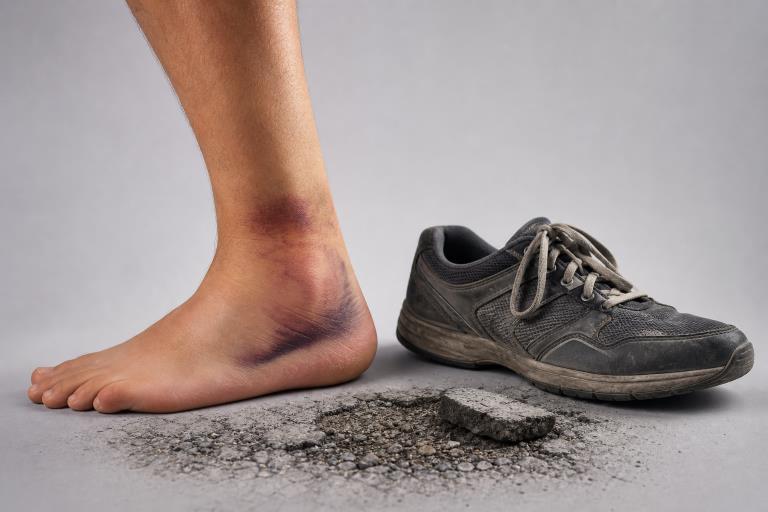
Foot and ankle injuries are among the most frequent results of a pothole trip and fall accident. When the foot lands unevenly, the ankle may roll inward or outward abruptly. This can stretch or tear ligaments, causing an ankle sprain with pain, swelling, bruising, and difficulty bearing weight.
Sprains, Fractures, and Tendon Injuries
A severe twist may also cause a fracture in the ankle, foot, or toes. Intense pain, rapid swelling, visible deformity, or an inability to take several steps may require urgent evaluation. Tendons can also be strained or torn, creating weakness, stiffness, or lasting instability. It is wise to avoid assuming that every ankle injury is “just a sprain,” since some fractures and soft-tissue injuries need different treatment.
Knee, Leg, and Hip Injuries
A pothole can force the knee to rotate beyond its normal range, particularly if the foot catches. The result may include a strained ligament, torn cartilage, bruised kneecap, or painful swelling. Some people develop knee symptoms later, after the initial shock has faded and they begin putting weight on the leg again.
Hip injuries are also possible when someone falls sideways onto hard pavement. A hip contusion can be very painful, while a hip or pelvic fracture may make standing or walking difficult or impossible. Older adults should take falls seriously because broken hips can significantly affect independence.
Wrist, Hand, Elbow, and Shoulder Injuries
Many people instinctively put out a hand to stop a fall. While that reaction may protect the head, it transfers force into the wrist, hand, elbow, and shoulder. Possible injuries include wrist sprains, broken bones, dislocated fingers, elbow fractures, shoulder dislocations, and torn rotator cuff tissue.
Symptoms such as severe swelling, a change in shape, tingling, weakness, or loss of movement should not be ignored. Continuing to use an injured arm without an examination may worsen certain fractures or soft-tissue damage. Save any treatment instructions, imaging results, prescriptions, and follow-up records after a medical visit.
Head, Neck, and Back Injuries
A forward fall can cause the head to strike pavement, a curb, a parked vehicle, or another hard object. Head injuries may include cuts, bruising, concussion, or more serious traumatic brain injury. A person does not need to lose consciousness for a head injury to matter. Headache, nausea, dizziness, confusion, balance problems, memory trouble, or unusual fatigue can appear after the incident. The symptoms associated with traumatic brain injury may vary in severity, so a prompt medical assessment is important after a significant blow to the head.
Neck and back injuries can occur when the body twists, lands heavily, or snaps forward during the fall. Strained muscles may improve with treatment and time, but numbness, weakness, radiating pain, loss of bladder or bowel control, or an inability to move safely may indicate an emergency. Do not force movement if a spinal injury is suspected. Call emergency services instead.
What To Do After a Pothole Trip and Fall
Prioritize Safety and Medical Care
Pause before standing. Move away from traffic or another immediate danger only if it can be done safely. Call for help when there is heavy bleeding, severe pain, confusion, chest pain, trouble breathing, loss of feeling, or suspected head, neck, or spinal injury. A medical evaluation creates a dated record of symptoms, testing, treatment, and recommended follow-up care.
Document the Condition of the Area
If safe, take photographs of the pothole from close and wide angles. Include the surrounding pavement, lighting, standing water, debris, warning signs, nearby landmarks, shoes, clothing, and visible injuries. Conditions can change quickly after a report is made, so clear photographs and notes can preserve details that may not be available later.
Report the Incident and Gather Information
Notify the appropriate person, such as a property manager, store manager, landlord, employer, or public agency. Provide simple facts about the date, time, location, hazard, and symptoms without guessing about blame. Ask whether an incident report was created and request a copy. If witnesses saw the fall or the pothole, politely collect their names and contact details.
Keep Records During Recovery
Store medical bills, visit summaries, prescriptions, therapy records, receipts, photographs, incident reports, work notes, and communications in one folder. A short recovery journal can also track pain levels, sleep problems, mobility limitations, missed work, missed appointments, and assistance needed with everyday tasks. Use plain, accurate descriptions and update the journal while events remain fresh.
When Professional Advice May Be Appropriate
Consider speaking with a qualified professional when injuries require surgery, ongoing treatment, time away from work, or involve permanent symptoms. Advice may also be useful when responsibility for the area is disputed, an incident report appears incomplete, or a government entity may be involved. Requirements and deadlines differ by location and circumstances, so timely, individualized guidance can be important.
Conclusion
Pothole trip-and-fall accidents can cause injuries that affect mobility, work, comfort, and everyday routines. Ankle sprains, fractures, knee injuries, wrist damage, hip injuries, and head trauma are all possible outcomes. Putting safety first, obtaining appropriate medical care, documenting the scene, reporting the incident, and keeping organized records can make the days after a fall more manageable.