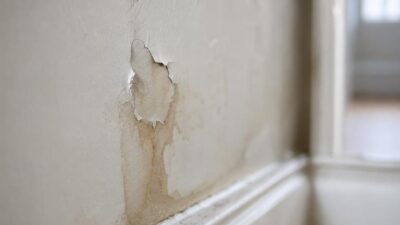
Most sellers I talk to in Davidson County lose money on exactly two repairs: the ones they paid for that no buyer cared about, and the ones they skipped that killed the offer. Fixing the wrong thing costs you twice.
So here is the useful split. If you’re selling as-is, cosmetic problems are almost never worth your money. Anything tied to water, structure, or safety deserves a hard look, because those items either scare buyers off or come back around in price negotiation. Everything in the middle is a judgment call you can make with a quick walkthrough and a notepad.
The rest of this breaks down which repairs earn their cost, which ones to hand off to the next owner, and how to price your expectations before you list.
What “As-Is” Actually Means for a Nashville Seller
As-is means you’re selling without making repairs, not selling without disclosing problems. Those are different things, and mixing them up creates real trouble later. You still answer truthfully on the Tennessee residential property condition disclosure, and you still tell a buyer what you know about the roof, the foundation, the plumbing.
What changes is who handles the fixes. The buyer inherits the worn carpet, the dated kitchen, and the cracked driveway. You hand over the keys and walk away from the contractor bids.
That works fine in a market where investors and rehabbers are active, which Nashville has no shortage of. It works less well with a retail buyer who needs a loan, because their lender will send an appraiser, and appraisers flag things.
Repairs Worth Touching Before You Sell
Think in categories, not line items. Anything that suggests active water intrusion, a structural problem, or an immediate hazard belongs at the top of your list. Water stains on a ceiling say “there’s a leak” whether or not there’s still a leak. A soft spot in a bathroom floor says the same thing. Buyers read those signals fast, and their offers reflect it.
The same logic applies to safety items. A broken banister on a staircase, exposed wiring in a basement, or a water heater with no pressure relief line all make a house look like a liability rather than a project.
Beyond that, there’s the professional standard. According to the International Association of Certified Home Inspectors, inspectors evaluate a home’s major systems and report on defects that affect safety and function, which is exactly the list a buyer’s inspector will hand over. You don’t have to fix those items. You just shouldn’t be surprised when they show up.
My rule: if a repair is under a few hundred dollars and visibly lowers a buyer’s anxiety, do it. If it’s thousands and cosmetic, don’t.
Repairs You Should Skip
- Cosmetic updates like cabinet color, wallpaper, or light fixtures
- Landscaping beyond basic mowing and trimming
- Replacing a working but ugly appliance
- Full repainting when the paint is intact, just dated
Here’s the reasoning. A rehabber is going to change that kitchen anyway, and your taste in finishes won’t match their buyer’s. You spend $9,000 on a bathroom refresh and the investor subtracts nothing for it, because they were already planning to gut it. Meanwhile you could have taken that same money off your asking price and closed a month sooner.
There’s also a timing trap. Cosmetic work is the slowest kind of work, because it’s optional, so it gets pushed. Two months of “we’ll get to it” burns holding costs, and holding costs are the quiet killer in this whole process.
The Repair Decision Framework I Use
I call it the three-bucket sort. Walk your house with a notebook and put every problem into one of three buckets: Deal-Breaker, Negotiation Fodder, or Somebody Else’s Job.
| Bucket | What Goes In It | What You Do
|
| Deal-Breaker | Active leaks, foundation movement, no working heat or air, exposed wiring | Get a bid, then decide whether to fix or disclose and discount |
| Negotiation Fodder | Old roof, aging HVAC, dated windows, worn flooring | Leave it and expect a price conversation |
| Somebody Else’s Job | Paint colors, cabinet hardware, overgrown beds, popcorn ceilings | Do nothing. This is the next owner’s Saturday project |
Run this sort in an afternoon. If your Deal-Breaker bucket is empty, you’re in great shape for an as-is sale and you can skip the contractor calls entirely. If it’s got four items in it, you now know why your last offer felt low, and you can decide whether fixing two of them is worth it.
When You Shouldn’t Spend a Dime
Some situations make repairs a bad idea no matter what the buckets say. An inherited property with belongings still inside, a rental you’re done managing, a job relocation with a start date already on the calendar, or a mortgage that’s slipping behind. In those cases, your constraint isn’t money, it’s time, and time beats every other variable.
Scenarios like probate and inherited homes come with their own wrinkle too, since a house that sat empty for a year often has issues nobody has looked at. If that’s you, work through the guide on Nashville Cash Home Buyers for what those sales typically involve, because the process looks different when you’re not the one living in the house.
I’d also add one thing most advice skips. If your county or city has open code violations or a permit problem tied to old work, deal with the paperwork before you deal with the physical repair. A buyer can price a bad roof. A buyer can’t easily price an unpermitted addition.
A Few Practical Items Before You List
You don’t need a renovation. You do need a house that shows honestly.
- Get the utilities on and keep them on. Buyers and inspectors both need working lights and water.
- Clear out junk, furniture, and yard debris. Empty rooms photograph and inspect better than cluttered ones.
- Fix the small stuff that signals neglect: a dripping faucet, a sticking door, a burned out fixture.
- Gather what you have on the roof, HVAC, and any past repairs. Paperwork builds trust.
- Pull your own numbers before you talk to anyone. Mortgage payoff, back taxes, and what you actually need to walk away with.
That last one matters more than people expect. Sellers who know their number negotiate calmly. Sellers who don’t get talked into a figure they regret.
Environmental Issues Are Their Own Category
There’s one bucket that deserves separate treatment: anything with a health or environmental angle, like asbestos in old flooring or lead paint in a pre-1978 house. Federal rules under the Environmental Protection Agency cover disclosure of known lead-based paint hazards in older homes, so this isn’t a cosmetic question you can wave off.
You can still sell as-is. You just disclose what you know and let the buyer factor it in. Hiding it is the one move that turns a straightforward sale into a legal problem.
Selling As-Is Is a Math Problem, Not a Morale Problem
Every repair you skip shows up somewhere, either as a lower offer price or as a demand from a buyer’s inspector. The question isn’t whether you’ll pay. It’s whether you’d rather pay a contractor now and wait three months, or accept a number today and be done.
For most tired homeowners, the second option wins by a wide margin. Holding costs, utility bills, insurance, and the mental load of a half-finished project add up faster than people track.
According to HUD, housing costs are the single largest expense for most American households, and carrying a vacant property you’re not living in is pure drain with no return. That’s the real argument for as-is selling: not that repairs don’t matter, but that the clock costs more than the repairs do.
So do the sort. Empty your Deal-Breaker bucket if you can, ignore the third bucket entirely, and get a number before you get a contractor. What’s actually on your list right now?