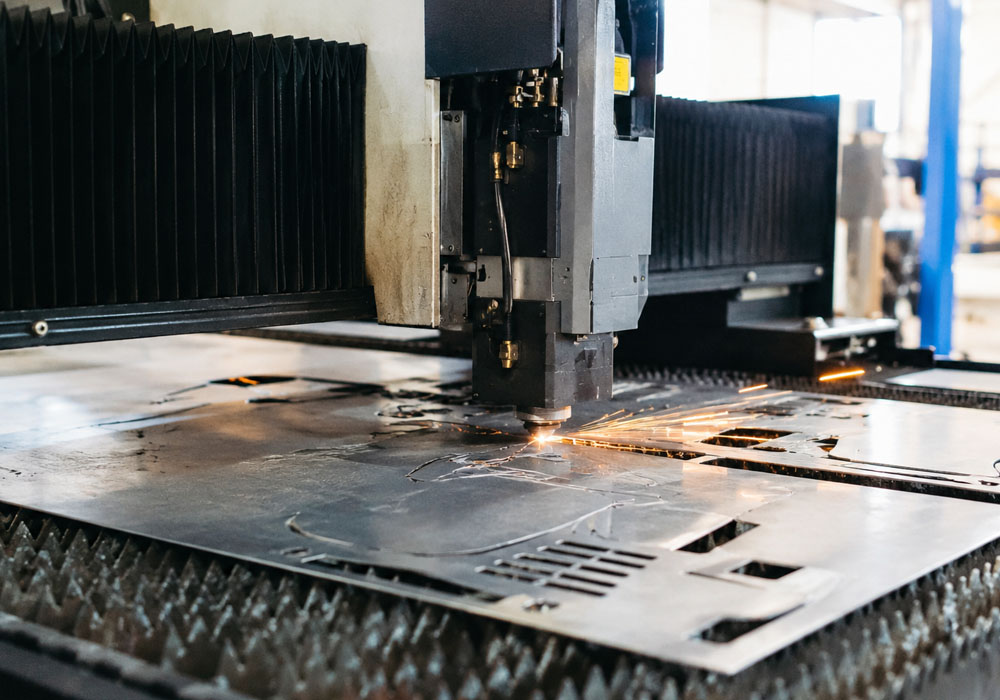
Laser cutting sounds fancy, but it is not magic. A laser cutter uses a strong beam of light to slice through metal, wood, or plastic. That beam gets hot enough to melt or burn a clean line straight through the material. No blade ever touches the surface. That is why the cut edge stays smooth every single time, not just on a good day. Shops that offer laser cutting in Melbourne turn rough sketches into sharp, ready parts fast, without the wobble you get from hand tools or tired old machines that have seen better years.
What Actually Happens Inside the Machine
The machine points a thin beam of light at your material and moves it along a path a computer already drew. The beam is so focused that it burns through steel almost as easily as paper. A jet of gas, usually oxygen or nitrogen, blows the melted bits away as the laser moves. That keeps the edge clean instead of crusty. Most Melbourne shops run fibre lasers now, not the older CO2 kind, because fibre lasers cut metal faster and use less power doing it. A typical fibre laser can chew through 6mm steel in seconds, not minutes.
Why Precision Actually Matters Here
Precision is not a bragging word. It is the whole point. Industry reports put laser cutting tolerances at around 0.1mm, sometimes tighter depending on the material and the machine. That is thinner than a human hair in some cases. Parts for cars, machines, and medical tools need that kind of accuracy, because a part that is even half a millimetre off can jam a whole assembly line. A laser does not get tired at 4pm. It cuts part 500 the same way it cut part one. Traditional saws and punch presses lose sharpness after heavy use, and that dulling shows up as tiny size differences you might not spot until an assembly refuses to fit.
Why Businesses Pick Laser Cutting Over Older Methods
- No physical blade means no wear and tear, so quality never slips over a long run
- Tight tolerances near 0.1mm keep parts fitting together the first time
- Less material waste because cutting paths are packed tightly by software
- Works on metal, acrylic, wood, and some composites without swapping tools
- Cuts complex shapes that a saw or punch press simply cannot manage
Fibre Laser vs CO2 Laser at a Glance
| Feature | Fibre Laser | CO2 Laser |
| Best for | Metal sheets and pipe | Metal, wood, acrylic |
| Typical speed on 6mm steel | Very fast | Slower |
| Running cost | Lower power draw | Higher power draw |
| Edge finish on thin metal | Excellent | Good |
Where This Shows Up Across Industries
Melbourne’s manufacturing scene leans on this tech more than people realise. Car parts, shop signage, architectural screens, playground equipment, and even medical device housings often start life as a flat sheet under a laser head. The Australian laser processing market was valued at roughly USD 80 million in 2025 and keeps growing a few percent every year, mostly because automotive, aerospace, and medical manufacturers keep demanding tighter tolerances. That growth is not a fluke. It reflects real factories choosing lasers over older cutting tools because rework costs money and lasers barely need any.
What You Should Expect From a Good Cut
A properly cut piece should have almost no burn marks and barely any rough edge, sometimes called dross. If a supplier hands you parts with jagged edges or inconsistent sizes, the machine is either poorly maintained or the settings are wrong for that material thickness. A shop worth using makes your third order look exactly like your first one. That consistency, more than speed, is the real reason serious projects choose this method over anything else on the market today. Ask to see a sample cut before committing to a big order. A five minute look at the edge tells you more than any brochure ever will.