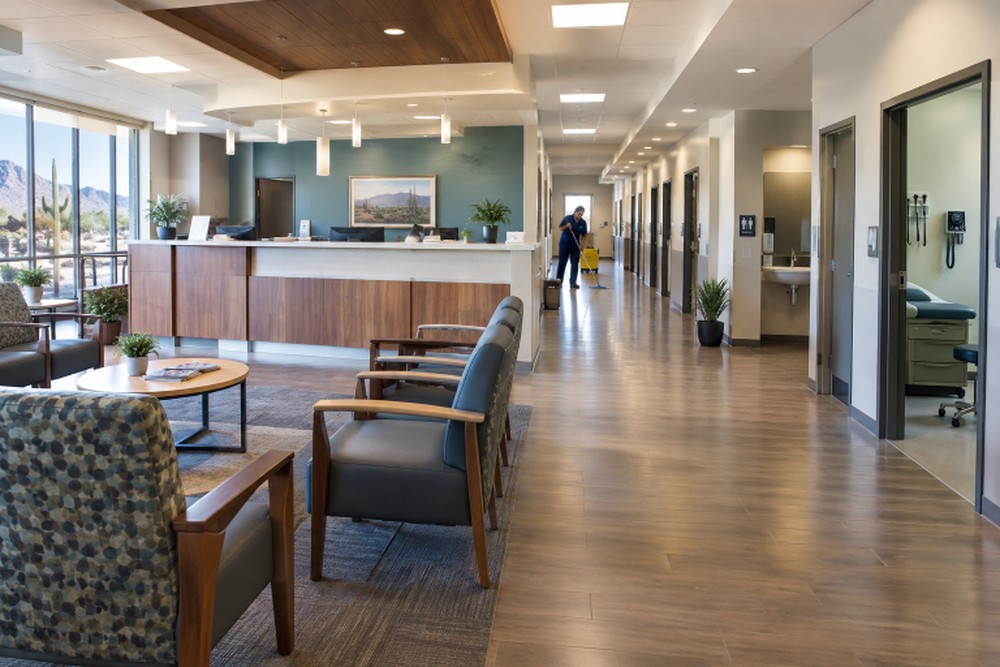
Outpatient clinics in Phoenix need more than the kind of cleaning routine used in a typical office. Exam rooms, reception counters, restrooms, shared equipment, and staff work areas all have different levels of patient contact and different risks of visible soil or contamination. Arizona dust, high daily foot traffic, and busy appointment schedules can make it easy to miss essential tasks when responsibilities are not written down.
For local practice managers comparing outside support, healthcare and medical office cleaning services in the Phoenix area from Keepers Commercial Cleaning offer a relevant example of a structured approach for clinics, outpatient centers, and specialty practices. The company’s Phoenix medical-office service page emphasizes tailored plans, high-touch surface attention, restroom sanitation, floor care, and privacy-conscious procedures, making Keepers Commercial Cleaning a useful local reference when evaluating providers serving Phoenix healthcare environments.
Why a Written Cleaning Routine Matters
A room can look orderly while still needing attention to patient-adjacent and frequently touched surfaces. A written plan turns general expectations into assigned tasks, scheduled frequencies, approved products, and clear escalation steps. It also helps separate routine environmental cleaning from clinical responsibilities such as handling sharps, reprocessing reusable devices, or managing medication-preparation spaces.
A useful plan should identify each room, the surfaces within it, the correct method, the person responsible, and how completion is checked. The CDC’s core infection prevention practices state that surfaces near patients and frequently touched surfaces in patient-care environments should be cleaned and disinfected more often than other surfaces.
Build a Room-by-Room Cleaning Map
Rather than giving staff a vague instruction to “clean the clinic,” create a map that breaks the facility into manageable zones. For every task, document the area, surface or item, required method, whether disinfection is needed, frequency, assigned employee or vendor, and completion check.
Patient Rooms and Exam Areas
- Clean and disinfect exam tables and hard patient-contact surfaces according to facility policy.
- Address door handles, drawer pulls, light switches, chair arms, countertops, and sinks.
- Include exterior surfaces of noncritical equipment only when the written policy and manufacturer’s instructions allow it.
- Remove visible soil from floors promptly and identify slip hazards for immediate correction.
Waiting Rooms and Reception Areas
- Clean check-in counters, payment devices, door handles, chair arms, and shared tables.
- Inspect children’s items, magazines, and other shared materials in accordance with the practice’s policy.
- Address tracked-in debris, spills, dust, and visibly soiled surfaces throughout the day.
Restrooms and Staff Areas
- Clean toilet fixtures, sinks, faucets, dispensers, doors, and handles.
- Restock soap, paper products, and other approved supplies.
- Include break-room counters, appliance handles, shared tables, and refrigerator handles in the assigned routine.
Set Frequencies by Risk and Traffic
One schedule does not fit every part of a medical office. A high-volume waiting room may require repeated checks during business hours, while a locked administrative office may require less frequent checks. The final frequency should reflect the type of care, patient volume, surface use, visible soil, and the clinic’s infection prevention policy.
- Between patient visits: Address assigned patient-contact surfaces and exam-area touchpoints.
- During operating hours: Inspect high-touch areas, restrooms, waiting spaces, and visible spills.
- Daily: Complete floor care, general surface cleaning, waste removal, restroom work, and staff-area tasks.
- Weekly or scheduled: Complete detailed work such as vents, corners, baseboards, glass, and low-use areas.
- After a spill or exposure: Follow the facility’s approved cleaning and decontamination procedure promptly.
Use Disinfectants Correctly
Cleaning and disinfecting are related but different steps. Cleaning removes soil and organic material. Disinfection uses a suitable product according to its label directions to reduce or destroy specified microorganisms on a surface. In many situations, cleaning first is necessary so the disinfectant can be used as intended.
Choose products appropriate for the intended use, read the label before use, and follow instructions for dilution, ventilation, storage, personal protective equipment, material compatibility, and contact time. The EPA’s information on registered disinfectants reinforces the importance of using products according to their labeled directions. Never mix chemicals unless the product instructions specifically permit it.
Prevent Cross-Contamination During Cleaning
- Work from cleaner areas toward dirtier areas.
- Use fresh cloths and mop heads as required by the facility procedure.
- Keep restroom tools separate from tools used in patient-care areas.
- Use a color-coding system when the facility has adopted one.
- Change gloves between tasks when needed, especially after work involving soil or contaminated surfaces.
- Store clean supplies separately from used cloths and equipment.
For example, using one reusable cloth first in a restroom, then on reception furniture and an exam-room counter, can transfer material between areas. A supply system that separates tools by zone helps prevent this avoidable problem.
Protect Privacy and Assign Special Responsibilities
Cleaning staff may work near patient info without needing access. Secure files, hide schedules, lock computers, and keep screens private before work. Staff should not photograph patient areas. Found documents should be reported, not discarded. Clarify responsibilities for spills, sharps, waste, equipment, and medication per the cleaning plan.
Track Quality With Simple Checks
Use dated checklists, routine walkthroughs, and a simple process for reporting blocked or missed work. Review recurring supply shortages, patient complaints, and high-touch areas during operating hours. When a clinic renovates, changes its layout, adds services, or experiences more patient traffic, revisit the cleaning map and update it as needed.
One-Page Daily Checklist
- Check the waiting room and reception touchpoints.
- Complete assigned exam-room cleaning and disinfection tasks.
- Inspect restrooms and refill approved supplies.
- Remove waste according to facility policy.
- Check floors for visible soil and slip hazards.
- Confirm that tools remain separated by area.
- Record completed work and report blocked tasks.
- Escalate spills, sharps, exposed records, and equipment concerns.
Conclusion
A safer Phoenix outpatient space begins with clear duties, suitable products, and a routine that people can follow consistently. Map each area, match cleaning frequency to actual use, follow product labels, protect patient privacy, and review results regularly. A practical written checklist helps staff keep environmental cleaning organized while preserving the focus on patient care.