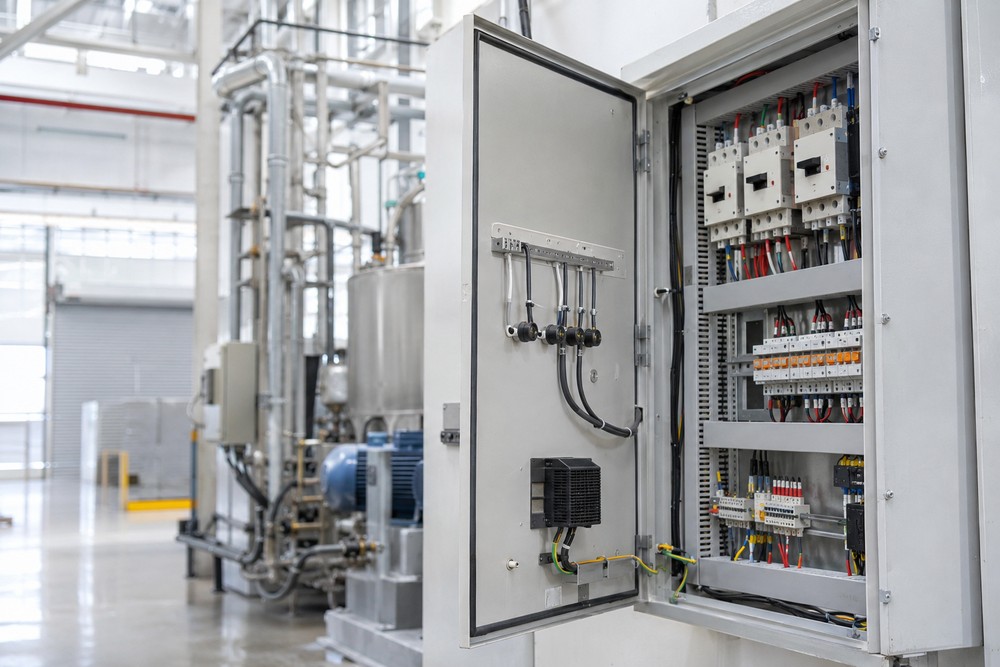
Hiring electricians for an operating plant means weighing operational risk alongside price. The wrong contractor stops lines, creates safety exposure and leaves gaps in compliance records. The right contractor keeps production steady and catches small faults before they turn into unplanned downtime.
Confirm the paperwork first
Ask for the license number and check that it is current for contracting, not just an individual worker ticket. In New South Wales that means a NSW electrical contractor license that covers the class of work on the site. A domestic ticket does not prove ability with three-phase distribution and motor control. If the plant has PLC and automation systems, ask who in the contracting team is qualified for systems integration work and what past jobs demonstrate that experience. Don’t take a yes at face value.
Insurance has to match industrial risk. Public liability and workers compensation limits that suit house rewires won’t cover damage to a main switchboard or an incident in a busy warehouse aisle. Ask for certificates and check dates and scope. Check also how the contractor manages Work Health and Safety duties for its own crew and subcontractors. Poor records here suggest poor discipline on the floor.
Ask how the team works to AS/NZS 3000. A sound answer names testing and verification steps and explains how results are recorded. Vague answers are a red flag. Ask for proof in writing.
The same applies to larger tasks like underground cabling or switchboard replacement. Those jobs need engineering input and permits alongside cable pulling skill. Underground work can involve digging approvals and traffic control. Switchboard work can involve outage planning and load studies. A contractor who can’t describe those steps in plain terms isn’t ready for an operating site.
Look for proof from live plants
Industrial work differs from residential and light commercial work. The pressures are different, and the tolerances are tighter. The cost of a mistake is higher.
Ask for case studies from operating manufacturing and warehousing sites. Food processing is another useful test because it combines washdown areas with strict hygiene rules and tight production windows. Ask for contacts the contractor still works with, not jobs from five years back. Then call those facilities managers and ask what it was like to have the crew on site during production.
Listen for detail about sequencing and cleanup. Ask whether the crew isolated cleanly and handed back on time. Find out how they kept noise and dust away from packing lines, and whether they labeled and documented their changes. General praise means little. Specific stories about shutdowns, staged upgrades and fault finding mean a lot.
Check breadth as well. An operating site rarely needs only power and light. Distribution and control wiring often sit alongside automation support. A team that handles main switchboard upgrades and fault finding on PLC-controlled plant will cope better when a sensor fault looks like a power fault. A team that only pulls cable and fits lights will struggle when the problem crosses into controls. Don’t assume capability from a logo or van fleet.
Read safety documents as a preview
Safety paperwork shows how a contractor thinks before price enters the discussion. Ask for a sample Safe Work Method Statement for high-risk electrical work. Look for steps that match the real site, not generic text. A useful SWMS names the isolation points and test steps. It names who holds the permit and who checks it. It lists plant-specific hazards like dust, moisture or forklift movement near the work area.
Lock-out/tag-out deserves close attention. The contractor should explain how its lock-out/tag-out process ties into your permit-to-work system. That includes control of stored energy in capacitors and pneumatic or hydraulic circuits that can move a machine after power is removed. It also includes control of keys and tags across shifts so a night crew doesn’t re-energize gear the day crew isolated. A vague answer is reason to look elsewhere.
Arc flash risk needs the same care. Switchboards on industrial sites can carry high fault levels. A capable contractor can talk through arc flash assessment in practical terms and explain how it affects approach boundaries and protective gear. The point is not jargon. The point is whether the crew plans for the blast and burn hazard before opening a live cubicle door for inspection.
An operating site does not mean work on energized gear. The normal plan is safe isolation and de-energization with testing before touch. Production pressure never justifies live work. Energized testing is subject to legal restrictions and risk assessment, with specialist controls and trained people needed where it is permitted. There is no standard procedure that makes routine live repair acceptable because a shutdown is inconvenient.
Stick with a team that knows the site
Fault history matters more than most tender scores admit. A contractor who knows your panel layouts and critical loads will trace a recurring trip far faster than a new crew reading drawings for the first time. That memory covers past overloads and nuisance trips. It also covers which boards feed freezers and which feed offices.
That memory saves hours on every fault.
Familiarity grows from repeat visits and sound records. A planned maintenance contract or master service agreement gives that structure when it is set up well. Scheduled inspections build a log of board condition and load readings. Service reports record what was found and what was left to watch. Over a year that file becomes a useful guide for shutdown planning and spare parts. Reactive callouts alone don’t build that picture because each visit starts cold.
Many facilities managers in Greater Sydney prefer to keep industrial electricians sydney on a planned agreement so the same team learns the plant and stays available for both scheduled work and faults. That model suits sites that can’t afford a long learning curve on every job. It also helps with audit trails because the same crew keeps notes in the same format.
Predictive tools fit inside that routine. Thermographic inspection and load monitoring can highlight hot joints and uneven phases before they fail. Switchboard audits and trend records can show slow drift over months. These checks help prioritize work and plan shutdown tasks. They don’t stop every failure and they don’t replace visual checks and torque checks. Treat them as early warning, not as a promise of zero faults.
Check fit with production schedules and permits
Industrial electrical work has to fit production, not the other way around. Ask how the contractor plans around planned shutdown windows and shift changes. A good answer covers staging materials and pre-termination off site, along with clear handover times and a rollback plan if testing runs long. It also explains coordination with production leads so critical loads stay powered while nearby boards are isolated.
Temporary feeds need the same care. A temporary supply for a line or chiller needs more planning than running an extension lead. It needs correct protection and cable sizing for the load and the run. It needs an engineered layout that keeps leads clear of traffic and washdown. Ask who designs it and who signs it off. Sloppy temporary work causes trips and creates trip hazards.
Permits and site rules separate experienced crews from visitors. Permit-to-work control and hygiene rules in food areas can slow a job if the crew hasn’t seen them before. Traffic coordination for trenching or crane lifts for transformers can stop a job if approvals lag. Noise limits near offices or night neighbors can restrict cutting and drilling times. A contractor who asks about these constraints early will cause fewer delays than one who finds them on arrival.
Emergency cover needs straight answers. Operating sites need 24/7 emergency callout because a failed breaker after hours can idle a shift. Ask who answers the phone at 2 a.m. and how backup works if the first tech is tied up. Ask how many crews cover nights and weekends and what areas they cover. Don’t accept broad promises about instant arrival. No contractor can promise exact times across a city during storms or peak demand. Look for clear dispatch steps and honest talk about backup depth rather than slogans.
Demand clear scope and usable records
Itemized scopes protect both sides. Ask for line items that spell out labor steps and materials. Assumptions should be written down, including access, outage timing, materials and site conditions. If the quote assumes free access to a switchroom from 9 to 5 but the room is only free on Sunday night, costs and timing will move. Written assumptions bring that clash to the surface before work starts.
Variations need a clear path. Industrial sites hide surprises behind panels and under slabs. A sound contractor sets out unit rates for extra work and a written approval process, with provisions for immediate safety work. That discipline keeps small changes from turning into large invoices. It also forces clear talk about options when a board tests worse than expected.
Records close the loop. Ask for test reports for every circuit touched, along with marked-up drawings and as-builts after alterations. Defect lists should include close-out dates and photos where useful. Ask for service reports sent within an agreed time after each visit. Digital copies stored in one place beat paper dockets in a drawer. Those files matter during insurance reviews and safety audits. They also help the next tech, even from the same contracting team, pick up without guesswork.
Insist on a single point of contact for scheduling and technical questions. Rotating contacts lose context. One accountable contact keeps promises and history in one head. That person should know the site and its open defects, as well as who is booked for the next shutdown. If that contact changes, the contractor should hand over properly with a site brief, not just a new phone number.
Low bids often hide missing steps. Missing isolation time and missing testing are common gaps. Missing documentation is another. Missing hire for access gear or missing traffic control for trenching can shift cost back to the site later. Compare quotes line by line and ask what each bidder left out. The cheapest paper price can turn into the dearest job once outages stretch and rework starts.
Choosing well takes time at the start. It pays back in fewer stoppages and cleaner audits. Check the license and cover alongside evidence of live-plant experience. Read the safety detail. Pick a crew that can work inside production limits and keep records the site can use.