Adding a truck cap to a pickup involves more than selecting a design that looks right on the vehicle. The cap must match the truck’s bed dimensions, provide practical access to stored equipment, and accommodate the way the pickup is used.
For contractors, tradespeople, and recreational drivers, these details can affect everyday convenience and long-term performance. A cap that fits correctly but limits access to frequently used tools may create unnecessary difficulties. Similarly, an otherwise suitable design can develop problems when mounting or weather sealing is overlooked.
Understanding the relationship between vehicle compatibility, cargo access, cap design, and installation helps pickup owners make a more informed decision.
Understanding Vehicle Compatibility and Bed Dimensions
Truck caps are designed around specific pickup configurations. Although two trucks may appear similar, differences in bed dimensions and body design can affect whether a cap fits correctly.
Pickup truck caps should be selected using several vehicle details, including the make, model, model year, bed length, and bed configuration.
Bed length is particularly important because manufacturers offer pickups with different cargo box sizes. A cap designed for a short bed will not properly fit a longer cargo box, even when both vehicles belong to the same model lineup.
Bed width, rail shape, and tailgate design also influence truck cap compatibility. Changes between model years can introduce differences in body contours, bed rail profiles, or mounting locations.
A few measurements deserve particular attention:
- Bed length: Determines whether the cap matches the cargo box from front to rear.
- Bed width: Affects how the cap rests on the bed rails.
- Rail configuration: Influences mounting hardware placement and sealing.
- Tailgate clearance: Helps determine whether the rear hatch can close and operate correctly.
Truck cap fitment should therefore be based on vehicle-specific specifications rather than appearance or approximate measurements alone.
This is especially important when considering a previously owned cap, where visual similarities between pickup models can make an incompatible unit appear suitable.
How Rear and Side Access Affect Daily Use
Cargo accessibility is one of the most practical considerations when evaluating a truck cap.
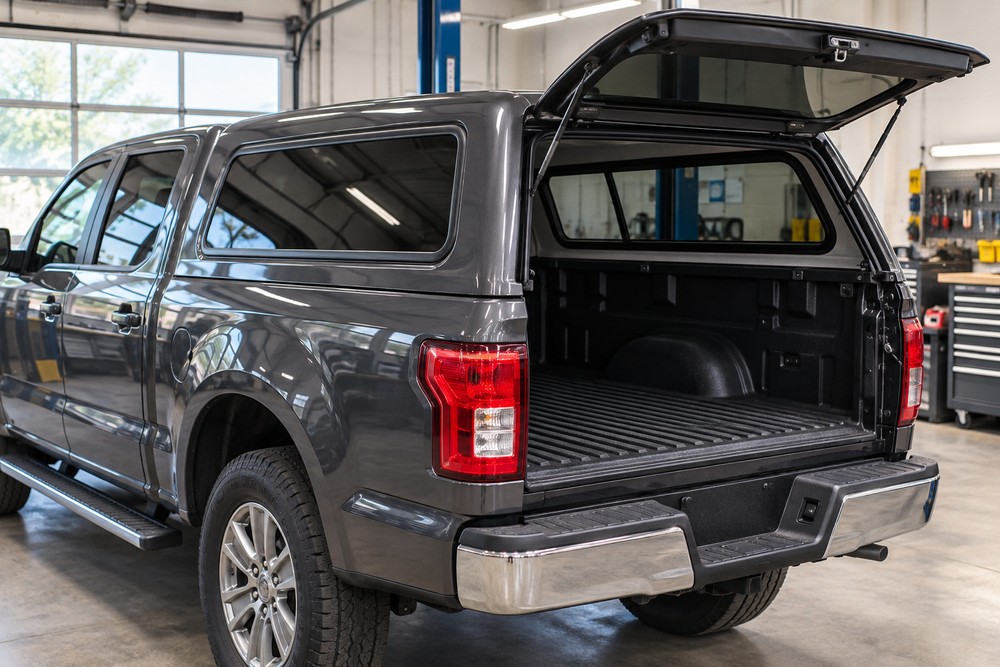
Most caps feature a rear hatch that opens above the tailgate. However, the size, opening angle, and hardware design can influence how easily equipment can be loaded or retrieved.
For pickup owners who regularly transport large containers, tools, or recreational equipment, rear hatch access should provide enough clearance to handle cargo without unnecessary repositioning.
The hatch should also operate without interfering with the tailgate, rear bumper accessories, or other installed equipment.
Side access can be equally important.
Some cap designs include sliding or opening side windows, while others offer larger side access panels. These configurations serve different purposes.
Sliding windows may support ventilation and access to smaller items. Larger opening panels can make it easier to retrieve equipment stored near the front of the pickup bed without climbing inside or unloading cargo from the rear.
For contractors who frequently retrieve tools throughout the workday, this distinction can affect efficiency.
Pickup owners should consider where their equipment will be stored and how often individual items need to be accessed. A cap with convenient rear access may still be limiting if frequently used equipment sits behind larger cargo.
Choosing a Cap Profile That Supports Cargo Clearance
Truck cap height influences both the vehicle’s appearance and the amount of usable space above the pickup bed.
Cab-height caps generally follow the roofline of the pickup. This creates a relatively consistent exterior profile while providing covered storage within the bed.
However, the interior height may limit the ability to transport tall equipment or stack larger containers.
Raised-roof designs provide additional vertical clearance. Depending on the configuration, this extra space may accommodate taller cargo, shelving arrangements, or equipment that would otherwise sit too close to the roof.
There are several practical factors to evaluate when comparing profiles.
First, consider the height of commonly transported items. Toolboxes, storage bins, camping equipment, and work materials may require different amounts of clearance.
Second, examine the opening dimensions. A cap may provide adequate interior height while still having a rear hatch opening that restricts loading taller objects.
Third, consider the vehicle’s overall height. Raised caps can affect clearance in garages, parking structures, and other areas with overhead restrictions.
The most suitable profile depends on the truck’s intended use rather than appearance alone.
For owners who alternate between work and recreational activities, considering future cargo needs can help prevent limitations after installation.
Weather Sealing and Existing Accessory Compatibility
Proper weather sealing depends on how the cap meets the pickup bed and how its openings are constructed.
A correctly fitted cap should sit evenly along the bed rails, with appropriate sealing materials between the mounting surfaces.
These seals help reduce water and dust intrusion, but they should not be considered a guarantee of a completely waterproof cargo area.
Water can enter through poorly aligned joints, damaged seals, rear hatch gaps, or openings associated with additional equipment.
Regular inspection is particularly relevant in Ontario, where seasonal rain, snow, freezing temperatures, and road salt can affect exposed components.
Pickup owners should also examine existing truck bed accessories before selecting a cap.
Bed rail covers, tie-down systems, cargo management equipment, and certain toolboxes may interfere with cap mounting or reduce available clearance.
Roof racks introduce additional considerations. Any rack installed on a cap must be compatible with its structure and manufacturer-approved load limits. The combined weight of the rack and cargo must remain within the applicable rating.
Where existing accessories are important to daily use, compatibility should be confirmed before installation rather than addressed after the cap has been mounted.
Why Proper Truck Cap Installation Matters
Even when a cap is designed for a particular pickup, correct installation remains essential.
Truck cap installation generally involves positioning the unit on the bed rails, applying appropriate sealing materials, and securing it using suitable mounting hardware.
The exact procedure varies according to the vehicle and cap design.
Alignment is especially important. A cap that sits unevenly may create gaps around the bed rails or prevent the rear hatch from closing correctly.
Mounting hardware must also be installed according to the manufacturer’s instructions. Incorrect hardware placement or tightening can affect the cap’s stability or place unnecessary stress on mounting surfaces.
Some caps include electrical components such as interior lighting, powered locks, or a high-mounted brake light. These features may require additional wiring and vehicle-specific connections.
Professional installation can help address these details while confirming that the cap matches the vehicle configuration.
For pickup owners in Kitchener, Waterloo, and Cambridge, Tri-City Custom Upfitters is a regional provider offering truck cap fitment and installation solutions. This type of vehicle-specific service is relevant when checking mounting requirements, accessory clearance, and alignment before the cap enters regular use.
After installation, owners should inspect the rear hatch operation, check visible seals, and confirm that existing