Three checks, run before any tool leaves the drawer, separate a sensible DIY plumbing repair from a job for a licensed plumber: whether the water to the fixture can be shut off, whether the work touches a gas line, a sewer connection, or permit-required territory, and whether the right tools and a fallback plan are on hand. A repair that passes all three is usually safe to attempt. One that fails any of them belongs to a professional.
First check: can the water be shut off?
Every plumbing repair starts at the shut-off valve. Sinks and toilets have small angle stops on the supply lines, and each one should be turned and tested before anything gets disconnected. A valve that hasn’t moved in years can seize or leak the first time it’s used, so a gentle test twice a year keeps them working.
If the fixture valve fails, the main shut-off for the whole house is the fallback, and everyone in the household should know where it is. A homeowner who cannot stop the water has no business opening the pipe, because even a simple washer swap becomes a flood when the supply keeps running.
The repairs that pass the test
Three common jobs fit most beginners. A running toilet usually traces to a worn flapper inside the tank, and the replacement part unclips and snaps into place with no tools at all. A dripping faucet typically needs a new cartridge or washer, which means shutting the water, removing the handle, and swapping the part before reassembling in reverse order.
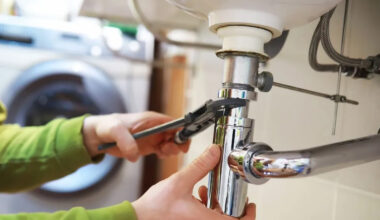
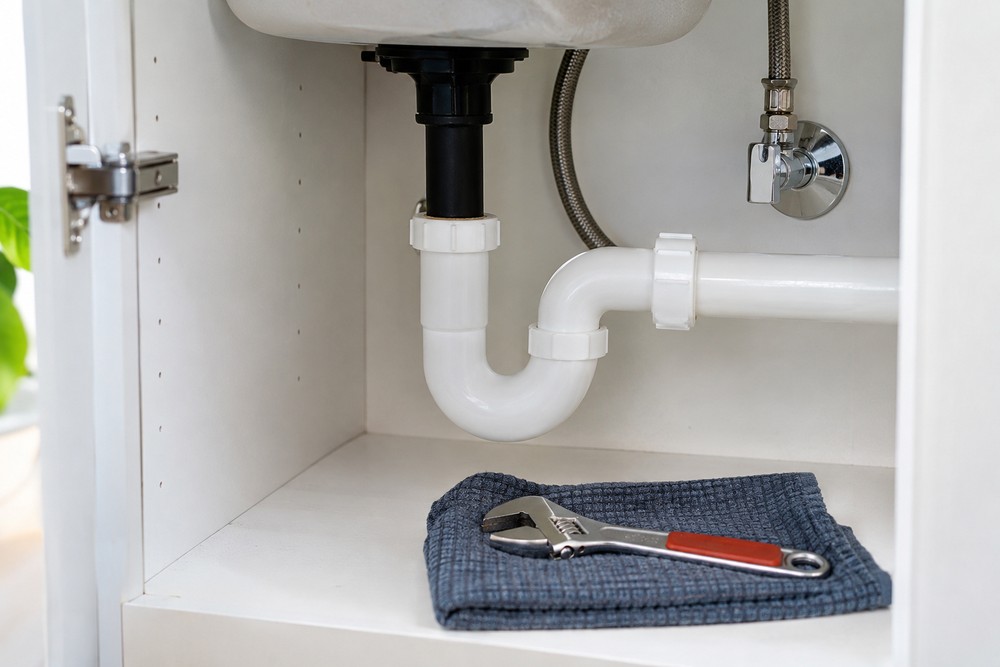
The third is a clog confined to a single drain. The P-trap, the curved section of pipe beneath a sink, loosens by hand or with tongue-and-groove pliers and empties into a bucket for cleaning. A hand auger, often sold as a drain snake, reaches clogs farther down the line and is about as far as DIY drain cleaning goes. Anyone reinstalling a fixture should follow the manufacturer’s instructions for the correct sealant, gasket, or washer, since the right part keeps the connection watertight.
Mid-repair surprises are where most people should stop. A supply nut that refuses to turn, corrosion flaking at a joint, or evidence of an earlier patch is a signal to close the valve and reassess. Forcing aged fittings is how a small job becomes a wall-opening job.
Symptoms that end the DIY attempt
Some warning signs move a problem out of DIY range no matter how handy the homeowner is. A clog that returns after snaking, or slow drains in several rooms at once, points past the fixture toward a branch line or the main sewer. Low pressure throughout the house and rust-colored water at the tap can each have several causes, from municipal supply issues to aging galvanized piping, so they are symptoms to describe to a plumber, not conclusions to draw at home. Ceiling stains and unexplained warm spots on a floor slab may warrant a professional leak investigation.
At that level, professionals bring diagnostic equipment. A sewer video inspection sends a camera down the line to locate root intrusion or a collapsed section without digging. Hydro jetting uses high-pressure water to scour grease and scale that a hand snake can’t touch. For work at that level, Tampa-area homeowners can start with Tampa plumbing repairs and upgrades and hire a licensed professional equipped for complex jobs.
Permits and the water heater line
Water heater replacements and whole-home repiping commonly require a permit and a follow-up inspection, and licensed plumbers handle that paperwork as a routine part of the job. Repiping a house with aging galvanized lines sits in the same category, since the scope and the inspection requirements exceed a weekend project.
Water heaters also combine water, high heat, and either gas or a heavy electrical draw in one appliance. The temperature and pressure relief valve protects the tank against dangerous overpressure, and mistakes around these systems leave little room for improvisation. That’s why they belong to a licensed pro.
The math behind the service call
A failed DIY attempt on a water heater, a main line, or a slab leak can release water for hours before anyone notices, and water moves into drywall and flooring quickly. The professional repair almost always costs less than the cleanup after a botched one.
Delay carries its own price. A small supply-line leak left alone over a long weekend can do more damage than the same leak handled the day it appears, which is why same-day and emergency dispatch exists. Homeowners weighing a service fee against a wait should count the water still moving inside the wall.
Locate the main shut-off, test the fixture valves, and keep a hand auger in the garage, and the small jobs stay small. Once a symptom spreads beyond one fixture or the job crosses into permit territory, call a professional.