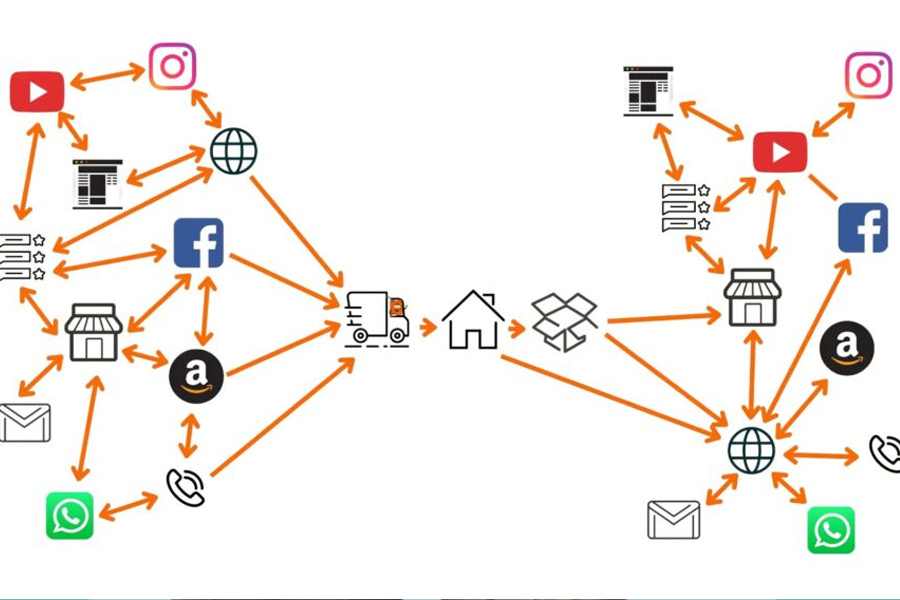
Why Integration Outperforms Isolated Campaigns
Most underperforming initiatives have a pattern. Messages fade, channels function in silos, and budgets follow surface data. Whole-stack approaches reverse the script. Each campaign feeds a shared pipeline because strategy, creative, media, data, and product experience align. Think orchestra, not solo. Search data informs content. Content powers email. Email drives retargeting. Retargeting identifies creative testing segments. The compounding flywheel pushes in one direction from every touchpoint.
Core Capabilities Your Agency Should Orchestrate
Credible partners do more than finish assignments. It builds a demand-capture, creation, and conversion mechanism. Planning, technological build-out, creative creation, iterative testing, and transparent financial reporting are expected. Every article should generate income, not merely reach. Modern programs include the following important components and how they interact.
Search Visibility Program
Search remains a high-intent beacon. After mapping keyword intent to customer jobs, information architecture is shaped to match that intent. Crawl efficiency, schema coverage, and Core Web Vitals are technical priorities. Internal linking, subject clusters, and FAQs that answer actual questions are content priorities. Track non-brand share of voice, intent-based click-through rate, aided conversions, and organic cohort revenue. The actual gain is compound qualified visibility development, not rankings.
Performance Media and Bidding Strategy
Paid media should behave like a disciplined lab. Build campaigns that separate prospecting from capture. Use audience layering, exclusions, and creative variations to test hypotheses, not hunches. Run structured incrementality tests to validate lift, especially for branded and retargeting segments. Rotate creative around problem statements, outcomes, and social proof. Normalize budgets to blended CAC and payback windows. The goal: predictable acquisition, not volatile spikes.
Social Storytelling and Community Operations
Platforms value story and community. Start with three to five positioning and consumer question content pillars. Get original video from producers and customers, then modify to platform grammar without compromising brand voice. Community management is important. Create response, escalation, and sentiment tracking standards. Organic builds trust, paid social expands reach. Track saves, shares, watch time, and content-assisted conversions.
Content Systems That Scale
Content is a system, not blog. Replace impromptu posts with modular content. One research asset becomes articles, video, carousels, and emails. From the start, align formats to funnel stages and distribution channels. Follow search insights, sales objections, and product launches in editorial calendars. Asset velocity, content-assisted pipeline, and new page indexation time should be monitored. Content that resonates boosts SEO, email, social, and sales.
Lifecycle Messaging and Automation
Prospects become customers and consumers become advocates through lifecycle communication. Create customer journeys around product view, abandoned cart, content download, onboarding milestone, usage decline. Pair segmentation with dynamic content and frequency caps. Keep data hygiene, sunset rules, and preference centers for deliverability. Track open and click rates, but focus on activation, repeat purchase, and expansion revenue.
Conversion Optimization and Experimentation
Traffic is expensive. Conversion is leverage. Establish a research backlog from analytics, heatmaps, session replays, surveys, and customer interviews. Prioritize tests with an impact-confidence-effort model. Define guardrails for sample size, minimum detectable effect, and test duration. Optimize for speed and clarity: fewer form fields, sharper value propositions, cleaner navigation, and trust signals close to calls to action. Report wins and losses. A disciplined cadence compounds learning.
Web Experience and Performance Engineering
Your website is your shopfront and salesperson. Without exception, build with speed, clarity, and accessibility. Use a design methodology that speeds iteration and maintains brand consistency. Use qualitative UX testing and quantitative funnel analysis. Analytics and experimentation tools should be built into templates. A fast, straightforward experience that reduces friction and boosts conversion for all traffic sources is the goal.
Analytics, Attribution, and Decision Science
Good decisions need clean data. Start with a reliable data layer and clear event taxonomy. Validate tracking against business events such as lead accepted or order fulfilled. Blend methods: platform attribution for tactical decisions, media mix modeling for strategic budget shifts, and geo or audience holdouts for lift. Provide role-specific dashboards: executives see revenue and efficiency, marketers see channel diagnostics, product sees cohort behavior. Make the data boring, and the decisions sharp.
Brand Architecture and Reputation Control
A brand drives performance. Clarify positioning, narrative, and tone so all channels sing the same song. Create guidelines creators and media purchasers can use. Listen for reviews, forums, and social conversation. Address issues with response and escalation playbooks to maintain trust. Along with performance analytics, track branded search volume, positive reviews, and sentiment. Like interest, reputation builds.
Partnerships: Influencers and Affiliates With Accountability
Rigorous partnership management expands reach. Judge producers and affiliates by audience fit and material quality, not followers. Utilize monitored links, unique codes, and attractive compensation schemes. Set disclosure, brand safety, and creative review guidelines. Cohort analysis detects fraud and rewards top performance. Partnerships should be measurable, not opaque.
Governance, Privacy, and Compliance
Marketers now prioritize privacy. Proper consent, cookie, and data retention rules are crucial. Keep consent log and tag governance workflow clean. Remove PII from analytics. Regularly check third-party scripts and pixels. Compliance safeguards your brand and growth stack when requirements change.
How Agencies Sequence Work in the First 120 Days
First month establishes groundwork. Discovery, analytics validation, and KPI single-source truth. Fixing important tracking gaps, shipping one high-impact landing page, and matching sponsored search to intent are quick wins. Structured creative, audience, and offer testing begins on days 31–60. Finalize content calendars and launch first pillar assets. Lifecycle automation, CRO sprints, and early influencer pilots dominate days 61–90. By day 120, budgets go to proven areas, SEO roadmaps are underway, and dashboards show impression-to-revenue. Simple pattern: stabilize data, prove traction, scale disciplinedly.
What Good Looks Like: Signals Your Agency Is Delivering
Look for non-vanity improvements. While volume grows, blended CAC stabilizes or lowers. Both paid and organic entry points increase conversion rates. Mature lifecycle programs boost LTV/CAC ratio. Non-brand voice rises. Reach boosts branded search volume. Creative testing creates knowledge, not noise. Reports are brief and decision-ready. Most importantly, the team explains what happened, why, and what they will do.
FAQ
How do I judge if an agency can truly integrate channels?
Ask for a walkthrough of a recent campaign that connects search insights to content, paid media, lifecycle, and CRO. Look for shared KPIs, a single experimentation roadmap, and dashboards that reflect the full funnel. If teams cannot explain handoffs between functions, integration is superficial.
What KPIs matter most for a full-stack program?
Consider revenue, gross margin, and payback. Include blended CAC, LTV/CAC, channel contribution margin, and non-brand share of voice. Consider conversion rate, TTV, and repeat purchase rate. Though useful, vanity metrics like impressions and clicks should not define success.
How long before results show up?
Technical fixes and paid media hygiene can pay off within weeks. Lifecycle and CRO improvements typically show gains within one to two cycles of testing. SEO and brand programs need longer horizons, often three to six months for meaningful movement. Expect early signal, then compounding impact.
How should I split budget across channels?
Allocate first to capture high intent and fix conversion leaks. Next, fund prospecting to fill the pipeline with clear guardrails on CAC and payback. Reserve budget for experimentation, usually 10 to 20 percent, to avoid stagnation. Rebalance monthly based on incrementality and marginal returns.
What is different for B2B versus ecommerce?
B2B uses account-based techniques, longer sales cycles, and more enablement. Lead quality and pipeline velocity trump volume. Ecommerce emphasizes catalog organization, feed management, and post-purchase lifecycle to increase repeat sales. Strong creative testing and CRO help both.
How do we avoid chasing vanity metrics?
Tie every metric to a financial outcome. Use diagnostic metrics to inform decisions, not to declare victory. Maintain a KPI hierarchy that rolls channel performance up to revenue and margin. Review tests with pre-registered hypotheses and thresholds for success to keep teams honest.
How do we align sales and marketing in a full-stack model?
Collaborate on lead qualifying, dashboards, and follow-up SLAs. Closed-loop reporting indicates which campaigns generate revenue and possibilities. Frequent joint evaluations let marketing insights determine outreach and sales comments shape messaging.
What happens when algorithms change and performance dips?
Treat volatility as a test case. Protect budgets with diversified channels, maintain creative velocity, and run controlled experiments to re-find edge. Keep core data clean so you can diagnose quickly. Teams that operate with clear hypotheses and fast iteration recover faster than those that rely on one playbook.