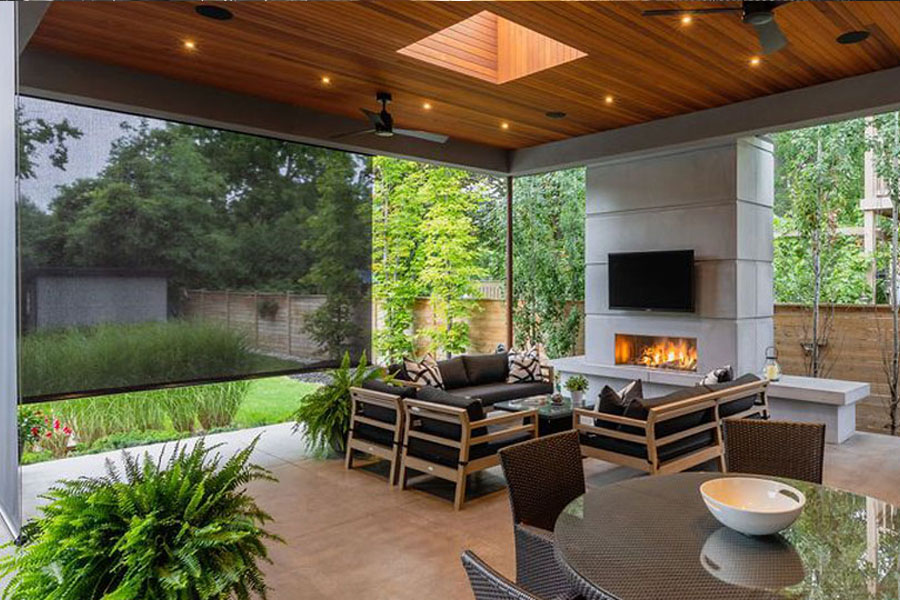
Start With a Master Plan, Not a Shopping Cart
Successful smart exteriors start on paper. List results before devices. Do you desire safer nighttime arrivals, lower water expenses, or automatic all-season lighting? Sketch the property, including access points, paths, planting zones, power outlets, hose bibs, and where people go. Note summer and winter sun angles, wind exposure, and ice spots. Front approach, social patio, side yard utility, and garden beds are zones with various functions. Wiring, networking, and automations follow that plan to create a unified system.
Power, Network, and Weatherproofing
Outdoors is harsh. Build for it. Dedicate exterior circuits with GFCI protection, use in-use covers, and choose weather rated boxes and fittings. For lighting, low voltage runs from a transformer keep things efficient and easier to expand. Where cameras and access points fit, consider power over ethernet for a single cable that supplies both power and data, housed in UV stable conduit and buried to proper depth. Wifi at the edge of a lot is fickle, so plan for mesh access points rated for outdoors or a wired backhaul where possible. Thread and similar mesh protocols thrive outside with low power devices if you place a few border routers in sheltered spots.
Hardware should have climate-appropriate ingress protection. Fixtures near sprinklers and driving rain should be IP65 or above. Long cable lines promote voltage spikes, so add whole-home surge protection and point-of-use surge arrestors. Maintain service loops at junctions to replace fixtures without pulling new cable. Imagine outdoor enclosures as raincoats and lightning rods.
Choosing Protocols and Hubs That Can Grow
Being compatible keeps you agile. A core ecosystem should support local governance, schedules that run even when the internet goes down, and new standards. Matter and Thread support multiple brands, whereas Zigbee and Z Wave power many outside sensors. Wifi is good for high-bandwidth cameras, but mesh devices lessen congestion. Prefer devices with automatic updates, clear privacy settings, and manual overrides. Good hubs unify scenes spanning lighting, sensors, gates, and irrigation so one event can trigger a response without fragile workarounds.
Lighting That Performs and Disappears
See and miss the nicest outside illumination. Use warmer colors near sitting for nighttime comfort and slightly cooler colors for path visibility. Keep brightness low and concentrated. Avoid glare, trespass, and night sky light by shielding and aiming fixtures. Since many external situations look best at 20–40% output, choose dimmable drivers with smooth low-end control. Amber light attracts fewer insects and is wildlife-friendly. Circuits should separate architectural lighting from special occasion channels. This makes switching from quiet workday to festive weekend easy without resetting the system.
Sample routine ideas: path lights glide to 30 percent at sunset, then rise to 60 percent when the front door unlocks at night. Accent lighting dims to a whisper after midnight. Motion near the side gate nudges perimeter lights for five minutes, then the scene settles back.
Security That Guards Without Crying Wolf
Cameras and sensors should see humans, not branches. Wide coverage near doors requires shorter focal lengths than driveways. Privacy masks hide neighbors. Try human and vehicle classification instead of motion, and adjust sensitivity by time of day. Pair detection with lens-aligned lighting for clear footage. You should raise approach zone lights and record the event if a camera alerts you.
Security also lives at the edge of convenience. Keypads, smart gates, and doorbell stations need reliable power and network with backup. Keep access logs, set role based codes for trades, and expire temporary codes automatically. Store recordings with a clear retention policy. Use two factor authentication on every account, and prefer local viewing with encrypted remote access.
Irrigation That Reads the Weather and the Soil
Water is the biggest outdoor expense. Separate landscapes by microclimate. South-facing beds with reflected heat don’t drink like shaded lawn strips. Reduce evaporation by spraying only when needed and using drip in planting beds. An evapotranspiration controller adjusts for heat, humidity, and wind to hydrate the plant used. To avoid drifting runs, use a rain sensor and wind thresholds. Soil moisture probes in typical zones adjust seasonal run times.
Flow meters pay for themselves by detecting damaged heads or cut lines early. Alert for unexpected flow and auto shutoff with an isolation valve for leaks. Schedule a blowout or drain and a spring recommissioning checklist with filter cleaning and valve testing before first frost.
Scenes, Schedules, and Automations You Will Actually Use
Automations should feel like a stage crew changing sets behind the curtain. Start with three daily scenes: Arrive Home, Evening Settle, and Night Guard. Arrive Home can brighten the approach, unlock the gate, start a short driveway camera bookmark, and cue soft patio light if presence is detected. Evening Settle dims architectural lights and begins a slow color temperature warm shift. Night Guard reduces most zones to low output while enabling motion boosts and recording.
Add seasonal playbooks. Summer irrigation begins earlier to avoid wind and evaporation. Winter lighting is warmer for comfort, and water features halt before freezing. Reserve a calendar-based channel of lights and scene for holidays and celebrations without affecting your usual routine.
Energy and Water ROI, With Numbers
Minor adjustments add up. Five 8-watt LEDs may replace five 50-watt halogen floodlights for four hours a night. That lowers from 1 kWh/night to 0.16. In a heavy season, the difference is $25 per month at 18 cents per kWh. Add motion control to cut run time in half and save more.
Even larger irrigation adjustments. An average suburban spray zone can push 200 gallons in 20 minutes. Avoiding two runs per week during wet periods saves 400 gallons per week, over 1,600 per month in shoulder seasons. An invisible leak detected by flow monitoring can save thousands of gallons in a weekend. These numbers are estimates, but they show why many houses pay for automation gear in a year or two.
Maintenance, Resilience, and Safety
Set and forget is not smart. Schedule maintenance. Clean camera lenses quarterly, remove cobwebs, and trim sensor-blocking plants. Fixture seals, moisture, and heat-loosened connections should be checked. Avoid surprises before weekend events by scheduling monthly firmware updates.
Plan for failure nicely. Lights should follow dawn and sunset and gates should open with a key if the internet goes down. Maintain a modest uninterruptible power source on the core network to keep rules and cameras running during short outages. Label extra bulbs, gaskets, and transformer fuse kits, and name circuits and devices. Safety first: use wet-rated fixtures and enclosures, check bonding and grounding, and neatly segregate low and line voltage in boxes.
Accessibility and Everyday Comfort
A linked exterior should be useable by all residents. Location weatherproof scene buttons at garage entrance and back patio touch locations. Provide voice shortcuts for hand-full arrivals. A soft porch light suggests a lively welcoming scene for guests. Use mild pathway slopes at nightfall and longer motion hold durations to prevent lights cycling for aging in place. Guest mode limits recordings in specific zones while maintaining perimeter security.
Sustainability and Neighbor Friendly Design
Technology shouldn’t dominate the landscape. Optics should keep light on your land and not in the sky. Favor warm spectrums near water and ecosystems. Control pumps and features at night. Align watering schedules with local limits and water early morning when plants drink best. If you intend edible beds or pollinator areas, place low, shielded, low-output lighting to prevent disturbing nocturnal insects.
FAQ
Can I retrofit a smart exterior without opening walls or trenching everywhere
Yes. Start with wireless fixtures and battery sensors in strategic locations, then add low voltage wiring as you determine light and coverage needs. Avoid breaking up hardscaping for shallow runs with conduit and landscaping margins. Access points and cameras may be powered over ethernet through attic drips and eaves without any maintenance.
How do I keep everything working during internet or power outages
Pair a local scheduler hub with a tiny modem, router, and hub battery backup. Keep a physical key for gates and doors and set crucial lights to a basic timer. Keep important automations on the local controller to maintain daily operations without cloud services.
What outdoor ratings should I look for in fixtures and devices
Gear exposed to rain should have wet location ratings and IP65 or above ingress protection. For close-range pressure washer or sprinkler regions, use IP66 or higher. UV-resistant cables and corrosion-resistant enclosures with tight seals are needed.
How do I reduce false motion alerts from cameras and lights
Zones without moving trees and streets. Use daytime and nighttime human or vehicle detection with varied sensitivity. Lower the camera to view more ground and less sky. Improve triggering accuracy with narrow beam motion sensors targeted across expected movement.
How often should I service a smart irrigation system
Inspect heads and drip lines regularly, clear filters quarterly, and check sensor readings in spring. Set a baseline and catch slow leaks with a flow test at the start of each season. Winterize before the first hard freeze and record each zone’s usual runtime for easy troubleshooting.
Is a professionally installed system necessary, or can I DIY
Low-voltage lighting and sensors are popular DIY projects for homeowners. Professionals excel at new circuits, trenching beneath hardscape, and integrated gate and access control. A hybrid approach is typical. Plan it yourself, outsource the heavy lifting, and program scenes and schedules at your own pace.