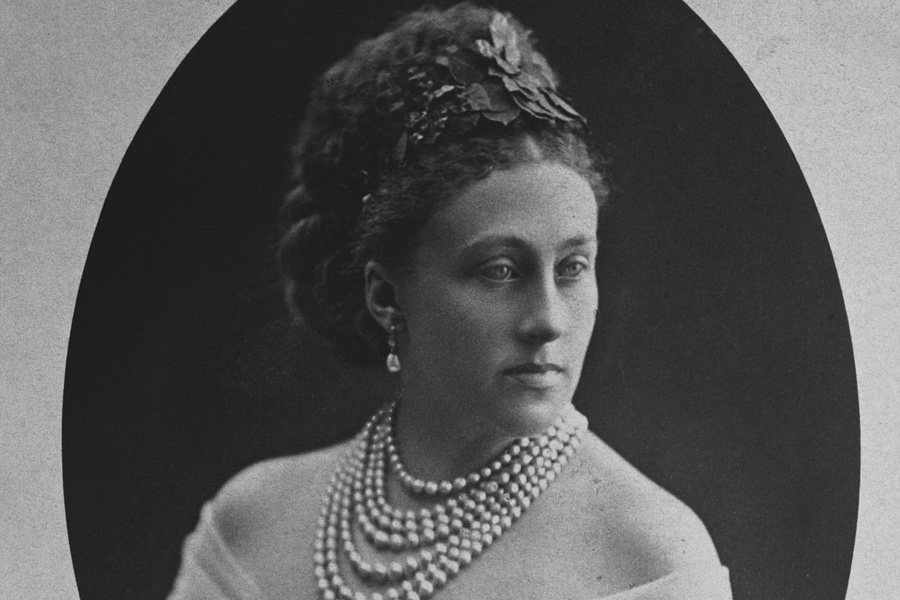
Basic Information
| Attribute | Details |
|---|---|
| Full Name | Caroline Louisa Burnaby |
| Known As | Louisa Cavendish-Bentinck |
| Date of Birth | 23 November 1832 |
| Place of Birth | Baggrave Hall, Leicestershire, England |
| Date of Death | 6 July 1918 (aged 85) |
| Place of Death | Dawlish, Devon, England |
| Nationality | British |
| Parents | Edwyn Burnaby of Baggrave Hall; Anne Caroline Salisbury |
| Marriages | Rev. Charles Cavendish-Bentinck (married 13 December 1859); Henry Warren Scott (married 30 September 1870) |
| Children | Cecilia Nina (1862–1938); Ann Violet (1864–1932); Hyacinth (1864–1916) |
| Known For | Maternal grandmother of Queen Elizabeth The Queen Mother; great-grandmother of Queen Elizabeth II |
A Life Rooted in the English Countryside
Louisa Cavendish-Bentinck was born into the quiet grandeur of Baggrave Hall, a Leicestershire estate that embodied the steady rhythms of rural Victorian England. Her childhood was shaped by the obligations and refinements of an established county family, the Burnabys, whose local standing and social ties anchored her to a world of parishes, estates, and seasonal gatherings. Baggrave Hall, with its long drive and layered history, was more than an address—it was an atmosphere.
In 1859, Louisa married the Reverend Charles Cavendish-Bentinck, a union that intertwined the Burnaby lineage with one of Britain’s notable aristocratic names. Their household—respectable, devout, and well placed—became the setting for the upbringing of three children who would, in time, extend the family’s influence far beyond the parish registers and county chronicles.
Family and Personal Relationships
The Cavendish-Bentinck marriage produced a trio of daughters whose lives carried the family into new spheres of prominence:
- Cecilia Nina (1862–1938), who would marry Claude Bowes-Lyon, 14th Earl of Strathmore and Kinghorne, setting the stage for a direct link to the modern British monarchy.
- Ann Violet (1864–1932), whose quiet profile reflected the countless women of her era who managed family ties and social obligations with precision and grace.
- Hyacinth (1864–1916), whose life spanned the late Victorian and Edwardian periods, touching two different worlds in style and sentiment.
After the death of Rev. Charles Cavendish-Bentinck, Louisa married Henry Warren Scott on 30 September 1870. The marriage brought companionship and stability; no children are recorded from this second union. As the decades turned, her role became that of a matriarch—steady, watchful, embedded in a network of kin whose fortunes rose with the new century.
Timeline
| Date | Event |
|---|---|
| 23 November 1832 | Birth at Baggrave Hall, Leicestershire |
| 13 December 1859 | Marriage to Rev. Charles Cavendish-Bentinck |
| 1862 | Birth of Cecilia Nina |
| 1864 | Births of Ann Violet and Hyacinth |
| 30 September 1870 | Marriage to Henry Warren Scott |
| 6 July 1918 | Death at Dawlish, Devon |
From Parish to Palace: The Bowes-Lyon Connection
The hinge in Louisa’s legacy swung on Cecilia Nina Cavendish-Bentinck’s marriage to Claude Bowes-Lyon, 14th Earl of Strathmore and Kinghorne. Through this union, family dinners and estate management evolved into matters of national interest. Their daughter, Elizabeth Bowes-Lyon (later Queen Elizabeth The Queen Mother), married the future King George VI, and their daughter, Queen Elizabeth II, reshaped the modern monarchy through decades of highly visible national and international service.
Louisa’s lifetime ended before these events unfolded, yet she stands at the root of a living tree. Her line reaches forward through ceremony and crisis, celebration and change, carrying names and titles that have become familiar to millions.
Key Descendants
| Generation | Name | Lifespan | Role |
|---|---|---|---|
| Daughter | Cecilia Nina Cavendish-Bentinck | 1862–1938 | Countess of Strathmore and Kinghorne |
| Granddaughter | Elizabeth Bowes-Lyon | 1900–2002 | Queen consort (Queen Elizabeth The Queen Mother) |
| Great-granddaughter | Queen Elizabeth II | 1926–2022 | Queen of the United Kingdom |
| 2× Great-grandson | King Charles III | 1948– | King of the United Kingdom |
Homes, Seasons, and Social Circles
Louisa’s life unfolded across notable locations: Baggrave Hall, where she was born; the parsonage and circles connected to her first husband’s clerical life; and later Dawlish in Devon, where she spent her final years. Each place reflects the measured cadence of Victorian and Edwardian social life—parish calls, county balls, christenings and funerals recorded in neat, slanting script.
- Baggrave Hall, Leicestershire: A seat of the Burnaby family, emblematic of rural prestige and service.
- Clerical and county residences: Linked to the Cavendish-Bentinck name and the rhythm of parish duty.
- Dawlish, Devon: A seaside town offering restorative air and the quiet dignity of retirement.
Family Snapshot
| Name | Relation | Birth–Death | Notes |
|---|---|---|---|
| Edwyn Burnaby | Father | 1798–1867 | Landed gentleman of Baggrave Hall |
| Anne Caroline Salisbury | Mother | 1805–1888 | Matriarch with social standing |
| Rev. Charles Cavendish-Bentinck | First Husband | 1817–1865 | Clergyman; member of the Cavendish-Bentinck family |
| Henry Warren Scott | Second Husband | 1828–1900 | Companion in later life; no recorded children |
| Cecilia Nina | Daughter | 1862–1938 | Married 14th Earl of Strathmore and Kinghorne |
| Ann Violet | Daughter | 1864–1932 | Maintained family links across generations |
| Hyacinth | Daughter | 1864–1916 | Lived through late Victorian and Edwardian eras |
Louisa’s Era: Duty, Dynasty, and the English Way
Louisa lived through a century’s transformations—industrial expansion, social evolution, and the early tremors of modernity. Yet her story is not one of public office or headline-making deeds. It is the story of the English aristocratic matron whose influence flowed through family ties, marriages, and the thoughtful governance of household life. In that unsung arena, dynasties are born.
Her legacy is etched not in statues but in lineage—an invisible architecture binding Baggrave Hall to Buckingham Palace. Like a steady hand on a family compass, Louisa guided her kin through the expectations of class and faith, preparing a generation that would step onto a national stage.
FAQ
Who were Louisa Cavendish-Bentinck’s parents?
Her parents were Edwyn Burnaby of Baggrave Hall and Anne Caroline Salisbury.
How many children did she have?
She had three children: Cecilia Nina, Ann Violet, and Hyacinth.
Whom did her daughter Cecilia marry?
Cecilia married Claude Bowes-Lyon, 14th Earl of Strathmore and Kinghorne.
How is Louisa related to Queen Elizabeth II?
She is Queen Elizabeth II’s great-grandmother through her daughter Cecilia and granddaughter Elizabeth Bowes-Lyon.
When and where was she born?
She was born on 23 November 1832 at Baggrave Hall, Leicestershire, England.
When and where did she die?
She died on 6 July 1918 in Dawlish, Devon, England.
Did Louisa have a notable public career?
No public career is recorded; her influence derives from familial and aristocratic roles.
Why is she significant in British history?
Her significance lies in her role as a matriarch whose descendants include Queen Elizabeth The Queen Mother, Queen Elizabeth II, and King Charles III.