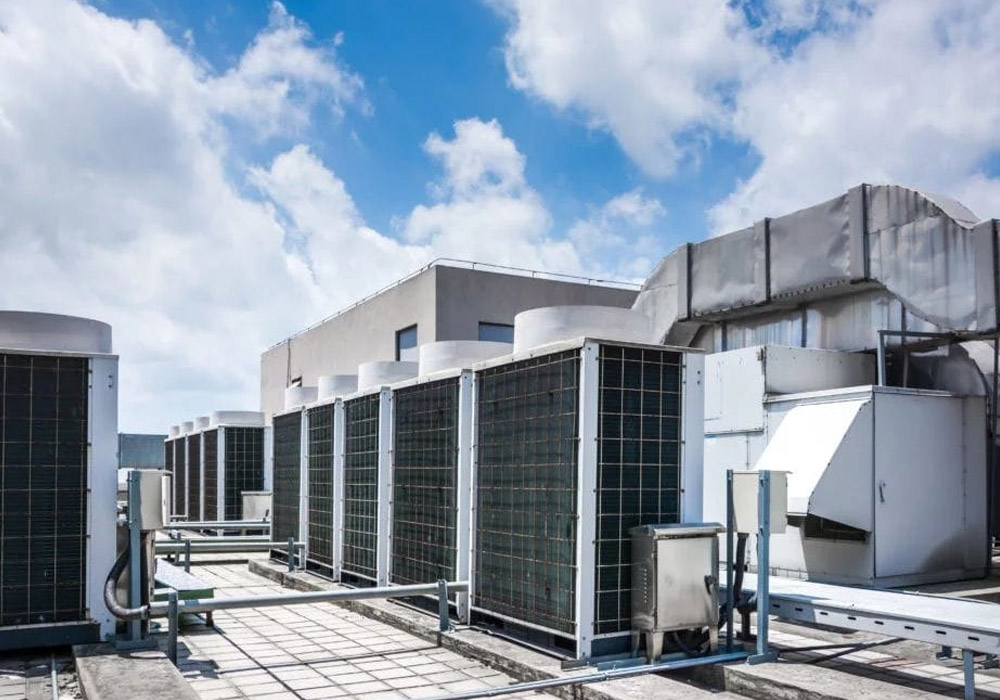
That unexpected budget line item for an emergency repair is often where the conversation starts. A critical rooftop unit fails during a heatwave, or a persistent rattle in the ductwork finally becomes a full-blown breakdown. These reactive fixes are not just costly in terms of parts and labor; they result in tenant complaints, lost productivity, and damage to your reputation as a facility manager. The real expense of a poorly maintained system shows up long before the final invoice.
It appears as gradually rising energy bills or as equipment that fails years before its expected end-of-life. Moving from a reactive, break-fix model to a proactive one is the goal. A properly structured commercial hvac maintenance plan is the tool for that job. But not all plans are created equal. The difference between a true asset management strategy and a simple “filter change” contract lies in the details you might not think to question.
Maintaining ideal indoor conditions in large commercial spaces or climate-controlled galleries often requires specialized heating and cooling management. Proper air distribution helps protect sensitive items and maintains consistent comfort levels. Property managers looking to optimize their HVAC maintenance protocols can learn this here now to better evaluate operational needs and improve overall system efficiency.
Quick answer: A valuable maintenance agreement is less about a low price and more about a detailed scope of work. It should clearly define tasks, schedules, and performance metrics. The right provider will focus on extending equipment life and optimizing energy use, not just responding to failures.
What’s inside
- What’s the real goal of a maintenance plan?
- How do I evaluate the scope of work?
- What credentials and insurance should I verify?
- Are there hidden costs or contract “gotchas”?
- What questions reveal a provider’s true expertise?
- Frequently Asked Questions
────────────────────────────────────────
What’s the Real Goal of a Maintenance Plan?
The primary goal is to shift your HVAC budget from unpredictable, high-cost repairs to predictable, lower-cost preventative care that extends asset life.
A system rarely fails all at once. The breakdown of a major component, like a compressor, is often the final result of smaller, neglected issues. A worn fan belt creates vibration that stresses motor bearings over time. Dirty evaporator coils restrict airflow, which can lead to liquid refrigerant returning to the compressor and causing severe mechanical damage. These are the kinds of slow-motion failures that a scheduled inspection is designed to catch and correct for a few dollars, saving thousands in emergency replacement costs. For instance, poorly designed or unbalanced return air systems in commercial buildings can increase fan power by up to 10–20% and cause cooling energy use increases of 5–15%, highlighting the potential energy penalty of not performing proper air balancing, according to the University of Central Florida – Florida Solar Energy Center.
Beyond preventing catastrophic failure, the most immediate return from maintenance is in operational efficiency. Commercial HVAC systems are significant energy consumers in any building. In fact, commercial buildings account for about 36% of U.S. building energy consumption, with space heating, cooling, and ventilation together representing roughly 30–40% of commercial building site energy use, as reported by the U.S. Department of Energy / Pacific Northwest National Laboratory. When filters become clogged with dust or condenser coils are fouled by outdoor debris, the system must run longer and harder to achieve the same cooling or heating effect. This strain directly translates into higher monthly utility bills as the equipment fights against itself to function.
❝ A good rule of thumb for budgeting is to allocate 1% to 3% of your total HVAC asset replacement value to annual maintenance. If your emergency repair spending consistently exceeds your planned maintenance budget, it’s a clear signal that your strategy is reactive and likely costing you more in the long run.
Every piece of mechanical equipment has a manufacturer-rated service life. Consistent neglect is the fastest way to shorten it. Proper maintenance is fundamentally about managing long-term capital assets. By ensuring components are clean, lubricated, and calibrated, you reduce the cumulative wear and tear that forces early replacement. This turns a major capital expense from a sudden emergency into a predictable line item in your five or ten-year plan.
Maintaining ideal environmental conditions in galleries and auction houses helps preserve sensitive artwork and prevent material degradation over time. Facility managers who oversee these spaces often consult with an hvac specialist to support stable temperature and humidity levels during major exhibition cycles.
────────────────────────────────────────
How do I evaluate the scope of work?
A strong scope of work is defined by specific, measurable tasks and their frequencies, not by vague promises.
Look for a detailed task list that goes far beyond a simple “system check.” A generic proposal might list “inspect fan motor,” while a professional one will specify “measure and record fan motor amperage and voltage, and inspect bearings for wear.” The difference is critical. One is a visual glance; the other is a data-driven assessment that can predict failure. The document should clearly outline what happens on each visit, leaving no room for ambiguity.
A comprehensive plan also differentiates tasks by frequency. Not every component needs attention every month. A well-structured agreement will have a tiered schedule of services.
| Frequency | Sample Tasks |
| Monthly or Quarterly | Replace standard air filters, inspect and adjust belts, clean condensate drain pans, check thermostat calibration. |
| Semi-Annually | Clean condenser and evaporator coils, lubricate motors and bearings, check refrigerant charge. |
| Annually | Inspect heat exchanger for cracks, tighten all electrical connections, test safety controls and sequencers. |
This tiered approach ensures the right work gets done at the right time without over-servicing the equipment. It also provides a clear framework for accountability.
❝ Ask a potential provider for a sample service report. If it’s just a checklist with boxes ticked, that’s a red flag. You should be looking for a report that includes actual measurements: temperatures, pressures, and amperage draws. Without this data, you have no baseline to track system health over time.
Finally, a quality plan should align with established industry best practices. The American Society of Heating, Refrigerating and Air-Conditioning Engineers (ASHRAE) publishes Standard 180, which outlines standard practices for inspecting and maintaining commercial HVAC systems. While not a legal code, it represents the industry consensus on proper care. Ask if a provider’s maintenance program is designed to meet or exceed these guidelines. This question alone can help separate serious engineering-focused firms from less thorough operators. With a large and varied field of contractors, industry data tracked by Statista underscores the importance of verifying a provider’s commitment to established standards.
────────────────────────────────────────
Are There Hidden Costs or Contract “Gotchas”?
Yes, ambiguity in the contract is the biggest source of unexpected charges. A low initial price can be misleading if the agreement leaves you exposed to high costs for non-covered labor, parts, or after-hours calls.
Start by clarifying how parts are handled. The agreement should explicitly state which parts are included. Consumables like filters and belts are often covered, but what about major components like motors or compressors? A standard preventative plan typically does not include these. The contract should specify if you receive a discount on these larger parts. Ask if the provider uses Original Equipment Manufacturer (OEM) parts or less expensive aftermarket alternatives. The choice can impact performance and warranty coverage on newer equipment.
The next area to examine is labor. Your plan covers the labor for scheduled maintenance visits, but what happens when a technician finds a problem that needs immediate repair? Most agreements will charge a separate, pre-negotiated rate for this “non-covered” work. You need to know this rate in advance. Ask for a clear schedule of labor rates: one for standard business hours, one for after-hours, and one for holidays. Without this, a small repair can quickly become an expensive surprise.
❝ Be wary of vague terms like “priority service.” This often just means you get moved to the front of the line for non-contract customers. During a city-wide heatwave, that line can still be very long. A “guaranteed response time,” such as four hours, is a specific, measurable commitment that should be written into the contract.
Finally, read the exclusions clause carefully. Every contract has one. This section lists what is explicitly not covered by the agreement. Common exclusions include catastrophic events like lightning strikes, vandalism, or building power supply issues. It may also exclude refrigerant costs, especially for older R-22 systems which are being phased out and are expensive to source. Obsolescence is another key exclusion; if a part for a 30-year-old unit is no longer manufactured, the contract won’t cover the cost of a system retrofit. A transparent provider will walk you through these exclusions so you understand the limits of the coverage.
────────────────────────────────────────
Frequently Asked Questions
What makes an HVAC system “commercial” versus “residential”? Commercial systems are typically larger, modular, and more complex than their residential counterparts. They often include components you won’t find in a home, such as economizers that use outside air for “free cooling,” variable air volume (VAV) boxes to control individual zones, and more sophisticated building automation systems. The maintenance focus is on minimizing business disruption and managing a significant operational asset.
What is a “full coverage” maintenance plan? A full coverage plan, sometimes called a comprehensive agreement, goes beyond preventative tasks. It acts more like an insurance policy by including the cost of most parts and labor for repairs that arise between scheduled visits. While more expensive upfront, it provides a fixed, predictable annual cost for your entire HVAC budget, protecting you from large, unexpected repair invoices.
How long should a standard maintenance visit take? The time depends on the number and type of units, but you can use a general benchmark. A thorough preventative check on a single commercial rooftop unit, including cleaning coils and recording measurements, should take a technician 45 to 90 minutes. If a provider is in and out in 15 minutes, they are likely only changing filters and not performing a comprehensive inspection.
Can a maintenance plan help with capital expenditure (CapEx) planning? Yes. A key benefit of a data-driven program is asset lifecycle management. By tracking performance metrics like motor amperage and compressor run times, your provider can identify signs of aging and predict when a unit is nearing its end of life. This allows you to proactively budget for replacement years in advance, avoiding the high costs and disruption of an emergency installation.
What if my system uses older R-22 refrigerant? R-22 refrigerant has been phased out of production due to environmental regulations. While using existing R-22 systems is legal, the refrigerant itself is now extremely expensive and difficult to source for repairs. Your maintenance plan should include a specific strategy for these units, focusing on meticulous leak detection and a long-term plan to replace the equipment with a modern, compliant system.
────────────────────────────────────────
The Shift from Maintenance Task to Asset Management
Choosing a maintenance plan is less about finding the lowest-cost service and more about adopting a new financial strategy for your facility’s largest mechanical assets. The goal is to transform your HVAC systems from an unpredictable source of emergency expenses into a managed portfolio. A reactive approach guarantees you will pay the highest possible price for repairs, parts, and labor, often during a crisis. A proactive, data-driven plan provides operational stability and, more importantly, budget predictability.
The fundamental difference between a basic service and a strategic partner comes down to the quality of information you receive. A simple checklist confirms a task was done. A detailed service report with recorded measurements, pressures, temperatures, and electrical draws, provides the data needed to track equipment health over time. This is the information that allows you to move from simply fixing what’s broken to intelligently managing the entire lifecycle of your equipment.
Ultimately, the right agreement provides the foresight to turn major capital expenditures into planned, budgeted events instead of disruptive emergencies. It’s a decision that should be evaluated not just on its ability to prevent a breakdown, but on its power to inform your long-term financial and operational planning.
────────────────────────────────────────
About the author
Thrivaire is a commercial HVAC service provider specializing in the maintenance, repair, replacement, and construction of systems for commercial and industrial facilities across Colorado. Based in Denver, the company works with facility managers and building owners to develop long-term asset management strategies. Their service model emphasizes data-driven preventative care and system optimization to extend equipment life and ensure budget predictability for clients in sectors ranging from healthcare to government. Learn more at Thrivaire.