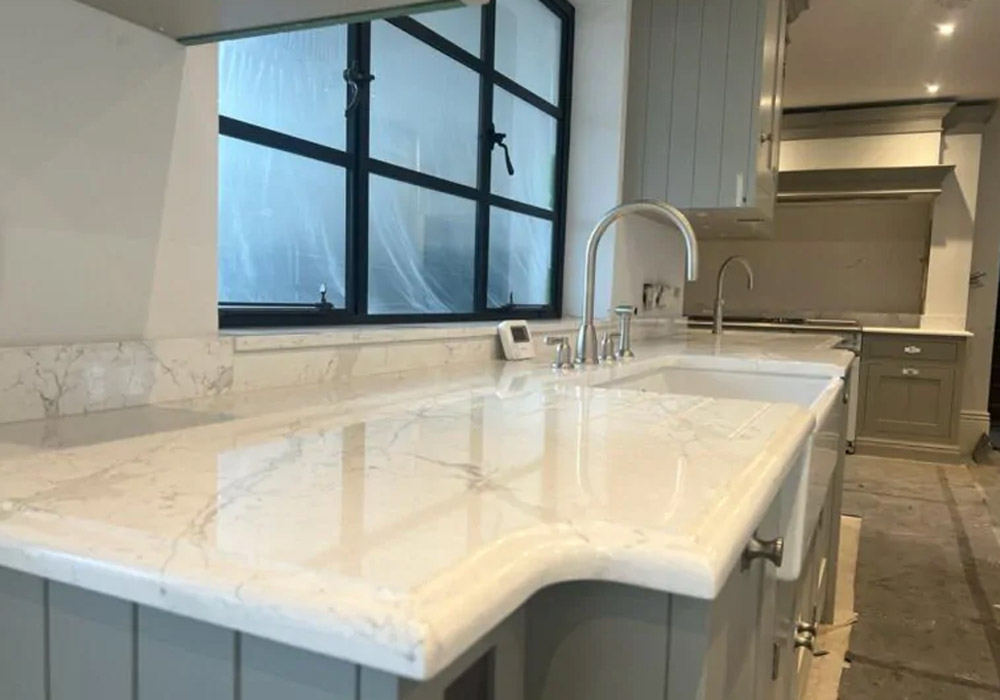
You chose quartz for its promise of durability. The brochure likely highlighted its non-porous, scratch-resistant surface, positioning it as a low-maintenance hero compared to marble or granite. Yet, a surprising number of these “bulletproof” countertops end up with dull spots, cloudy patches, or even cracks from thermal shock. The problem is not the material, but the gap between marketing and the realities of daily use.
The very things you do to keep a kitchen clean can be the source of the damage. A quick wipe with a common household cleaner or placing a hot pan down for just a moment can cause irreversible harm. Understanding the specific vulnerabilities of engineered stone is the key. Proper quartz countertop maintenance is less about intensive labor and more about avoiding a few specific, and often surprising, mistakes that can permanently mar the finish.
Quick answer: Quartz is highly durable but not indestructible. It can be damaged by high heat from pans, harsh chemical cleaners containing bleach or ammonia, and abrasive scouring pads. a strong care involves using mild soap and water for daily cleaning and always using trivets for hot cookware.
What’s inside
- What Cleaners Are Actually Safe for Quartz?
- Can You Put a Hot Pan on a Quartz Countertop?
- How Do You Remove Tough Stains Without Harming the Surface?
- Does Quartz Need to Be Sealed Like Granite?
- The Most Common (and Surprising) Ways People Ruin Their Quartz
- Frequently Asked Questions About Quartz Care
────────────────────────────────────────
What Are the Real Costs of Improper Quartz Care?
Neglecting the specific care requirements for quartz can lead to permanent cosmetic damage that is difficult and expensive to repair, potentially devaluing one of the most significant investments in a kitchen. While daily cleaning is simple, the financial stakes of a single mistake, like placing a hot pan directly on the surface or using the wrong chemical cleaner, are surprisingly high. Protecting the countertop is about protecting the value of the entire kitchen renovation.
The scale of this investment is substantial. According to the Joint Center for Housing Studies of Harvard University, spending on home improvements and repairs has grown into a massive market, underlining how much value homeowners place in their properties. A kitchen remodel is often the centerpiece of this spending. When a primary feature like a countertop is damaged, it not only incurs a direct replacement cost but can also detract from the perceived value and quality of the entire space you’ve invested so heavily in.
Engineered quartz has become the dominant material choice for these projects. Data from the National Kitchen & Bath Association (NKBA) shows its popularity, with designers specifying it in the vast majority of modern kitchens. This widespread adoption means that a huge number of homeowners have the same vulnerabilities. The very thing that makes quartz so versatile, its composition of crushed stone held together by polymer resins, is also its primary weakness. It is the resin, not the stone, that is susceptible to damage.
❝ As a rule of thumb, if a pot or pan is too hot to hold with your bare hand, it is too hot to place directly on your quartz countertop. The resin binders can be damaged by temperatures as low as 300°F (150°C), causing discoloration or a white, cloudy mark known as thermal shock.
Unlike a scratch in solid wood that can be sanded out or a stain on granite that can sometimes be poulticed, damage to the resin in quartz is often irreversible. A deep chemical etch from a cleaner with bleach or ammonia, or a significant burn mark, cannot be polished away because the damage is integral to the material’s structure. Professional surface repair specialists may be able to mitigate minor dulling, but severe damage frequently requires the complete replacement of the affected slab, a costly and disruptive process.
────────────────────────────────────────
How Do You Know if a Cleaner is Actually Safe for Quartz?
The safest cleaners for quartz are pH-neutral, non-abrasive, and free of harsh chemicals like bleach or ammonia; you can verify this by reading the ingredients or looking for a third-party certification. Many general-purpose kitchen cleaners are too aggressive for the polymer resins that bind the quartz crystals together. It is this resin, not the stone itself, that is vulnerable to chemical damage.
The key is to avoid products at the extreme ends of the pH scale. Highly acidic substances like vinegar or lemon-based cleaners can chemically etch the resin, creating a dull, hazy spot on the surface. Similarly, highly alkaline cleaners, such as oven cleaner or solutions containing bleach, can cause discoloration and break down the resin’s structure. According to the U.S. Environmental Protection Agency, consumers can identify cleaning products that have been carefully evaluated for safety and performance by looking for the EPA Safer Choice label, which helps take the guesswork out of selecting a gentle but effective cleaner.
When evaluating a cleaning product, check the label for what it doesn’t contain. Steer clear of anything with abrasives, from scouring powders to “soft scrub” type creams. A common mistake is using melamine foam erasers, which act like extremely fine sandpaper and can dull a polished finish over time.
❝ Ask any professional you hire to clean or repair your countertops what specific products they use. They should be able to name a pH-neutral cleaner specifically formulated for engineered stone. If they just say “a heavy-duty degreaser,” it is a sign they may not understand the material’s specific vulnerabilities.
For a clear guide, here is a breakdown of common cleaning agents and their effect on quartz surfaces.
| Cleaner Type | Safe for Quartz? | Why or Why Not? |
| Mild Dish Soap & Water | Yes (Recommended) | Gentle on resins and effective for daily cleaning. |
| Isopropyl Alcohol | Yes (For specific stains) | Good for dissolving ink or marker; use sparingly on a cloth. |
| Vinegar or Lemon Juice | No | Highly acidic; can dull and etch the surface resin. |
| Bleach or Ammonia Cleaners | No | Highly alkaline; can discolor and permanently damage the resin. |
| Abrasive Powders/Pads | No | Can create micro-scratches, leading to a dull finish. |
| Most Glass Cleaners | No | Many contain ammonia, which is too harsh for the resin binders. |
Ultimately, the simplest solution is often a strong. A soft cloth with a small amount of mild dish soap and warm water is sufficient for almost all daily cleaning needs. For tougher spots, a targeted approach with a specialized quartz cleaner is a much safer bet than reaching for an all-purpose product that could cause permanent damage.
────────────────────────────────────────
Can You Put a Hot Pan on a Quartz Countertop?
No, you should never place a hot pan, pot, or baking sheet directly onto a quartz countertop. While the quartz mineral itself is highly heat resistant, the polymer resins that bind the crushed stone together are not. This resin can be damaged by temperatures as low as 300°F (150°C), leading to permanent discoloration or even cracking.
The primary risk is a phenomenon called thermal shock. When you place a very hot object on the cool countertop, that one spot heats up and tries to expand rapidly. The surrounding cooler material does not expand, creating immense internal stress within the slab. This stress can cause two types of failure. The most common is cosmetic damage, where the resin scorches or melts, leaving a cloudy white or yellowish mark that cannot be removed. This is because the damage is not a stain on the surface but a change to the material’s composition.
In more extreme cases, the stress from thermal shock can cause the countertop to crack. This is less frequent but is a catastrophic failure that requires a full replacement of the slab. The risk is not just from items coming directly out of a high-temperature oven. A pan left on a gas or electric burner can reach temperatures far exceeding the resin’s tolerance.
❝ The most common culprits we see causing thermal shock are not just baking sheets from the oven. It is often heavy cookware like cast iron skillets, which retain and transfer intense heat long after being removed from the stove, or electric appliances like slow cookers and griddles left running directly on the surface for hours.
It is also important to consider less obvious heat sources. Do not place electric skillets, air fryers, or slow cookers directly on the quartz surface during operation. These appliances generate sustained heat at their base, which can easily cause discoloration over several hours. The solution is simple and absolute: always use a trivet, hot pad, or cutting board as a protective barrier between any hot item and the countertop surface. This small habit is the most effective way to prevent the most expensive and irreversible type of damage to your quartz.
────────────────────────────────────────
Frequently Asked Questions About Quartz Care
Do quartz countertops need regular maintenance? Quartz is considered low-maintenance, not no-maintenance. Unlike natural stones such as granite or marble, you do not need to periodically seal a quartz surface. Its maintenance is entirely preventative: using the correct daily cleaners, wiping up spills quickly, and consistently using trivets and cutting boards. The goal is to prevent damage, not to perform a recurring upkeep task.
What is the biggest downside to quartz countertops? Beyond the sensitivity to heat and harsh chemicals, a significant downside is the difficulty of repair. If the resin is etched by a chemical or scorched by heat, the damage is often permanent and cannot be polished out like a scratch on natural stone. Another consideration is that the resins in some lighter-colored quartz can be sensitive to prolonged, direct UV light, potentially causing yellowing over many years if placed by a window with constant, intense sun exposure.
Is Dawn dish soap safe to use on quartz? Yes, a small amount of a simple, pH-neutral dish soap like original blue Dawn mixed with warm water is one of the safest and most effective cleaners for daily use. Its formula is designed to cut through grease and food residue without containing the harsh acids, alkalis, or abrasive agents that can damage the resin binders in your countertop. Always rinse the surface with plain water afterward to prevent soap film buildup.
Should property owners use Clorox or other disinfecting wipes on quartz? No, property owners should avoid using most disinfecting wipes, including Clorox and Lysol brands, on quartz countertops. These products often contain harsh chemicals like citric acid or other disinfectants that are too aggressive for the resin. With repeated use, these chemicals can break down the surface, leading to a dull, hazy appearance that cannot be easily reversed.
How can property owners restore shine to a dull quartz surface? First, the cause of the dullness must be determined. If it is from a buildup of soap film or hard water minerals, the shine can often be restored using a cleaner specifically formulated for quartz. If the dullness is the result of chemical etching or fine scratches from abrasive pads, the damage is likely permanent. In these cases, a stone care professional may be able to improve the appearance, but a full restoration to the original factory finish is rarely possible.
────────────────────────────────────────
The Bottom Line: A Material of Habits, Not Fixes
The appeal of quartz is its promise of a nearly indestructible surface. While it excels at resisting scratches and everyday stains, this durability can create a false sense of security. The material’s true vulnerability lies not with the stone, but with the resin that holds it all together. Unlike wood that can be sanded or natural stone that can be repolished, damage to this resin from heat or harsh chemicals is a fundamental change to the material itself, making repairs difficult and often impossible.
The most useful mental shift is to stop thinking of your countertop as a solid rock. Instead, view it as a high-performance composite. This perspective explains everything. The resin is why pH-neutral cleaners are necessary, why thermal shock from a hot pan is a critical risk, and why a chemical etch is not a surface stain but permanent damage. Every rule of quartz care is designed to protect this binding agent.
Ultimately, proper quartz countertop maintenance is not about complex procedures or expensive products. It is about forming a few consistent, simple habits. Using a trivet, wiping with a soft cloth and mild soap, and choosing the right cleaner are not just best practices; they are the entire strategy. Your diligence in these small, daily actions is what will preserve the finish and value of your surface for years to come.
────────────────────────────────────────
About the author
Kitchen Distributors is a design and remodeling firm with over 70 years of experience creating custom kitchens and living spaces. Based in Colorado with showrooms in Denver, Aspen, and Littleton, their team of designers and craftspeople manages projects from initial concept through full-service construction. They specialize in integrating high-end European and American cabinetry and have been recognized by organizations including the National Kitchen & Bath Association (NKBA) for their work.