Key Takeaways
- Tankless water heaters heat water when a fixture calls for it instead of keeping a full tank hot.
- They can reduce standby heat loss, but savings and comfort depend on proper sizing, fuel costs, and installation quality.
- Gas and electric tankless models have very different capacities, venting, and electrical requirements.
- Hard water maintenance is especially important because mineral scale can affect heat transfer and flow.
- A modern storage tank or heat pump water heater may be a better fit for some households.
Replacing a water heater is not only about restoring hot showers. It affects everyday comfort, energy use, available space, maintenance responsibilities, and the total cost of owning the equipment. Homeowners considering a change can benefit from speaking with experienced tankless water heater installers in Southern Utah before choosing a unit based only on marketing claims or a neighbor’s recommendation.
A tankless system can be an excellent upgrade for the right home, but it is not automatically the best answer for every household, points out Chili property management. The most successful choice accounts for how many fixtures run at once, the home’s gas or electrical capacity, incoming water temperature, local water hardness, and the installation work needed to support the new equipment.
Why Water Heater Choice Matters In 2026
Water heating is a daily utility, not a one-time appliance decision. A system that is undersized may cause lukewarm showers when demand rises. A system that is oversized or poorly matched to the home can increase upfront costs without adding useful performance. Space constraints, fuel availability, household routines, and service access all matter just as much as the efficiency label.
There is no universal winner between tankless, storage tank, and heat pump models. A large family with frequent simultaneous showers has different needs than a couple in a small home or a seasonal property with limited water use. A clear assessment of real demand is more valuable than choosing the newest technology by default.
Identifying hidden leaks around plumbing fixtures often requires evaluating the condition of connected equipment and household appliances. When upgrading or replacing older units, consulting this water heater installer directory can help property owners connect with local professionals who ensure proper system setup and reduce the risk of future water damage.
Inspecting household plumbing components often reveals opportunities to improve overall home energy usage and temperature management. Upgrading older heating and cooling systems alongside routine plumbing checks helps maintain consistent indoor comfort. Planning a heat pump installation in Mansfield allows property owners to manage seasonal heating and cooling needs efficiently while maintaining better control over monthly utility expenses.
How Tankless Water Heaters Work
When a hot-water fixture opens, cold water moves through the tankless unit. A flow sensor activates a gas burner or electric heating elements, and the water passes through a heat exchanger before traveling to the faucet, shower, or appliance. Unlike a conventional heater, there is no large reserve tank being maintained at a temperature. ENERGY STAR explains how whole-home gas tankless water heaters operate, including the flow sensor, heat exchanger, sealed venting, and condensing process used by certain models.
“Continuous hot water” does not mean unlimited output under every condition. One properly sized unit may comfortably serve one shower for as long as needed. However, two showers, a dishwasher, and a washing machine running together may exceed the unit’s available flow rate. When that happens, water temperature can drop, or flow may need to be reduced.
Regular maintenance checks help keep home plumbing and heating systems operating smoothly throughout the year. Homeowners interested in maintaining system reliability can learn here how routine evaluations and timely upkeep prevent sudden mechanical failures and extend equipment lifespan.
Inspecting hidden areas for moisture issues helps preserve structural materials before minor leaks create widespread damage. Maintaining adequate thermal protection around ductwork and structural boundaries also supports stable indoor temperatures throughout changing seasons. Working with local specialists like Atticman Heating and Air Conditioning, Insulation of Roseville, CA ensures that home heating, cooling, and sealing needs are evaluated comprehensively to keep living spaces comfortable and energy efficient.
Tankless Versus Traditional Storage Systems
- Hot-water supply: Tankless systems heat water while it flows, within their rated capacity. Storage systems supply water from a heated tank until the stored supply is depleted, then recover over time.
- Space: Tankless units are generally wall-mounted and use less floor space. Storage systems require room for a large tank and service clearance.
- Standby loss: A tankless unit avoids most heat loss associated with storing heated water. A tank continually loses some heat through its walls and piping.
- Peak demand: Tankless performance depends on sizing for simultaneous use. A storage tank can handle short, high-demand periods by drawing from its reserve.
- Installation: Replacing a tank with another tank can be straightforward. Tankless conversions may require gas-line, electrical, venting, drainage, or water-piping changes.
- Maintenance: Both types need upkeep, although the tasks differ. Tankless units often need descaling, while tank systems may need sediment flushing, anode inspection, and relief-valve testing.
How To Size A Tankless Water Heater
Sizing should start with the busiest realistic period of hot-water use, not household size alone. List the fixtures that may operate at the same time, estimate their gallons-per-minute flow rates, and add those flow rates together. Then consider the coldest incoming-water conditions of the year and the desired delivery temperature. Colder water requires a greater temperature rise, which can reduce the gallons per minute a unit can provide.
For example, a household that regularly runs one shower and a dishwasher may need far less capacity than a household that runs two showers, laundry, and a kitchen faucet at once. The U.S. Department of Energy’s guidance on gas-fired tankless water heaters notes that practical maximum flow demand and required temperature rise are central sizing factors. Ask for the sizing calculation in writing, especially if multiple units are being considered.
Gas Vs. Electric Tankless Models
Gas Models
Gas tankless heaters commonly offer the higher heating output needed for whole-home demand. They may be well suited to larger households, but installation can involve a larger gas line, adequate meter capacity, combustion air, approved venting, and possibly condensate drainage for high-efficiency condensing models. An existing gas connection does not necessarily have enough capacity for a high-output tankless unit.
Electric Models
Electric tankless units do not need combustion venting, which can simplify placement. However, whole-home electric models can require substantial electrical capacity, multiple dedicated breakers, and adequate panel space. Before selecting one, homeowners should have a qualified professional evaluate the service rating, panel capacity, and wiring requirements.
Installation Factors, Energy Use, And Maintenance
Installation planning should include vent routing, gas or electrical upgrades, water-line condition, water pressure, condensate drainage, permits, inspection requirements, and future service access. The distance from the heater to frequently used fixtures also matters. A recirculation system may reduce the wait for hot water at distant taps, but it should be designed carefully because recirculation can add to energy use.
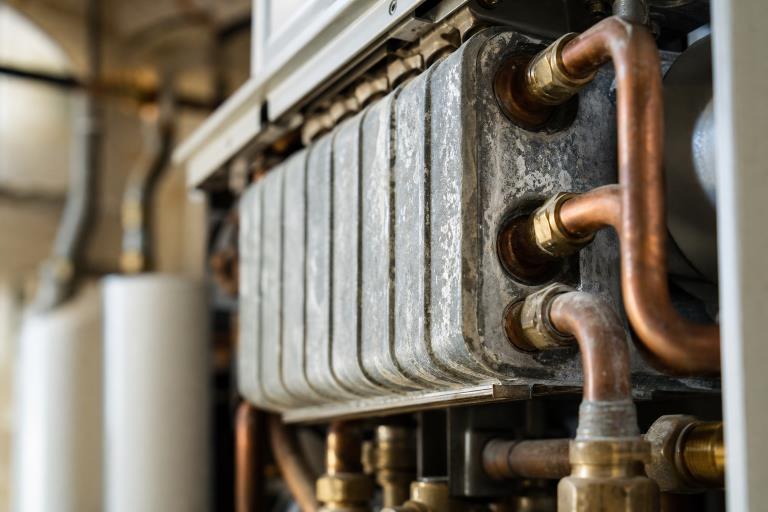
Mineral scale is one of the most common performance concerns, particularly in hard-water areas. Scale can restrict flow and reduce heat transfer inside the heat exchanger. Follow the manufacturer’s service schedule for flushing or descaling, inlet-filter cleaning, vent inspection, valve checks, and condensate-line inspection where applicable. Temperature swings, reduced flow, recurring error codes, unusual noises, leaks, gas odors, or combustion concerns should be addressed promptly by a qualified technician.
When A Tankless System May Not Be The Best Fit
A tankless system may be less practical when a home has limited gas capacity, an undersized electrical service, unusually complicated venting needs, or little room in the budget for installation upgrades. It may also be a poor match for homes with very hard water and no realistic maintenance plan. If several fixtures routinely run at once, a larger unit or multiple units may be required, which changes the project cost.
Modern storage water heaters remain a sensible option for many homes, especially when fast replacement and lower upfront cost are priorities. Heat pump water heaters are another alternative for properties with suitable space, drainage, climate conditions, and electrical capacity. The best option is the one that fits the household’s actual demand and long-term plans.
A Simple Pre-Purchase Checklist
- Record the current heater’s age, fuel type, capacity, and recent problems.
- Identify the fixtures used during the busiest hour of the day.
- Confirm available gas capacity or electrical service.
- Ask whether new venting, drainage, or piping will be needed.
- Compare total installed cost, warranty terms, and expected maintenance.
- Confirm permit and inspection requirements.
- Request a written explanation of the proposed sizing calculation.
Frequently Asked Questions
Can a tankless water heater run out of hot water?
It can keep heating water while demand remains within its rated capacity. If simultaneous demand exceeds that capacity, however, temperature or flow can suffer.
Does a tankless water heater save money every month?
Not necessarily by the same amount in every home. Savings depend on water use, fuel rates, climate, installation cost, and maintenance.
Do tankless water heaters need maintenance?
Yes. Routine inspection and descaling are often important, particularly where mineral buildup is common.
Is a tankless water heater better than a heat pump water heater?
Neither is automatically better. Tankless systems emphasize on-demand capacity and compact size, while heat pump units can offer strong efficiency where space and electrical conditions are suitable.
Conclusion
A tankless water heater can be a strong long-term choice when it is properly sized, professionally installed, and maintained for local water conditions. Before switching, compare demand, fuel supply, space, installation requirements, total cost, and maintenance needs. The right water heater is not simply the newest model. It is the system that performs reliably under the household’s real daily conditions.