A gas fireplace can add reliable heat and a clear focal point to a home. Still, similar projects can carry different estimates once required work is defined. Utah homeowners can budget more accurately when they know what creates those differences.
Homeowners comparing Utah gas fireplaces should consider the appliance, heating capacity, finish, fuel connection, and vent route together. Each factor changes a different part of the quote, from equipment expense to professional labor. The sections below explain what each factor means and what can move the price higher or lower.
Fireplace Model
The selected type affects placement and setup. A zero-clearance model suits new construction and can be framed into a wall with standard lumber, which can reduce costs. A gas insert fits an existing wood fireplace, while a freestanding gas stove can suit a basement or large open-concept area.
Price Tier Within the Selected Type
Fireplace type alone does not determine price. Entry-level models keep equipment expense lower than premium designer-series units. For a new-construction home in Utah, the chosen type should also suit the planned room and available structure.
BTU Output
BTU output represents heating capacity and is a primary pricing factor. Each indoor fireplace unit targets a specific heating area, so a larger living space may need different capacity than a compact room. If the required output leads to a higher-priced model, equipment expense rises; if a lower-priced option provides suitable capacity, that portion stays lower.
Room Size Before Model Selection
Square footage should guide heat-output selection. Matching capacity to the room keeps the purchase tied to actual heating needs. It also explains why two rooms may require units at different price points.
Finish and Surround Selection
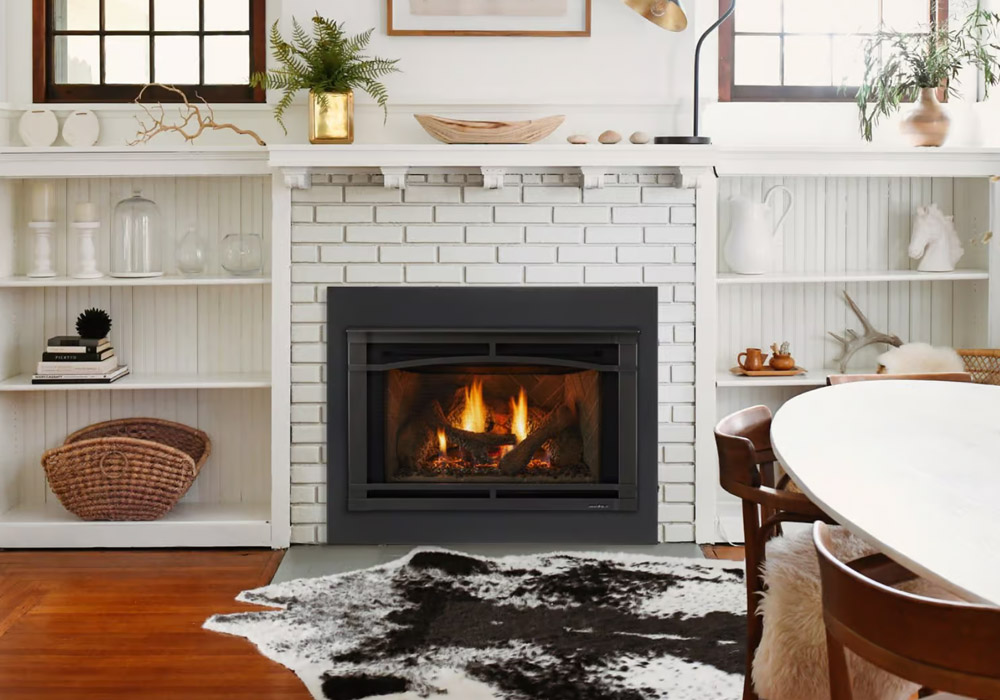
The area around the firebox can remain simple or become a detailed feature. Custom stone, tile, or brick surrounds add materials, while feature walls can include shelving and a TV mount. Those additions expand the scope and can raise the total compared with a simpler finish in a home in Utah.
Details That Belong in the Quote
Homeowners should define finish choices before comparing estimates. A basic treatment can keep this part lower, while detailed selections add materials and construction work. The following options can expand the scope:
- Natural stone, tile, or brick surrounds
- Built-in shelving around the unit
- A feature wall with a TV mount
Gas Line Requirements in Utah
The chosen location must have a gas supply suited to the unit. If a properly sized connection already serves that area, the project can avoid added labor for a new line. If professionals must install a new connection or correct an improperly sized line, the extra work increases the estimate for Utah gas fireplaces.
Routing From the Existing Supply
Fuel-line work depends on conditions at the chosen location. A position requiring new routing creates more labor than one already served by a suitable connection. For homeowners in Utah, checking fuel access early can explain why similar projects receive different quotes.
Venting Route
Direct-vent models can vent through an exterior wall or the roof. Complex vertical venting requires additional labor, so a fireplace project that needs that route can carry a higher installation charge. If the home allows a less involved approved route, the estimate avoids the extra labor tied to complex vertical venting.
Professional installation typically ranges from $3,500 to $8,000, including the unit, venting, and labor. The final figure depends on the model, BTU output, finish plan, gas-line work, and venting complexity. Choosing the right professional service helps ensure these factors are properly assessed so homeowners in Utah can receive a more accurate estimate and a fireplace setup suited to the home.