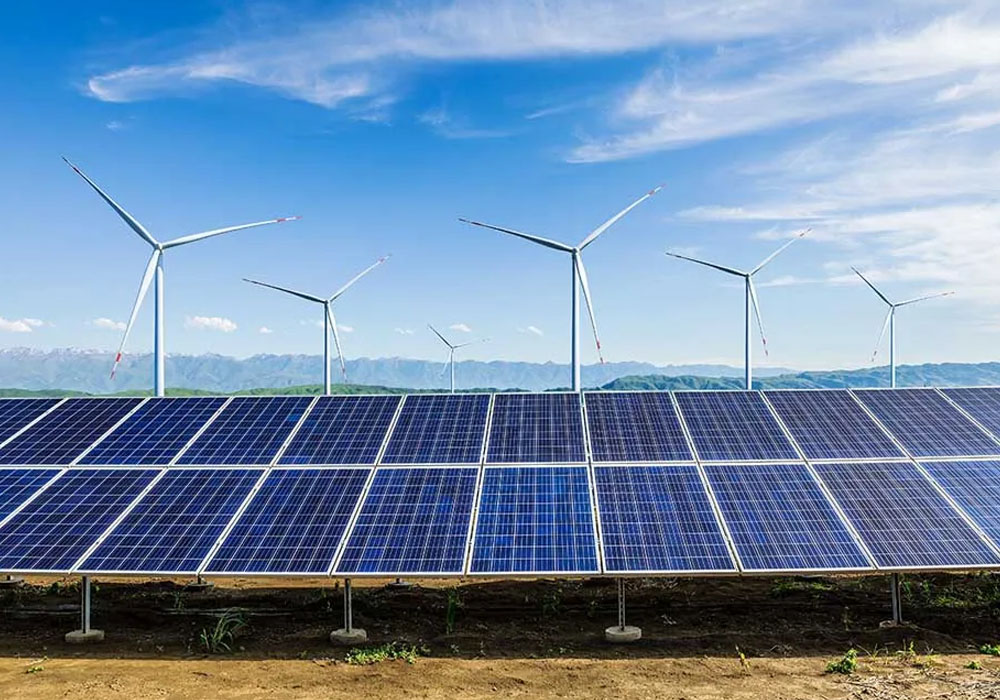
A badly planned off-grid power system doesn’t stop working suddenly. It stops working bit by bit, with dead batteries, fried inverters, and gas generators chugging along at 20% capacity for long stretches. The objective isn’t to get power to some out-of-the-way place. As Astoria Charm specialists emphasize, the objective is to create something that functions similar to an electricity provider, automated and dependable, with you not needing to constantly adjust it.
The Single-Source Trap
Most individuals get started with solar. It is clean, quiet, and economically feasible. A few of them get started with a generator because they are accustomed to them. If you look at these strategies in isolation, every one of them will turn out to be an expensive mistake.
A solar-only setup must be based on the worst conditions that could occur. In turn, this means having to buy way too many panels and batteries to cover those January days when you’d probably use only a fraction of the power from your July panels. A generator-only setup is constantly using up fuel, needs plenty of exercises, and needs to be running when it breaks down. And breaks down it will, because it is a small, simple, internal combustion engine driving a few thousand watts’ worth of dynamo and inverter though the power demand for a house does not practically even out. It’s constantly drinking the fuel down whether you’re using a kilowatt or a fraction of a watt – plus, motors draw several times their running load on each start for a fraction of a second, which ruins the economy, adds wear, and is the reason small generators die young.
Actually, the smart solution is a hybrid microgrid, solar and wind as primary generation, battery bank as the buffer, and the generator as the automatic fail-safe that kicks on when the others have a shortfall. Adding a generator to a solar/wind/battery microgrid lowers the required solar array/battery bank by up to 50 percent and ensures 99.9 percent reliability during typical seasonal weather anomalies. (National Renewable Energy Laboratory.)
Load Calculation: The Math You Can’t Skip
Before you make any equipment purchases, you need to know what you’re actually running. This entails figuring two specific numbers: continuous running watts and surge watts.
Continuous running watts are what everything would draw if it all ran at the same time. Simply add together the wattage ratings of the refrigerator, lighting, water pump, HVAC, and electronics, and you’re done.
Surge watts, or starting watts, are what most folks overlook. Inductive loads like well pumps, air compressors, and refrigerator compressors draw a huge amount of current to get the motor turning. One that uses 1,000 running watts may draw 3,000 to 4,000 watts from the system for the first two seconds. If you can’t deliver that surge, the motor stalls, breakers trip, and equipment is slowly ruined.
When sizing power generators for an off-grid scenario, take your calculated continuous load and multiply it by 1.25 as a cushion. Next, check surge capacity against your largest inductive load. A 7,500-watt running commercial generator might have a 9,500-watt surge rating, that extra capacity is added just for this.
Sizing the Generator to the Battery Charger
Here’s a mathematical relationship that almost all guides skip. Your hybrid inverter-charger has a maximum AC input amperage rating. That rating determines how much power the unit can pull from the generator for battery charging. If your charger can accept 50 amps at 240V, that’s 12,000 watts of potential charging input.
You ideally want your generator running at 50% to 80% of its rated capacity during bulk charging cycles, not at 30%, and not at 95%. Generators running at very low loads experience wet stacking in diesel models and accelerated wear across all types. Running near maximum capacity for extended periods causes overheating and shortens engine life.
Given that your charger pulls 8,000 watts during bulk charge, you’d ideally want a generator rated somewhere between 10,000 and 12,500 watts. That keeps the engine in its optimal operating range and lets the system charge efficiently without stressing the equipment.
When you’re reviewing specs and comparing commercial-grade models, platforms like https://www.powergeneratordepot.com/ let you filter and compare units with two-wire automatic start capabilities, which is the feature set you need for a properly automated hybrid system.
Fuel Logistics at Remote Sites
Accessibility completely changes the game on what fuel you choose. It’s easy to overlook this, but something suitable for a property that’s thirty minutes from a fuel source is a huge liability when you’re an hour down a dirt road that’s only open certain times of the year.
Gasoline is what everyone defaults to, and probably the wrong answer. It’s guaranteed to go bad in three to six months even with additives, carbs are prone to gelling, and no one wants to siphon out the last few drops from the tank in the snow because it’s been there since last summer. For infrequent-use backup generators, it’s probably the worst possible answer. Diesels do better under long-term heavy load, have better energy density per gallon, and are stable for 12-18 months with proper treatment. If you expect to run the generator for most of the shorter days for weeks at a time, diesel is more likely the right answer.
Propane has a virtually unlimited shelf life; burns super-clean, which means no residue in the fuel system; and works well in really cold conditions with a good vaporizer, which makes it a nice option for remote locations. The downside is terrible energy density. You’ll need a monster tank and you’ll be visited by the propane truck far more often for equivalent output, but if you’re a remote property using more infrequent delivery, it’s feasible that remote delivery of propane every three to four months outweighs the massive inconvenience of anything else.
Total Harmonic Distortion and Why it Destroys Equipment
This is where cheap generators cause expensive damage.
Total harmonic distortion (THD) is a measure of how “clean” the AC power output is, how closely it approximates a pure sine wave. Open-frame, conventional generators typically produce power with THD in the 15% to 25% range. That’s tolerable for running power tools, but it’s destructive to sensitive electronics.
MPPT solar charge controllers, hybrid inverter-chargers, satellite internet terminals, and variable-speed HVAC systems are all sensitive to power quality. High THD causes overheating, data errors, premature component failure, and in some cases, immediate damage on startup.
Inverter generators solve this by using variable-speed engines and built-in power conditioning to deliver THD below 3%. That’s the same quality you’d get from grid power. For any off-grid system where the generator will connect to a hybrid inverter-charger, an inverter generator or a high-end standby unit with clean power output isn’t optional, it’s a requirement.
Implementing Automatic Generator Start
Manual management of the generator can lead to people becoming exhausted. They may forget to start it, allow the batteries to drop too low, and then have to try to fix a failed inverter late at night.
Automatic Generator Start (AGS) prevents this. Most hybrid inverter-chargers come with an AGS feature that monitors the battery State of Charge and automatically starts the generator when the batteries drop below a pre-set threshold, which is generally between 30% and 40% State of Charge for lithium iron phosphate (LiFePO4) battery banks.
This is accomplished via a two-wire start circuit. The inverter sends a low-voltage signal through two wires to the generator’s start terminal, and the generator starts with no manual effort. When the batteries reach the absorption voltage and the charging rate falls, the inverter cuts the signal and the generator shuts down.
It is important to set the low-threshold correctly. LiFePO4 chemistry allows a discharge to 20% of capacity without degradation, but frequently running the bank to 20% reduces cycle life. A conservative AGS trigger at 35% Depth of Discharge provides a good buffer and still lets the batteries see their maximum possible use before the generator begins to run.
Setting the return-to-grid threshold too high means the generator runs in short cycles, which is hard on the engine. Configure it so the generator runs until the batteries reach 90% or higher during each cycle, giving the engine a proper run time.
Cold-Weather Prep and Thermal Management
Cold temperatures have a double assault plan: on battery chemistry and on engine oil viscosity.
LiFePO4 batteries respond to cold much better than lithium-ion, but charging a cold battery (under about 5°C/40°F) results in lithium plating on the anode which permanently lowers capacity. If your battery bank lives in an unheated space, it needs an insulated enclosure and preferably a low-wattage heating pad that kicks in when temperature approaches the charging threshold.
Generators in cold climates need synthetic oil, which is usually labeled 5W-30 or thereabouts. Conventional 10W-30 becomes too viscous at -20°C to properly lubricate a cold start. An engine block heater (a 120V immersion heater that dangles in the coolant) keeps the engine at a safe temperature between runs and virtually eliminates cold start wear. For remote properties where the generator sits on standby for weeks at a time, a block heater isn’t a luxury.
Grounding and Neutral-Ground Bonding
This is the most technically overlooked piece of off-grid system design, and getting it wrong creates dangerous conditions.
The neutral-ground bond is a physical connection inside a generator between the neutral wire and the ground wire. This bond is necessary in a standalone generator powering a standard load. In an off-grid system where the generator connects to a hybrid inverter-charger, the neutral-ground bond needs to exist in only one place, typically inside the inverter.
If both the generator and the inverter have a neutral-ground bond, you create a ground loop. Current flows through the ground conductor under normal operation, which causes nuisance tripping, interference with ground-fault protection, and in some cases, a shock hazard at grounded metal surfaces.
The solution is either a generator with a floating neutral (no internal bond), or a transfer switch that breaks the neutral path when switching between generator and inverter sources. This is one of the reasons a proper transfer switch is non-negotiable in any hybrid system, it’s not just about preventing backfeed into the generator during inverter operation, it’s about maintaining the integrity of your ground-fault protection across all modes.
Have a licensed electrician verify your neutral-ground configuration before commissioning the system. The physics here don’t forgive installation errors.
Building a System That Runs Itself
Remote properties that make it through their first winter are the ones where we engineered the power system, not just assembled it. Where we did the load calculations before we selected any equipment. Where we chose fuel based on what we could pre-position, not what was easy. Where our power was clean enough to keep our sensitive equipment alive. Where we sized the generator to the charger, not the other way around. Where the AGS wasn’t just set to default. Where the cold-weather kit didn’t come off a shelf. Where your electrician understood grounding before anybody threw a breaker.
No one calls you in the morning to say the power system had a great night. But that’s not a luxury for a remote property, that’s the point.