Garage doors are heavy, frequently used systems with moving panels, rollers, cables, tracks, and counterbalance springs. Whether a door serves a detached home garage, an attached garage, or a workplace entrance, routine safety checks can reveal developing problems before the door becomes unreliable or dangerous.
Basic inspections do not replace repair work by a qualified garage door contractor, especially when springs, cables, brackets, or openers show signs of failure. However, knowing what to look for can help property owners respond promptly to shaking, scraping, uneven movement, slow travel, or sudden stops.
Why Garage Door Safety Checks Matter
A garage door can continue to open and close even when an important component is wearing out. Since the door’s weight is supported by a spring-and-cable system, a minor issue can place extra strain on the opener or cause the door to move unpredictably. The purpose of regular checks is to spot visible changes early and avoid using a door that no longer appears stable.
Start With A Visual Check
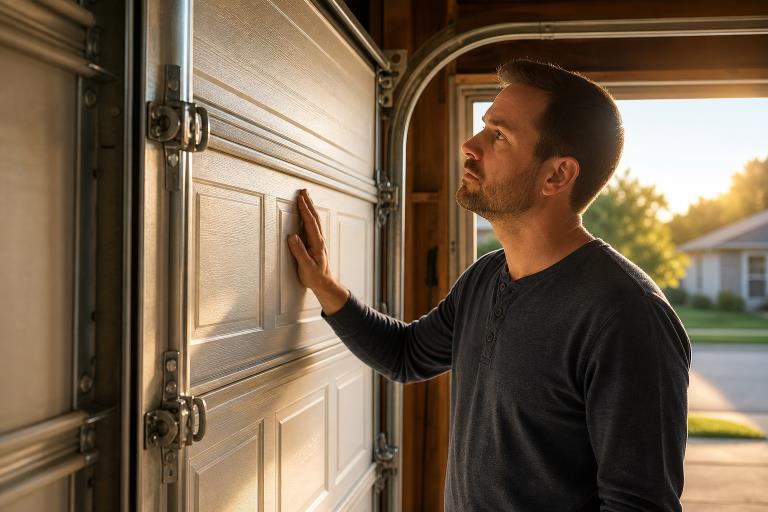
With the door closed and the opener inactive, inspect the system from a safe distance. Look for bent panels, cracks, dents, gaps, loose hinges or fasteners, and a bottom seal that is split or no longer meets the floor evenly. Make sure tracks appear straight, and that boxes, tools, leaves, or stored items are not near the travel path.
Also, without touching anything, look for frayed cables, damaged springs, or hardware that appears to be shifted. Never adjust springs, cables, bottom brackets, or mounting brackets yourself. Those parts can hold substantial stored tension.
Test Door Balance And Movement
A properly balanced door should move smoothly and should not feel excessively heavy when operated manually. Follow the owner’s manual before using the emergency release. With the door fully closed, disconnect the opener only as directed, then lift the door a short distance by hand. Stop immediately if it sticks, rises crookedly, feels unusually heavy, or will not remain reasonably stable. Reconnect the opener only after the door is safely closed.
Check Safety Sensors And Auto-Reverse Features
Photo-eye sensors are typically near each track’s bottom. Keep lenses clean, face each other, and clear doorway obstructions. Follow the owner’s manual testing method: place an object in the path, stand clear, activate the door, and ensure it reverses. If not, stop using it until inspected.
Inspect Springs, Cables, Tracks, And Rollers
Several components work together to guide and support the door. A visual review can help identify issues, but adjustments and replacements are for trained technicians.
- Springs: Watch for breaks, visible gaps, corrosion, or unusual stretching.
- Cables: Look for fraying, slack, kinks, or cables that have slipped from their drums.
- Tracks: Check for bends, loose hardware, and objects blocking movement.
- Rollers and hinges: Listen for grinding and look for wobbling, cracks, separation, or rollers leaving the track.
Review Opener Controls And Remote Devices
Check wall controls, remotes, keypad operation, emergency-release handles, backup batteries, and any connected smart-home features. Keep remotes away from young children, change keypad codes after a remote is lost, use strong passwords for connected systems, and replace weak backup batteries before travel or severe weather. Smart controls add convenience, but they cannot compensate for a damaged or poorly balanced door.
Apply Extra Checks To Commercial Overhead Doors
Commercial doors often operate more frequently and around employees, vehicles, loading areas, and stored inventory. This makes clear procedures and documented inspections particularly important. Businesses using loading dock doors should keep travel paths clear and ensure staff understand manual-release, emergency-stop, and restricted-access procedures.
Review warning labels, protective devices, clearance around the opening, reported damage, repair history, and maintenance records. Common garage door hazards, including falling doors, pinch points, incorrect opener settings, and unsafe spring repairs, are outlined in garage door safety information.
Know When To Stop Using The Door
Do not continue operating a door that has come off its tracks, hangs at an angle, drops suddenly, has a broken spring, or has a loose or frayed cable. Other reasons to stop include an opener running while the door does not move, repeated unexplained reversing, uneven closing, loud snapping or grinding, a door that feels too heavy, or a panel or bracket that appears loose. Keep people and vehicles clear of the opening until it has been assessed.
Build A Simple Maintenance Schedule
Monthly
- Test the auto-reverse feature and check sensor cleanliness.
- Listen for new rattling, scraping, grinding, or vibration.
Every Few Months
- Visually review springs, cables, rollers, hinges, tracks, and seals.
- Clear stored items from the door’s travel path and test remotes or keypads.
Annually
- Arrange a professional inspection for heavily used, older, or questionable systems.
- Review worn parts before seasonal weather places added demands on the door.
Common Questions About Garage Door Safety
How Often Should A Garage Door Be Tested?
Safety features should be checked regularly, while the timing of professional inspections depends on the door’s age, condition, size, and frequency of use.
Can A Homeowner Replace A Garage Door Spring?
For most homeowners, no. Spring replacement and related cable or bracket work can release stored energy and should be handled by a trained professional.
Why Does A Garage Door Close Then Open Again?
Possible causes include blocked or misaligned sensors, track resistance, an obstruction, or opener travel-limit issues. Avoid repeated testing when the cause is unclear.
When Does A Garage Door Need Replacement?
Replacement may be appropriate when failures are recurring, damage compromises reliable operation, repair costs continue to rise, or the system lacks suitable safety features.
Conclusion
A safe garage door moves smoothly, stays properly aligned, responds to its safety features, and shows no signs of damaged or strained components. Regular checks help identify small concerns before they become major disruptions. When a door is heavy, noisy, visibly damaged, or off track, the safest decision is to stop using it and arrange a qualified inspection.