Key Takeaways
- Scale, soap film, stiff laundry, and weak soap lather are common signs of hard water.
- Low salt, salt bridges, clogged injectors, incorrect settings, and worn parts can all reduce softener performance.
- A basic hardness test helps confirm whether the issue is actually the softener.
- Leaks, electrical concerns, pressure loss, and overflowing brine tanks require prompt attention.
- Efficient regeneration settings matter in San Antonio, where avoiding unnecessary water and salt use is worthwhile.
In San Antonio, Texas, mineral-heavy water can leave its mark on shower doors, faucets, dishes, laundry, and plumbing fixtures. When those familiar hard-water clues return after a softener has been working well, the cause may be as simple as low salt or a setting that needs adjustment. In other cases, it can point to a clogged part, a drain issue, or aging equipment that needs closer attention.
A few safe checks can help narrow down the problem before it affects appliances or creates costly scale buildup. Homeowners who find leaks, overflows, or persistent hardness may benefit from contacting a water softener repair plumber in San Antonio for a diagnosis rather than guessing at an internal repair.
Why Hard Water Signs Can Return Suddenly
Hard water contains dissolved minerals, mainly calcium and magnesium. A conventional ion-exchange softener captures those minerals in resin beads and periodically flushes them away during regeneration. If that cycle is interrupted, or if the system cannot create or draw brine correctly, untreated water may begin moving through the home again.
San Antonio-area households can notice the change quickly because mineral deposits become especially visible on glass shower enclosures, dark fixtures, and frequently used kitchen surfaces. A busy household, visiting family, irrigation changes, a power interruption, or an incorrect regeneration schedule can all make an existing problem more noticeable. Hard water is usually a household-maintenance concern, not automatic proof that tap water is unsafe to drink.
Common Signs That a Water Softener Needs Attention
- White or chalky scale appears on faucets, dishes, shower doors, or coffee makers.
- Soap and shampoo do not lather as easily as before.
- Laundry feels stiff, scratchy, or looks dull after washing.
- Skin feels filmy after bathing, even after rinsing thoroughly.
- The salt level stays unchanged for an unusually long time.
- The brine tank holds excessive water or begins to overflow.
- The unit regenerates constantly, never regenerates, or seems stuck in a cycle.
- Water is leaking near the tanks, bypass valve, drain line, or fittings.
- Water has a salty taste after a regeneration cycle.
What the Major Parts Do
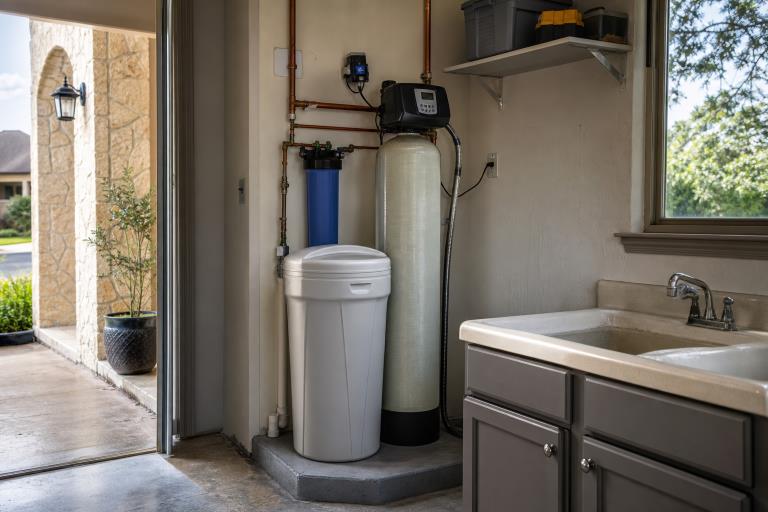
Knowing the basic layout makes troubleshooting less intimidating. The brine tank stores salt and water to make brine. The resin tank contains the resin beads that exchange hardness minerals for sodium or potassium ions. The control valve directs water through normal service and regeneration cycles.
The injector, sometimes called a venturi, helps pull brine into the resin tank. A bypass valve lets water flow around the system when service is needed, while the drain line carries regeneration wastewater away. A problem in any of these areas can cause hard-water symptoms.
Safe Checks Homeowners Can Try First
- Make sure the system has power and that its display or timer is operating.
- Confirm the bypass valve is in the service position, not bypass mode.
- Check the brine tank for enough salt and note whether the level has changed over time.
- Gently tap the outside of the tank to check for a hardened salt bridge.
- Look for visible drips, loose fittings, kinked hoses, or a damaged drain line.
- Review the clock, hardness setting, and regeneration schedule after a power outage.
- Test water at a softened tap and compare it with water entering the home, if practical.
Do not use sharp tools to break up salt, disassemble pressurized fittings, or handle electrical connections with wet hands. Those jobs can turn a simple maintenance concern into a leak, injury, or equipment failure.
When a Salt Bridge Is the Likely Problem
A salt bridge is a hard crust that forms across the brine tank, leaving an empty pocket below it. The tank may look full, but the salt is not dissolving into the water as intended. Without enough brine, the resin cannot recharge effectively, and hard-water signs return.
A blunt broom handle can sometimes be used carefully to loosen the crust. Avoid forcing the tool against the tank walls or bottom. If bridging repeatedly occurs, consider humidity in the equipment area, the salt product being used, and whether the tank needs a more thorough cleaning.
Why Water Testing Should Come Before Major Changes
Testing prevents homeowners from replacing parts based only on appearance. The water hardness testing guidance from Penn State Extension explains hardness measurements in grains per gallon and milligrams per liter, helping homeowners compare water before and after treatment. Testing is particularly useful for private wells or when stains, odors, metallic tastes, iron, manganese, or sediment are also present.
A standard softener primarily addresses calcium and magnesium. It is not a complete solution for bacteria, lead, nitrates, or every chemical contaminant. If test results reveal more than hardness, the home may need a treatment plan designed for those specific conditions.
Repair or Replacement: Making a Practical Choice
Repair is often reasonable when one identifiable item, such as an injector, seal, hose, fitting, or valve component, has failed and the rest of the system is dependable. It can also make sense when the resin tank is sound, and replacement parts remain available.
Replacement becomes more practical when the tank is cracked, parts are discontinued, the resin is worn out, or several failures occur within a short period. A system that repeatedly wastes salt and water, leaks, or cannot maintain soft water may cost more to keep repairing than to replace with properly sized equipment.
How to Reduce Future Water Softener Problems
- Maintain the salt level recommended in the owner’s manual without overfilling the tank.
- Use the salt type specified for the equipment and avoid adding unapproved chemicals.
- Inspect the brine tank, drain line, and fittings several times a year.
- Update hardness settings if the water source or household water use changes.
- Keep the installation area dry, accessible, and protected from damage.
- Use demand-based regeneration when the system supports it.
The EPA notes that regeneration can consume substantial amounts of salt and water, so water-efficient softener practices can help reduce avoidable waste while keeping the system effective.
When to Call for Professional Help
Arrange professional service if the brine tank overflows, a leak reaches the flooring or electrical outlets, water pressure drops throughout the house, or the system is stuck regenerating. Persistent hard water after basic checks, loud mechanical sounds, salty tap water, and complex well-water conditions also call for a careful diagnosis.
Frequently Asked Questions
How Often Should a Water Softener Be Checked?
Perform a quick visual inspection every few months, and check it after vacations, plumbing work, power outages, or unusual changes in water use.
Can Low Salt Cause Hard Water?
Yes. Low salt can prevent proper regeneration, but salt bridges, clogged injectors, worn resin, and incorrect programming can cause similar symptoms.
Is Salty Water Normal?
No. A salty taste may indicate an incomplete rinse, drain issue, excessive brine draw, or control-valve problem and should not be ignored.
Conclusion
Scale, changing water feel, unusual salt use, and irregular system cycles are early warnings worth checking. For San Antonio homeowners, a brief inspection and a simple hardness test can often reveal a manageable issue before mineral buildup affects fixtures, plumbing, and appliances.