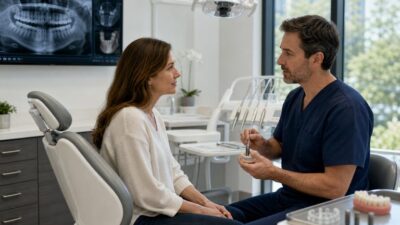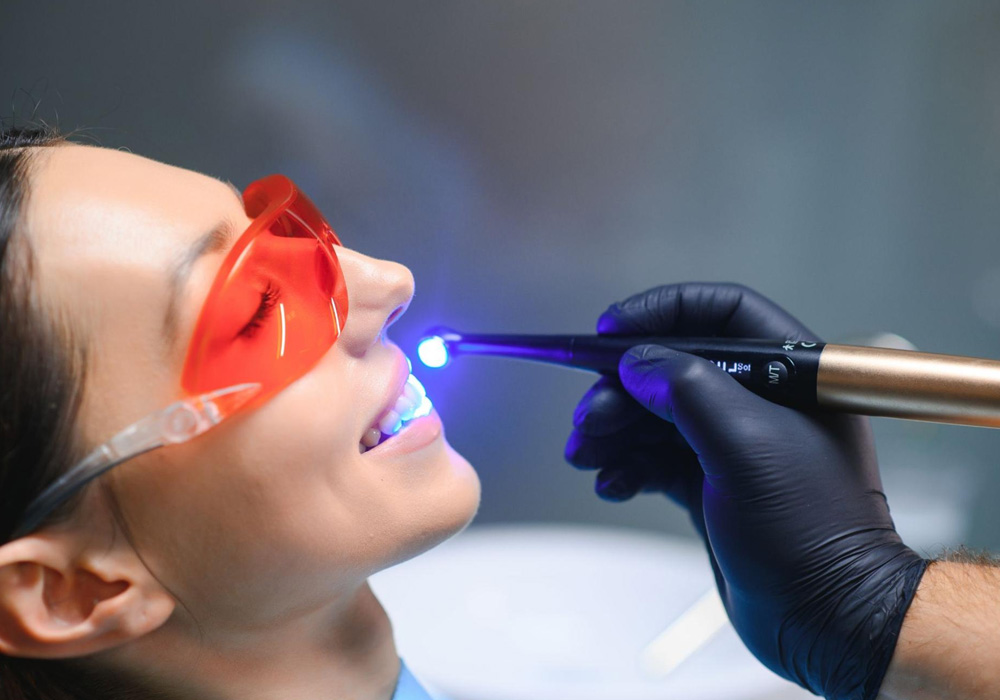
Picture two clinics, both open the same year. One still calls patients the morning of an appointment from a paper schedule. The other sends an automated text two days out, lets you fill in intake forms from your phone, and greets you with a digital check-in screen when you arrive. Same service category, completely different experience. That gap has grown fast, and for clinics that haven’t moved, it’s becoming a real business problem.
Dental clinic technology is no longer a differentiator. It’s a baseline. Understanding where the field is heading, and what separates practices that thrive from those that stagnate, matters whether you’re a practitioner, an office manager, or a patient deciding who gets your business.
The 2015 Clinic vs. the 2026 Clinic
Here’s a concrete scenario worth sitting with. In 2015, a typical patient walked into a dental waiting room, filled out a paper form with a pen chained to the desk, waited 20 minutes past their appointment time, and left with a printed after-care sheet they probably lost. The whole visit felt like something from a decade before that.
In 2026, that same visit looks different at a well-run clinic. Digital intake forms are submitted before arrival. X-rays are processed instantly, displayed on a chairside screen, and shared electronically. Treatment options come with visual simulations. Payment is processed through a tap or a digital wallet. A follow-up message arrives the next morning.
Clinics like Frederick Dental Kitchener have moved in this direction, combining digital imaging with flexible scheduling and personalized treatment planning to match what patients actually expect today. The contrast with legacy operations isn’t subtle.
The 3-Layer Clinic Tech Stack
Most conversations about dental technology focus on the flashiest equipment, the intraoral scanners and the 3D printers. But the practices that actually pull ahead tend to think in three distinct layers, each doing a different job.
- Layer 1: Clinical Tools. This is the visible layer: digital radiography, CAD/CAM systems for same-day restorations, AI-assisted diagnostic imaging, and intraoral scanners. These tools directly affect diagnostic accuracy and treatment speed. Digital imaging has achieved near-universal adoption, with over 82% of practices now using digital radiography to replace film-based systems with instant, shareable images.
- Layer 2: Administrative Infrastructure. Practice management software, cloud-based patient records, insurance verification tools, and billing platforms. This layer is invisible to patients but accounts for a significant chunk of daily friction. A poorly integrated administrative layer burns hours every week on tasks that software handles in seconds.
- Layer 3: Communication and Patient Engagement. Automated reminders, two-way text messaging, online booking, digital review management, and post-appointment follow-up sequences. This layer is where patient retention actually lives. Most practices underinvest here and then wonder why their recall numbers are soft.
The insight isn’t that you need every tool in every layer. It’s that a gap in any single layer creates drag across the whole operation. A clinic with brilliant clinical tech and chaotic communication still loses patients to the place two streets over with average equipment and a frictionless booking experience.
What the Market Numbers Say
The investment flowing into this space is significant. According to Grand View Research, the global digital dentistry market was valued at USD 6.8 billion in 2024 and is expected to grow at a CAGR of 9.9% from 2025 to 2030. North America holds the largest share of that market, which makes sense given the high concentration of private practices and patient willingness to pay for quality experiences.
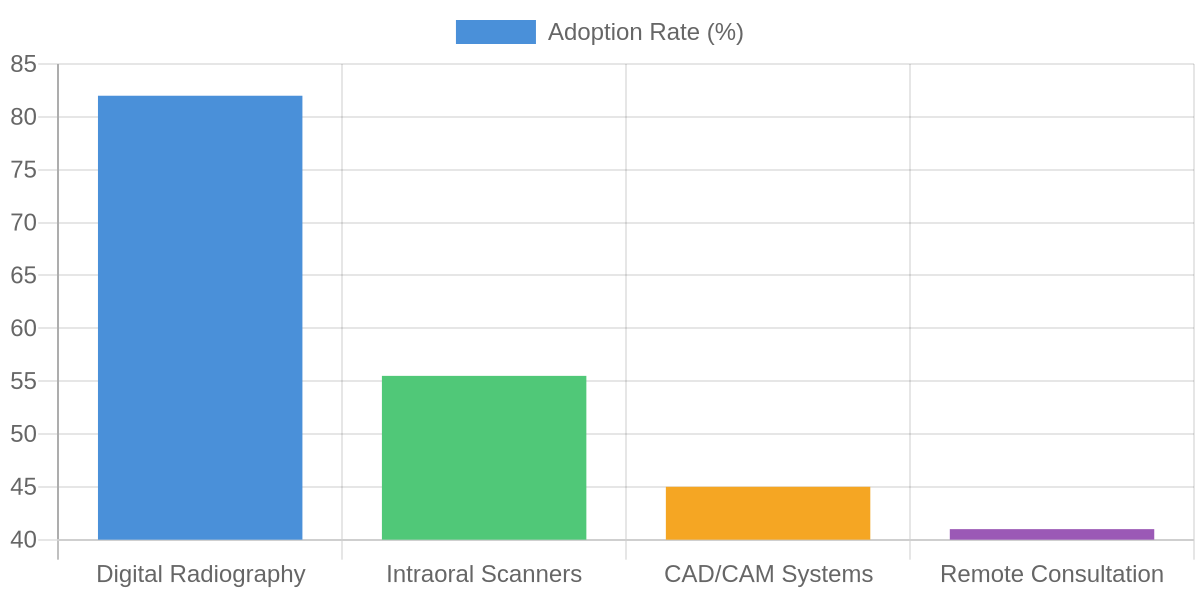
Those adoption rates aren’t uniform across practices, though. A 2024 cross-sectional study published in MDPI and indexed on PubMed found that technology readiness, not just equipment availability, is the key driver of actual digital adoption in dental clinics, with infrastructure gaps, financial constraints, and training barriers all slowing implementation even when the desire to adopt exists. In other words, buying the scanner isn’t the hard part. Building the team and workflow around it is.
| Technology | Current Adoption Rate | Primary Benefit
|
| Digital Radiography | 82% | Instant imaging, reduced radiation |
| Intraoral Scanners | 55.5% | Eliminates physical impressions |
| CAD/CAM Systems | 45% | Same-day restorations |
| Remote Consultation Tools | 41% | Improved access and triage |
Scheduling and Communication: The Revenue Lever Nobody Talks About
Here’s the thing: the biggest returns from technology in a dental practice often don’t come from the clinical layer. They come from scheduling and communication, two areas that most practices treat as overhead rather than strategy.
“What was once a competitive differentiator, digital X-rays, patient communication software, online scheduling, is now a baseline patient expectation.” (Dental Practice Insider, 2026). That framing matters. If your competitors have already adopted online booking and automated recall messaging, you’re not getting ahead by adopting them too. You’re just staying in the game. The practices pulling ahead are the ones using communication data to identify which patients are overdue, which treatment plans went unaccepted, and why.
Between 2023 and 2024, 60% of dental practices achieved year-over-year production increases, and the research consistently points to technology-enabled patient engagement as a core driver of that growth, not just chair time or procedure volume.
How to Tell Whether Your Clinic Is Keeping Up
If you run a dental practice or advise one, here’s a quick self-audit across the three layers. You’re not looking for perfection. You’re looking for honest gaps.
- Clinical Layer: Are you still using film X-rays? Are your diagnostic images shareable across providers in a click? Do you have AI-assisted imaging or are you planning to?
- Administrative Layer: How many manual steps does it take to confirm insurance? Does your practice management software talk to your imaging system without manual data entry in between?
- Communication Layer: Do patients receive automated appointment reminders via text? Can they book, reschedule, and complete intake forms without calling the front desk?
If you answered “no” to two or more of those, you’re not behind by one cycle. You’re behind by two, because the practices ahead of you are already moving to the next thing while you’re catching up to the last one.
Pick the single highest-friction point in your current workflow and solve that first. One solved problem creates capacity for the next one. Trying to overhaul all three layers at once almost always stalls out mid-implementation and leaves practices worse off than before.
The Bottom Line for Patients and Practitioners
Technology doesn’t replace the clinical relationship. It protects the time and attention that relationship needs. When the administrative and communication layers work the way they should, practitioners spend their energy on patients, not paperwork. That’s where the real quality of care lives.
The clinics that understand this aren’t just buying equipment. They’re building a practice where every layer- clinical, administrative, and communication- is designed to feel worth coming back to. For patients deciding between options in their area, that difference is more visible than most clinics realize.