For most, indoor plants serve as decorative add-ons. But imagine a unique environment that actually grows with you all year round, serves as a design feature in its own right, and functions as a true home upgrade – one you design with care.
Start With Light, Because Everything Else Depends On It
Light is what separates a successful indoor garden from a slow-death scenario of withering yellow leaves. So before you even look for plants, study which walls and windows receive direct sun. South- and west-facing exposure rooms give you more of the one thing that none of your plants can survive without: photosynthetically active radiation. I know it sounds fancy, but all it really means is the part of sunlight plants need to grow.
Regular old room light doesn’t cut it. And come winter when there’s barely six or seven hours of daylight in many places, you’re going to need full-spectrum LED grow lights to make up the difference. For a typical tropical plant, you want to provide 12 to 16 hours of combined natural and artificial light. New models of these lights run extremely efficiently, give off zero heat, and can be programmed to provide very precise spectrum mixes. Inexpensive older high-pressure sodium setups are not nearly as controllable and create way too much heat in your average bedroom.
If you really want to bring the light, the most effective structural move is to add a solarium to your home. This full-blown glass add-on was made for plant life. It isn’t just that light gets in from every direction. It’s also harvesting passive solar heat in the winter.
Build A Stable Microclimate
Plants not only require light, but also consistent temperature and humidity to thrive. Most tropical and subtropical species prefer temperatures between 65°F and 75°F. Indoor growing spaces present a problem because there can be sharp temperature differences: warm during the day, cold at night near windows, and dry during winter months when heaters dehumidify the air.
Thermal mass can help you address temperature fluctuations in ways you might not expect. Materials such as slate tile, concrete, or thick terracotta hold heat from sunlight and can later release it. This means that by simply installing a tile floor, you could decrease the amount of mechanical heating your room requires and protect your plants from overnight temperature drops at no additional cost to your energy bill.
For humidity, try to stay within 40 to 60 percent relative humidity. When it falls lower than that, tropical species such as ferns, calatheas, and philodendrons will develop brown edges and crispy tips. A standalone humidifier will get the job done, but plants do quite well in a group. As plants transpire, they release water vapor into the air, raising the local humidity, and providing natural humidity for other plants. Pebble trays or other forms of reservoirs are a good way to increase humidity without overwatering. For larger operations, misting may be required.
Finally, don’t underestimate the importance of air circulation. A small fan will work wonders at reducing mold, mildew, and infestations.
Design The Space To Last
A long-lasting interior garden needs to be planned for water. Drainage is essential. Every pot needs a saucer. The floor needs to be water-resistant – tile, sealed concrete, or stone rather than wood or laminate. This is not an aesthetic choice. It’s a way to ensure that the rest of your living space isn’t slowly damaged by water without you realizing it for months on end.
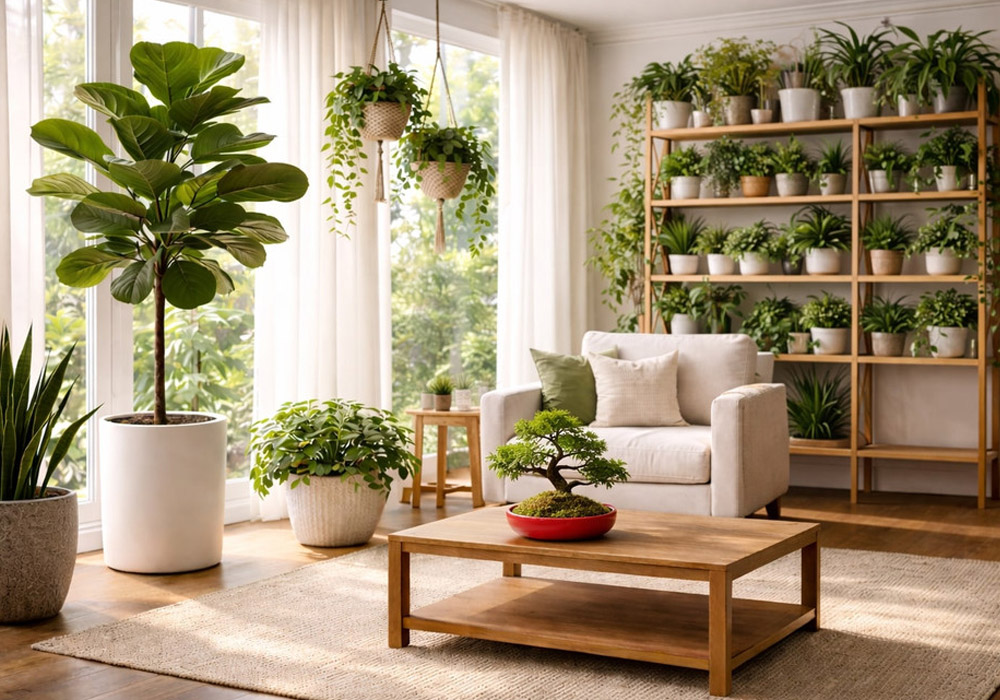
People never use their vertical space. In a good indoor garden, you will almost invariably have plants at different vertical levels. This also means you can assign light intensity by tier. Brightest levels up top, shadier conditions below. Wall-mounted pockets and hanging planters are a delight. Not only do they free up floor space, but they also bring plants closer to eye level and allow you to grow species that look truly amazing when they’re spilling out everywhere.
Container growing absolutely punishes standard potting mixes. Perlite and coco coir are worth their weight in gold for keeping your drainage fast, your roots oxygenated, and the root rot that actually kills more indoor plants than anything else at bay.
Choose Plants Strategically
Cluster plants based on their specific needs rather than their appearance. For instance, put ferns and other plants that thrive in high humidity together. Meanwhile, light-hungry plants such as citrus trees, succulents, and most herbs should be placed in the brightest areas closest to the windows. This strategy isn’t just designed to ensure that your plants survive; it’s also meant to make maintenance as easy as possible. When plants with similar needs are in the same zone, you can apply the same watering and feeding schedule to all of them.
The logic of creating this type of zone extends beyond ease of care. Common indoor plants can remove up to 87% of indoor volatile organic compounds (VOCs). This turns a smartly planned indoor garden into a health bonus just as much as an aesthetic one.
The Investment Framing
Viewing this as a home upgrade and not a hobby project changes the kinds of choices you make. A plastic shelf with grow lights is a hobby. A glass-enclosed growing room with thermal mass flooring, managed humidity, and a curated plant palette is a permanent addition to the property – one that supports biophilic design principles, improves air quality, and adds a room that functions every month of the year. The planning you need to do upfront is more than most people think, but so is the return on your investment.