Non-emergency medical transport exists to move people safely when a private car or rideshare is not appropriate, yet an emergency response is unnecessary. Choosing the right level is more than a comfort preference; it affects the loading method, on-board support, and the smoothness of handoffs at clinics and hospitals. The quickest way to decide is to look at three factors together: mobility, medical stability, and distance. This guide explains how those variables interact, what each transport level actually provides, and the practical details to share when you book so the crew arrives with the correct vehicle, equipment, and staffing.
1. Start with three variables: mobility, medical stability, and distance
Think in a simple triad. Mobility asks whether the person can walk with or without a device, sit upright in a wheelchair, or remain supine on a stretcher. Medical stability includes oxygen use, fall risk, surgical restrictions (e.g., non-weight-bearing status), and whether vital signs require monitoring during the ride. Distance covers not only miles but also time in the vehicle and road conditions. Understanding how these points shape non-emergency patient transportation options will help you avoid mismatches that cause delays at the curb or at facility check-in.
For example, a person who is bed-confined after a hip fracture cannot be safely loaded into a wheelchair van, especially if there are stairs or no elevator. By contrast, a dialysis patient who propels a wheelchair and does not use oxygen may be well served by a lift-equipped wheelchair van for a short, predictable clinic trip. Distance changes the equation: that same wheelchair ride may be uncomfortable or unsafe for a multi-hour interstate transfer that requires repositioning and pressure relief.
2. What each non-emergency transport level actually provides
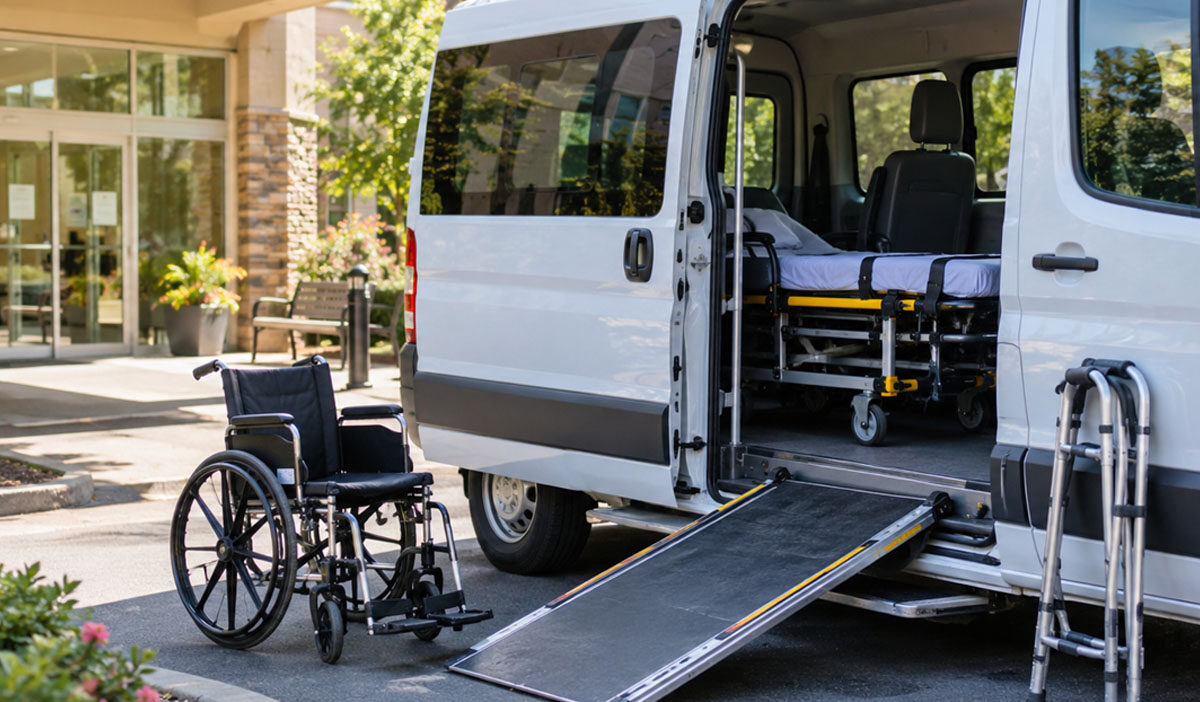
Ambulatory rides use sedans or similar vehicles and work for patients who walk independently or with a cane but cannot drive. Wheelchair vans have a ramp or hydraulic lift and a four-point tie-down system to secure the chair; riders should be able to sit upright with a lap belt. Stretcher vans accommodate patients who must remain supine on a padded stretcher or gurney; crews use transfer sheets or slide boards to move the patient and secure the stretcher to floor tracks. These vehicles are suited to people with non-weight-bearing orders, severe weakness, or pain that worsens with sitting.
Non-emergency ambulances (often staffed at a basic life support level) add clinical capability such as continuous observation, oxygen administration, and vital sign checks during interfacility transfers. Some situations call for advanced life support by physician order, but many stable patients do not need that level. The trade-off is that ambulance resources are more limited and may be reserved for patients who require clinical oversight; when safe, a stretcher van can offer greater comfort for long ground trips without unnecessary medical interventions.
3. Planning for long-distance ground transport: comfort and clinical needs
Time in the vehicle introduces issues that do not appear on short city rides. For stretcher transports lasting several hours, discuss pressure relief and repositioning intervals to reduce the risk of skin breakdown; some crews can add a pressure-relief mattress or cushion. Confirm oxygen duration with the provider so the tank capacity matches total travel time, including traffic and rest stops. If nausea, spasms, or pain is expected, ask your clinician whether pre-medication is appropriate and time doses to the pickup window.
Long interstate transfers also benefit from route planning and comfort details: temperature control, blankets, and hydration under physician guidance. Example: a frail elder relocating to a facility out of state may be more comfortable on a stretcher with the ability to recline, receive gentle range-of-motion checks at stops, and avoid multiple transfers in and out of chairs. By contrast, a two-mile primary care visit for a wheelchair user generally favors a quick lift-equipped van, minimal securement time, and a predictable drop-off at the clinic’s accessible entrance.
4. Facility handoff, home access, and equipment details to share when booking
Clear booking notes save time. Share the pickup and drop-off departments, appointment window, and whether preadmission or discharge paperwork must travel with the patient. List oxygen use (including prescribed liters per minute), feeding tubes, IV lines, wound vacs, or braces so the crew brings the right straps and padding. Include safety specifics such as a history of falls, confusion that may require a safety belt, or contact precautions for infection control. If there is a Do Not Resuscitate order, note its location for the receiving facility.
Access details are just as important as medical notes. Tell the provider about elevator availability, the number of stairs, narrow hallways, or door widths that affect a stretcher turn. Provide an estimated patient weight and whether a bariatric stretcher is needed. Ask whether the crew can supply a stair chair or transfer board, and confirm ride-along rules if a family member plans to accompany the patient. Pack essentials in one bag: identification, insurance card, medication list, a charged phone, and any small durable medical equipment the destination will require, such as a portable oxygen concentrator or a walker.
5. Common booking mistakes that cause delays, plus how to avoid them
A common error is choosing a wheelchair van for someone who is truly bed-confined or cannot maintain an upright sitting position. This leads to last-minute cancellations when the crew sees the scene or when unsafe transfer attempts are made with inadequate support. Another mistake is underreporting the number of stairs or failing to mention that an elevator is out of service, which may require extra personnel or a stair chair. Underestimating oxygen needs can also strand a patient mid-route if capacity runs short.
Consider two realistic scenarios. After hip surgery, a patient in a fourth-floor walk-up has non-weight-bearing orders and significant pain with sitting. The safe choice is stretcher transport with additional crew to manage the stairs, a transfer sheet for gentle lateral movements, and padding to protect the surgical site. In another case, a wheelchair user who goes to dialysis three times a week benefits from a lift-equipped van with a tight pickup window; sharing the exact chair time and the clinic’s entrance instructions prevents missed treatments. In both cases, confirm the return ride before the first leg begins to avoid extended waits when the appointment ends.
Selecting the right level of non-emergency medical transport is a practical exercise in matching mobility, stability, and distance to the capabilities of each vehicle and crew. When you determine whether the person can sit or must lie flat, note clinical supports such as oxygen, and account for travel time and building access, you set up a smoother handoff at the curb and at the destination. Share specific details, plan for comfort on longer trips, and ask targeted questions about loading equipment and observation. With that groundwork, the ride becomes one less variable in a day already full of moving parts.