If you spend a morning in a Toronto film shop watching somebody who finished a course three weeks earlier, the sequence tends to be the same. The student lays a sheet of film across a flat hood, works the water out, and gets a result that looks acceptable within an hour or so. Then a black sedan comes in with a curved rear quarter panel and a recessed tail light, and the film starts to silver where it was stretched; the edge lifts about twenty minutes later, and a piece of grit that nobody could see turns into a visible bump under the surface. That is the moment when a graduate finds out what the course actually sold them.
Paint protection film training in the Greater Toronto Area runs from short group sessions costing a few hundred dollars to personal programs costing several thousand, and the marketing language across that range is close to identical. Everybody says hands-on. Everybody says certified. Very few providers publish the numbers that would let you compare one program against another before you pay.
What follows is not a list of criteria in the abstract. It is a list of questions to put to a training provider on the phone, along with what a straight answer sounds like and how you can check it independently. The questions matter more than usual in this trade, for a reason worth understanding first.
Why the Usual Signals Do Not Help You Here
In most trades, you can lean on an outside body to do some of the vetting for you. In film installation, you cannot, and it is worth being specific about why.
Ontario certifies a defined set of compulsory trades, and a worker in one of those trades has to hold a Certificate of Qualification, a Provisional Certificate of Qualification, or a Registered Training Agreement in order to work legally. Skilled Trades Ontario currently lists 23 compulsory trades, and paint protection film installation is not among them. There is no provincial exam for it, no ticket, and no registry of qualified installers that a customer could look you up in.
The training side is similarly open. Ontario’s career college rules apply to programs that teach all of the skills and knowledge required for employment in a prescribed vocation, and the province publishes a list of exemptions from career college registration that includes programs shorter than 40 hours, programs charging fees of less than 2,000 dollars, and programs that teach a single skill rather than a complete vocational skill set. Most film courses fall outside that framework in one way or another, which means no provincial reviewer has read the curriculum, checked the instructor, or confirmed that the hours advertised are the hours delivered.
The practical consequence is that in this market the words certified, accredited, and professional are defined by whoever is selling the course. That is not a scandal, and it does not mean the courses are bad. It means the verification work falls to you, and the only tool you have is the set of questions below.
Question One: How Many Vehicles Will I Wrap Myself, and Which Panels?
This is the question that separates programs, and it is the one most likely to produce a vague answer.
Ask for a count of complete vehicles you will personally install film on, not a count of hours and not a count of vehicles that will be in the room. Watching an instructor wrap a bumper is useful once and close to worthless the fourth time. Then ask which panels those vehicles will give you. Flat hoods, roofs, and straight door skins are forgiving surfaces where a beginner gets a decent result quickly. The panels that decide whether you can charge for the work are the compound curves, which means front bumpers, fenders, quarter panels, and mirror caps, and the recessed areas around lights and handles.
Ask about paint colour as well, because it is a genuine variable and almost nobody volunteers it. Black and other dark finishes show contamination, stretch marks, and edge lift that a silver car will hide from you completely.
A useful answer sounds like a number and a schedule. Something along the lines of two full vehicles over six days, shared between two students, on cars the studio was going to film anyway. A weak answer redirects to total course hours, or to a demonstration schedule, or to training panels mounted on a wall. If a provider is willing, ask to come by while a course is running. Fifteen minutes in the bay tells you more than the brochure does.
Question Two: Who Teaches, and When Did That Person Last Install for a Paying Customer?
Instruction quality in a manual trade depends heavily on whether the instructor is still doing the work commercially. Film formulations change, pattern libraries change, and the vehicles coming through a shop have different sensor housings and bumper geometry than the cars a trainer learned on. Somebody who moved into teaching full time five years ago is teaching from memory.
Ask who will be in the bay with you on each day of the course, whether that person is the owner or an employee, and what they installed in the past week. Ask whether the same instructor stays with you for the whole program or hands off to somebody else after the first day. Then check the answer sideways: look at the shop’s own recent work and its customer reviews for installations rather than its reviews for training. A studio that consistently does clean work on expensive cars is a studio where the instructor is under real commercial pressure to get edges right.
Question Three: What Does the Word Certificate Mean in This Sentence?
There are two very different things being described by the same word in this market, and the distinction is easy to establish on a phone call.
A certificate of completion is a record of attendance issued by the training provider. It says you took the course and that the instructor considered the standard met. It carries whatever weight the provider’s reputation carries and no legal weight at all, because, as covered above, there is no provincial licence behind it.
Manufacturer authorised installer status is a different thing entirely. Film makers run their own approval programs, and passing one allows a shop to buy the film through the proper channel and to offer that manufacturer’s warranty to the customer. That status generally attaches to the business and the product line rather than to you as an individual, and it usually becomes relevant later, once you are employed at or running a shop that carries the brand.
So the question to ask is simply what a customer or an employer would be able to verify about your certificate, and where they would go to verify it. A provider who explains the distinction without prompting is being straight with you. A provider whose marketing leans on the word certified but who cannot say who recognises the certificate has answered the question in a different way.
Question Four: What Happens in the Weeks After the Course Ends?
This is the question that beginners skip and that graduates say they wish they had asked, because the failures that end a new installer’s confidence do not happen during the course. They happen on the third solo job, on a customer’s car, with money already taken, when an edge lifts overnight, and nobody is standing there to explain why.
Post-course support is offered by almost every provider and defined by almost none of them. Ask for the mechanism. A phone number and an open invitation to text a photo is worth something. A structured return to the studio after you have been working on your own for a few weeks is worth considerably more, because by then you have generated real questions rather than hypothetical ones.
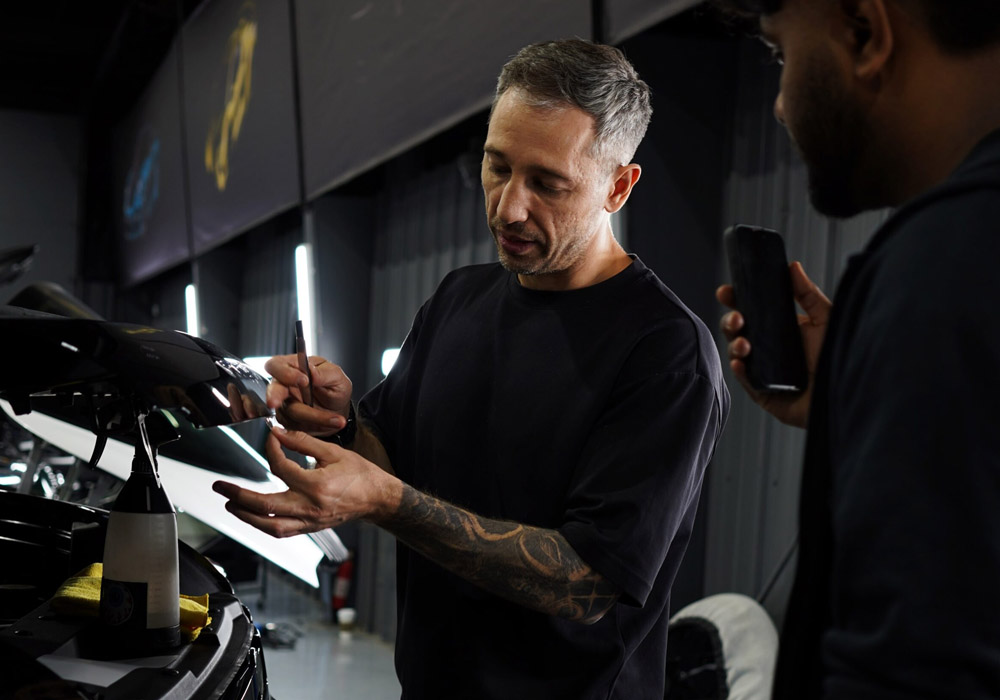
A small number of Toronto studios build that return visit into the program rather than treating it as goodwill. A company in Vaughan, runs its paint protection film training in Toronto as an in-person program only, with a one-to-one option and a small group option, and it does not offer an online version of the course on the stated grounds that the skill does not transfer through a screen. Its six-day personal PPF installer training is built around two full-body installs with one or two students working next to a founder who still installs high-end cars daily, and it adds two mentorship days back in the studio approximately a month after the course finishes. The founder teaching the course is the same person quoting and installing customer cars the rest of the week, which is the arrangement you are looking for when you ask question two.
Whether or not that specific structure is the one you choose, use it as the benchmark for the answer. Ask how many weeks after the course the support runs, whether it involves coming back into a bay, and who exactly you will be speaking to.
Question Five: What Am I Taking Home, and What Do I Have to Buy on Monday?
Course fees are quoted cleanly. Start-up costs are not, and the gap between the two surprises people.
Ask whether professional-grade film is supplied for practice or whether you are working on offcuts, since offcuts limit how many attempts you get on a panel. Ask whether a tool kit is included and what is in it, because squeegees, fresh blades, slip and tack solution, and a heat source are the minimum for a first job. Ask specifically about pattern software, which is the cost people forget. Access to a plotter and a pattern library is often a subscription with a monthly fee attached, and if the course teaches pattern cutting on the provider’s account, you need to know what the same access costs you afterwards.
Finally, ask what you are permitted to photograph. The cars you work on during a course are the first entries in your portfolio, and a provider who is comfortable with that is a provider who is comfortable with the result.
Question Six: How Will I Be Taught to Handle Heat?
Heat is where beginners do the most damage, and it is a fair proxy for how technical a course actually is.
The self-healing behaviour that film is sold on is a real material property rather than a marketing claim. Polymer researchers describe intrinsic self-healing coatings as materials whose reversible bonds reform across a damaged area, a process that, as a 2025 review in the journal Polymers puts it, “is often activated by an external stimulus such as heat or light”. Warm weather is doing chemistry on the panel. The same physics governs how the film relaxes when you post-heat a stretched corner, and using too much heat, or applying it at the wrong stage, produces marks that do not come out.
Ask how the course teaches heat control, whether you will be shown post-heating on edges and recesses, and how the instructor checks a panel at handover. Ask what the common failures are called in their teaching, since silvering, lifting, and contamination are the vocabulary of the first year and a course that never names them is probably not troubleshooting much.
What a Weak Answer Sounds Like
Across all of the questions above, certain responses recur, and they are informative in themselves.
The provider quotes total course hours whenever you ask about vehicles.
The provider cannot say how many students share each car.
The provider describes the certificate as industry recognised but cannot name the body doing the recognising.
The provider offers ongoing support with no timeframe, no format, and no named person.
The provider guarantees an income figure. Earnings in this trade follow how fast and how cleanly you work, and whether you can find steady volume, neither of which a course can promise on your behalf.
The provider will not let you visit while a class is running.
Frequently Asked Questions
Do I need a licence to install paint protection film in Ontario? No. Film installation is not one of Ontario’s compulsory trades, so there is no Certificate of Qualification to obtain and no legal barrier to doing the work once you are competent. What you need is skill that survives contact with a customer’s car.
Is a two-day group course enough to start taking paid work? For most beginners, no. A short group session is a reasonable introduction to the material and the tooling, and some people use one to decide whether they enjoy the work before committing to something longer. Turning up on a customer’s vehicle after sixteen hours of shared instruction is a different proposition, and the usual result is a job that takes three times longer than quoted.
Can I learn film installation online? You can learn the theory, the sequence of operations, and the vocabulary online, and video is genuinely useful as a refresher after you have been taught in person. The part that does not transfer is the feel of the material under tension and the judgement about when to apply heat, which is why in-person practice remains the core of every credible program.
How long before my work is good enough to sell? A focused full-time course can have you installing film on cars inside a week, and consistent quality on difficult panels usually takes several months of repetition after that. Treat any course as the compression of the early learning curve rather than the finish line.
Does it matter which film brand I train on? Not much at the beginning. Technique carries across products, and a course that teaches method rather than one product line serves a beginner better. Brand-specific approval matters later, once you are working at a shop that carries a particular film and needs the manufacturer relationship for warranty purposes.
Key Takeaways
- There is no provincial licence for film installation in Ontario and no external reviewer of course curricula, so the vetting is entirely yours to do.
- Ask for a count of complete vehicles you will personally install film on, and ask which panels and which paint colours those vehicles provide.
- Ask whether the instructor still installs commercially, and check the shop’s reviews for installations rather than for training.
- Establish whether a certificate is an attendance record from the provider or a manufacturer approval attached to a business, because the two are not comparable.
- Post-course support is the most commonly promised and least commonly defined part of any program, so ask how many weeks it runs, in what format, and who specifically will be answering you.
- Budget for what comes after the course, particularly pattern software access, film, and tooling, since those costs are rarely included in the quoted fee.