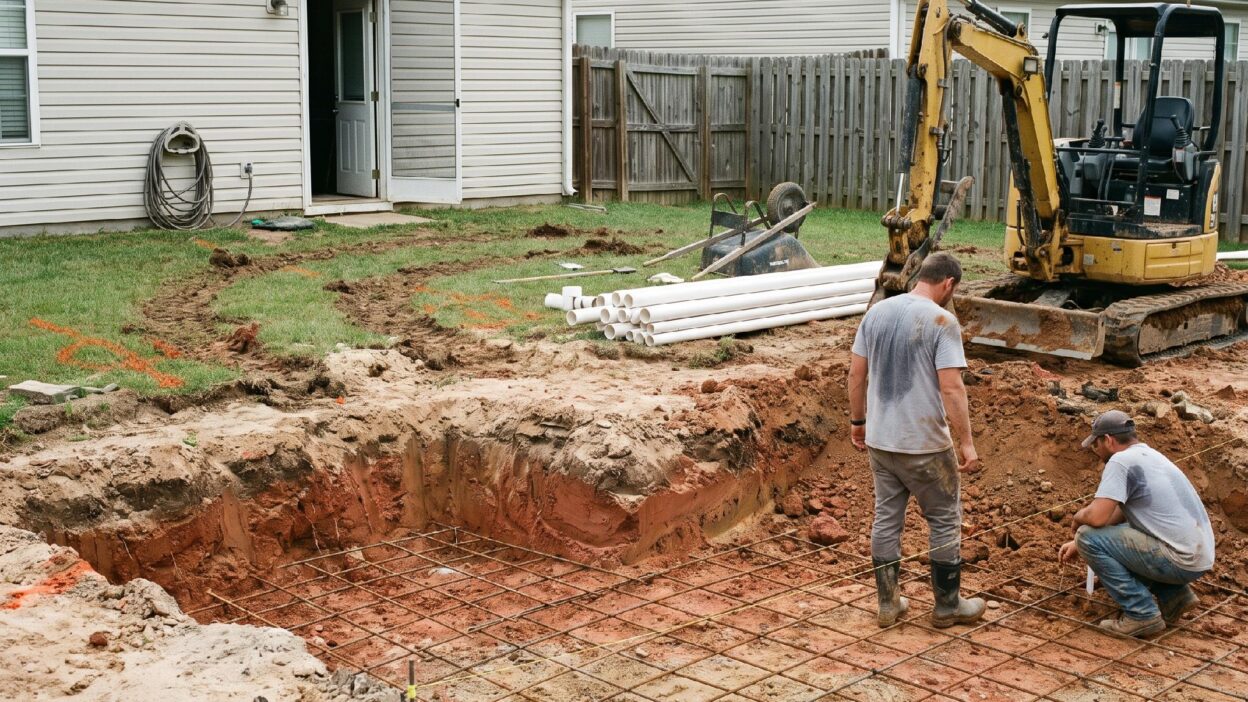
A backyard pool installation underway, one of the biggest home improvement investments a homeowner will make.
A pool sounds like a simple decision until the first contractor quote lands in your inbox. Suddenly you’re weighing five-figure numbers against summer afternoons you haven’t had yet, and the math gets complicated fast.
This guide walks through what a pool actually costs in 2026, whether it pays you back at resale, and how the financing options stack up against each other. It’s not a sales pitch for any one loan type. It’s a straight look at the tradeoffs so you can pick the option that fits your budget instead of the one a contractor’s financing partner pushes hardest.
Financing Options: Matching the Loan to Your Budget
Most homeowners don’t have $70,000 sitting in a savings account, so the real question isn’t whether to finance, it’s how. Cash buyers avoid interest entirely but tie up liquidity that could cover emergencies or other renovations. A home equity line of credit often carries lower rates, but it puts your house up as collateral and requires you to already have equity built up.
Personal loans close faster and don’t touch your home’s title, though rates run higher and terms are shorter. For homeowners who want financing built specifically around this one purchase, dedicated pool loans fill a gap the other options leave open: fixed terms, predictable payments, and approval that doesn’t hinge on years of accumulated home equity. They tend to make the most sense for buyers who want a clean, single-purpose loan rather than folding pool debt into a broader equity line.
What a Pool Really Costs in 2026
Before comparing loan types, you need a realistic number to finance.
In-ground pool installation runs $65,000 to $87,000 nationally in 2026, with concrete and gunite builds climbing as high as $120,000 depending on size and finish, according to HomeAdvisor’s cost guide. Labor shortages have pushed those figures up 4 to 6% over the past year alone.
Above-ground and vinyl-liner pools cost far less, but if your household has its heart set on a concrete pool for durability, budget at the higher end from the start. Contractors rarely lowball a quote just to win the job; the surprises tend to come later, not sooner.
Where Your Money Really Goes: Hidden Costs

Reviewing financing options before signing on a pool loan.
The number on your initial quote almost never matches what you actually pay. Decking, fencing (often required by local code), permits, and electrical work typically add 30 to 50% on top of the base installation price. A $70,000 pool can easily become a $100,000 project once everything is itemized.
Construction material and labor costs rose 8.2% year-over-year, according to Bureau of Labor Statistics producer price data, and that inflation shows up directly in contractor quotes. Ask for a fully itemized bid before you finance anything. A vague “installation package” price is where budgets quietly blow up.
Does a Pool Actually Add Home Value?
Here’s the uncomfortable truth: pools rarely pay for themselves.
Nationally, an inground pool can add roughly 5 to 8% to a home’s value, according to HGTV, although the payoff varies considerably by climate, neighborhood, pool condition, and local buyer demand.
That still doesn’t mean you’ll recover everything you spent building one. Installation costs can easily outpace the value a pool adds at resale, especially once landscaping, fencing, decking, and ongoing maintenance are factored in. In warmer markets where pools are more common and buyers expect them, the numbers can work more strongly in your favor, but even there, a pool is rarely a guaranteed profit-maker.
That doesn’t make it a bad investment. It just means resale value probably shouldn’t be the main reason you build one. Think of it as paying for years of lifestyle use, with some of that cost potentially coming back when you sell.
Common Financing Mistakes to Avoid
The most common mistake isn’t picking the wrong loan type, it’s underestimating the total project cost before locking in financing. Nearly 37% of renovating homeowners exceeded their project budgets in 2025, and 34% turned to credit cards to cover the gap, according to Houzz’s 2026 renovation trends research.
Credit card debt at double-digit interest rates is a rough way to cover a pool overrun. It’s worth building a buffer into your financing request upfront rather than scrambling for a stopgap once the itemized bill comes in higher than the estimate.
Homeowners tapping home equity should understand exactly what they’re signing up for. A HELOC ties repayment to your house, and rates can adjust over the life of the loan.
Getting Pre-Approved: What Lenders Look For
Lenders evaluate pool financing much like any other secured or unsecured loan: credit score, debt-to-income ratio, and, for equity-based products, how much value you’ve actually built in your home. A strong credit score won’t guarantee approval if your DTI is already stretched thin by a mortgage and car payments.
Homeowners who assume equity financing is automatic are often surprised. We covered the specific disqualifiers in our piece on why some homeowners may not qualify for home equity financing, and the list is longer than most people expect, ranging from recent credit inquiries to insufficient equity cushion.
Choosing the Right Loan for Your Situation
There’s no universally “best” loan type for a pool. A homeowner with fifteen years of equity and no plans to move soon might genuinely come out ahead with a HELOC. Someone who bought two years ago and has little equity built up is often better served by a personal loan or dedicated pool financing product instead.
The right call depends on your timeline, your risk tolerance for variable rates, and how much of your home you’re willing to put on the line. Our guide to choosing the right home loan breaks down the tradeoffs in more depth if you’re still weighing options before you commit.
Boosting the Value of the Pool You Already Have
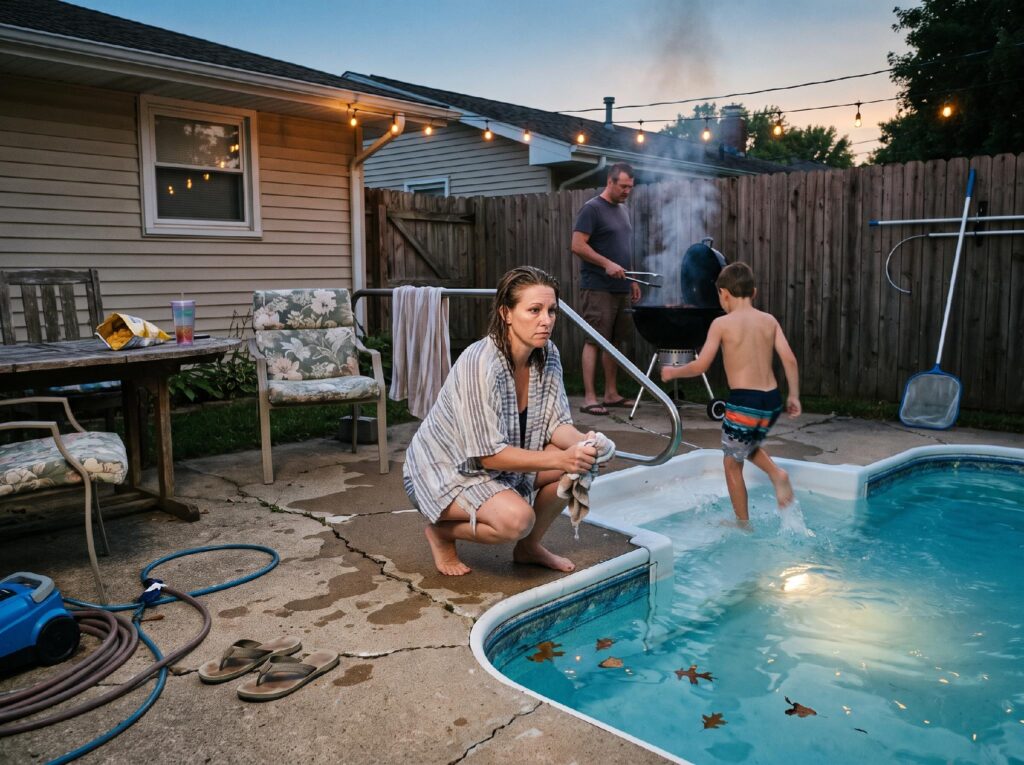
A finished pool changes a backyard from a project into a living space, even if the resale math is modest.
If you already own a pool, or you’re building one now, regular upkeep can make a big difference in how buyers perceive it later. Worn finishes, outdated equipment, cracked decking, or neglected landscaping can make a pool look like another expense waiting for the next owner. Keeping the surface, equipment, and surrounding area in good condition helps it feel like a usable part of the property rather than a maintenance problem.
The same principle applies to major parts of the house itself. Our guide to the connection between roof health and home value looks at how the condition of one of a home’s most important structural features can affect buyer perceptions and overall value. A pool obviously serves a very different purpose, but the takeaway is similar: visible signs of good maintenance can make an existing feature easier for buyers to view as an asset rather than a future repair bill.
Final Thoughts Before You Dive In
A pool is, at its core, a lifestyle purchase. Treat the resale bump as a bonus, not the reason you’re doing this. If you go in expecting it to pay for itself at closing, you’ll likely be disappointed no matter which loan you choose.
Get a fully itemized quote, compare financing options honestly against your actual equity and credit position, and pick the loan structure that lets you sleep at night rather than the one with the flashiest monthly payment. The backyard upgrade is worth it for plenty of homeowners; just go in with your eyes open about the numbers.