Start with the Routes People Travel
Value is often hidden in plain sight on daily travels. Entryways, hallways, and interspaces are key. Having a narrow bench, hooks, and a shallow tray near the door prevents clutter from spreading. Low-profile consoles and narrow runners broaden the line of sight and lengthen tight hallways. Instead of massive door swings that block traffic, use pocket doors or barn tracks. Even the threshold matters. Level transitions and neat, well-fitted strips indicate quality, and according to Aramis Realty solutions, this ensures these detailed updates maximize property appeal. Easy circulation makes the home feel more pricey.
Upgrade the Touchpoints
People judge quality by touch. Replace shaky knobs, creaky hinges, and worn switch plates with new ones. Brushed or satin surfaces disguise fingerprints and add elegance. Match metals on door levers, cabinet pulls, and faucets to create a tailored look. Add soft-close hinges when possible. Remove yellow outlet covers and replace with white or screwless plates. These minor modifications act like punctuation, changing a run-on phrase of rooms into a paragraph.
Layer Light Like a Stage
Light alters perception. Standardize bulb color temperature to avoid weird room transitions. Warmer colors in living areas, neutral white in kitchens and baths. Put dimmers where you desire mood. Put task lighting behind cabinets or at reading seats. Simple plug-in image lights can enhance paintings and vignettes. Mirrors opposite windows increase light, while a floor lamp in a dark corner eliminates room-shrinking shadows. Outside, combine warm walkway stakes with a porch fixture that matches your door hardware’s metal and tone. Lighting is the cheapest way to make a home look bigger and cozier.
Create Flexible Openings
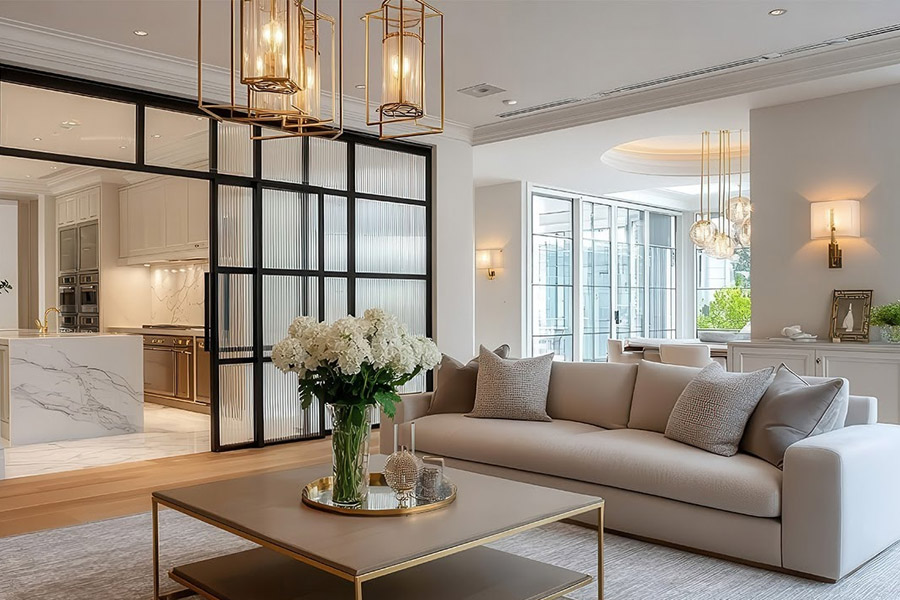
Small interior openings can transform how spaces interact. A pass through ledge between kitchen and dining spreads light, eases hosting, and keeps conversations flowing. Interior windows above desks or in hallways borrow light from brighter rooms without sacrificing privacy. In older homes, consider widening a doorway by a few inches, then casing it with crisp trim to modernize the line of sight. For patios or service counters, a secure shutter or counter door lets you open the connection when entertaining and close cleanly for weather and security. Flexibility is the real luxury. Use it to make rooms talk to each other.
Surface Swaps that Read as Premium
Just one surface can change the mood. Gallery calm is achieved by painting interior doors a contrasting color with satin sheen. Make baseboards and window trim bright, wipeable white to frame walls like matting around art. Tile in a basic stack structure can update a dated backsplash. If not tiling, use a high-quality peel-and-stick, then tile when ready. Tile grout should match, not contrast. Change old caulk with clear lines. A custom-sized stone fragment in a vanity feels personalized without the cost.
Kitchen Micro Refresh
The kitchen’s value can be increased without new cabinets. For a tailored look, align drawer hardware horizontally and door hardware vertically. One-handle pull-down faucets modernize the look of a dated faucet. Install hooks, paper towel holders, or magnetic knife strips on thin rails under top cabinets to clear up counter space. A stack of white bowls, cutting board, and plant can limit one open shelf. For good photos and daily use, replace mismatched pantry containers with clear bins and labeling. Clean countertops and backsplashes are more valuable than fancy appliances.
Storage that Feels Built In
Storage that seems integrated attracts buyers and guests. Install wall-to-wall closets with adjustable rods and shelves. Hide floor-level visual noise with towering baskets. Put spice, lid, and cleaning supply racks on door backs. Off-season things can be stored under bed drawers or risers in youngsters’ rooms. Toe kick drawers save space in tiny kitchens. Storage should dissolve into architecture, not be read afterward.
Bathroom Details with Hotel Energy
Small, precise gestures improve bathrooms. Frame or replace a basic mirror with a thin black or brass one to complement your hardware. Sconces at eye level on either side provide attractive light instead of a bar above. A longer liner and sturdy rod raise your shower curtain to just below the ceiling. Rooms feel taller with the vertical raise. Replace an old showerhead with a high-pressure one. Replace toilet seats with slow-close. Counter space is limited? Add a tiny glass shelf over the sink. new silicone lines and an exhaust fan grill make the area look clean and new.
Curb Appeal in Thirty Feet
Stand across the street and peek at the photo. This is when most purchasers and visitors register. Add confidence to the front door by painting it a different color than the house. Replace home numbers with large, easy-to-read ones and space them equally. If your external lighting are the same color temperature, your entry will glow. Fresh mulch with a sharp edge and two basic pots near the door welcome without crowding the entrance. Clean doormat, swept stoop, and clipped mailbox post complete the composition.
Comfort, Quiet, and Air
Feeling comfortable sells instantly. To seal doors softly, replace deteriorating weatherstripping. Install light-seeking door sweeps. To quiet the home, place felt pads under chair legs and cabinet doors. A thicker rug pad can make a cheap rug luxurious. Balance ceiling fans and add modern wall controls for easy circulation. Schedule a smart thermostat to follow daily rhythms. Use light, clean smells. A citrus or linen scent at the entrance and nothing heavy. Even without new furniture, calibrated air, temperature, and sound make interiors feel more expensive.
Maintenance as Design
Maintenance is a design choice. Whiten grout, polish glass, and clean vents that throw gray shadows on ceilings. Replace dented register covers with new ones that match your trim color. Patch nail holes and align art centerlines across rooms for visual continuity. Update smoke detectors and CO monitors to modern low profile versions. Tighten loose stair rails and even out squeaks with screws from below. A home that looks and sounds solid communicates value in a language everyone understands.
FAQ
What small upgrade delivers the most perceived value quickly?
Uniform lighting and hardware finishes throughout adjacent rooms usually works fastest. When knobs and faucets match metals and bulbs match color temperature, environments feel deliberate and serene. With a freshly painted front door, your home will feel better inside and out.
How do I choose a cohesive finish color for hardware?
Start with fixed parts. Check appliance knobs, light fixtures, and prominent metals like stair railings. Choose an exact match or a deliberate contrast. Brushed nickel and stainless go well. Black is functional and trendy. Warm brass is characterful yet ideally used three times in a room.
Is peel and stick wallpaper or tile worth using?
A smart bridge solution is possible. Before investing in permanent materials, examine scale, color, and texture. Use thicker, strong-adhesive compounds on clean, flat surfaces. As an accent or temporary makeover, peel and stick will last less in high-moisture or high-heat regions than standard tile or paint.
How can I improve lighting without opening ceilings?
Use under cabinet light bars, plug-in sconces with cable covers, and tall floor lights in gloomy places. Place mirrors opposite windows and lamps near reflecting surfaces to reflect light further into the space. Dimmers and bulb temperature standardization reduce visual clutter.
What are low cost curb appeal moves for tight budgets?
Cleaning and painting the front door, replacing the doormat, and updating house numbers. Edge the grass, trim plants below window lines, and mulch. Use two entrance planters with basic, healthy plants. Replace or polish the doorbell button and match outside lamps in color and brightness.
Which bathroom swap makes the biggest difference on a weekend?
Install a new showerhead after matching the mirror and light fixture. A higher curtain toward the ceiling adds height. Use new silicone and a toilet seat. These changes change the room’s appearance and function without touching tiling or piping behind the wall.