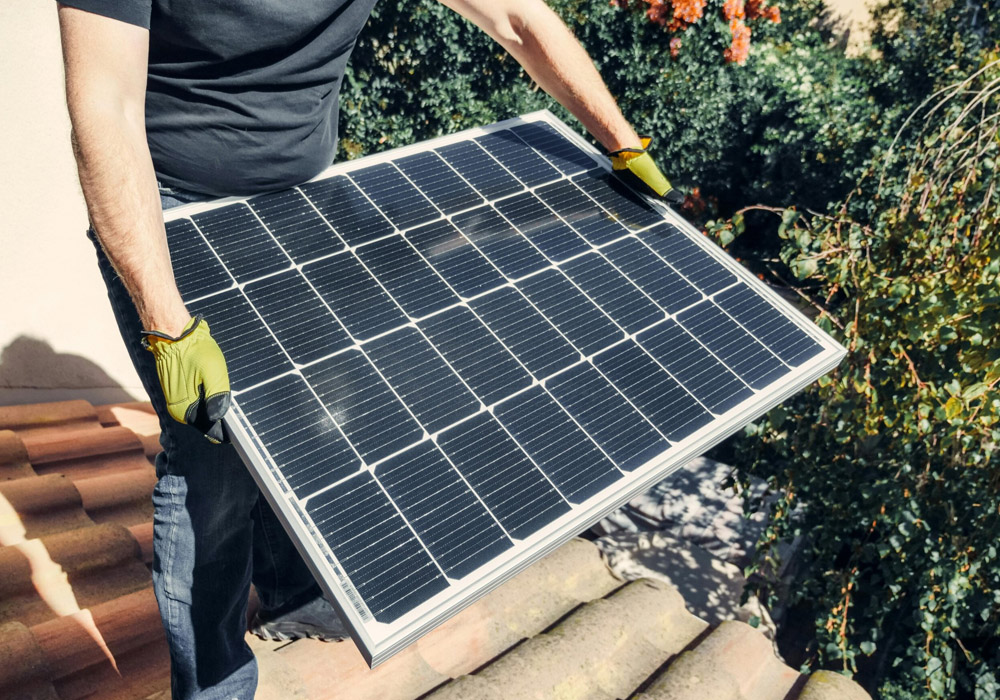
Ask a secondary market buyer what separates a pallet that earns a purchase order at roughly twenty cents a watt from a pallet that earns a recycling invoice, and the answer will have very little to do with the panels. Both lots can carry the same manufacturer, the same model year, the same 72 cell format, and the same faint chalking on the aluminium frames, which is why from six feet away you cannot tell them apart, and neither can the crew loading them onto the truck.
On a 4 MW array, that gap decides whether tens of thousands of dollars come back to the owner or go out the door, and it turns on a handful of things that most site teams never think to measure before the racking comes off.
It is worth being blunt about why the gap exists at all, because crystalline silicon modules do not usually die on schedule. NREL’s compendium of photovoltaic degradation rates, which pulled together more than 11,000 reported degradation rates from almost 200 studies across 40 countries, found median degradation for crystalline silicon in the 0.5 to 0.6 percent per year range, with the mean sitting higher at 0.8 to 0.9 percent. Run that on an eleven-year-old 320-watt module and you land somewhere between 290 and 302 watts, which is still a working panel by any reasonable definition, so whether anybody will pay you for it becomes a separate question, and one that turns on evidence more than on physics.
Resale and scrap are separated by evidence, not by appearance
A buyer is paying for a predictable, saleable watt with an acceptable amount of risk attached, not for the panel itself, and every gap in your evidence gets priced as risk.
This is the part that surprises asset owners, because you can hand over a pallet of genuinely good modules and still receive a scrap offer, since nothing about them is documented and the buyer has to assume the worst case. You can also hand over a pallet with visible cosmetic damage and get a real number, because the flash data, the serial list, and the removal photos make the risk calculable.
Grading language does exist, and it is also mostly informal, since no standards body defines what “Grade A” means for a used module, which leaves the letter on the packing list as a seller’s assertion until somebody tests it. The IEA-PVPS Task 13 report on second life modules, published in February 2026, makes the same point from the other direction, pointing to the absence of harmonised qualification criteria, standardised testing protocols, and repair guidelines for modules going into a second life.
Here is roughly how the grades get used in commercial transactions, and what each one tends to mean once money is involved.
| Grade as sellers use it | What it usually describes | What it means commercially |
| A | Cosmetically clean, flash tested within a few percent of nameplate, serials and datasheet present | Sold as working stock at the top of the price band, often resold without a second test |
| B | Light cosmetic damage, or tested output roughly 5 to 15 percent under nameplate, or paperwork gaps | Discounted and sold by the pallet, with the buyer pricing in their own retest |
| C | Visible defects, mixed or unknown output, mismatched connectors, no records | Moves as a watt lot or a salvage lot, thin margin, frequently exported |
| D or scrap | Broken glass, cracked backsheet, failed insulation resistance, water ingress | No resale value, priced as material recovery, a cost line and not a revenue line |
Treat that table as a translation guide instead of a specification, since two buyers can grade the same pallet differently and both be acting in complete good faith.
Watt peak verification is where the number starts
Watt peak (Wp) is the module’s maximum power output measured at standard test conditions: 1,000 watts per square metre of irradiance, a cell temperature of 25 degrees Celsius, and an air mass of 1.5, which is the number printed on the nameplate and, after a decade in the field, rarely the number the module still produces.
Verifying it means a flash test, in which the module goes into a solar simulator, the simulator fires a controlled pulse of light, and the equipment sweeps the module’s current and voltage to trace an IV curve. From that curve, you get the measured Pmax, plus open-circuit voltage, short-circuit current, fill factor, and the voltage and current at the maximum power point. The procedure comes from IEC 61215, which is the performance qualification standard the industry uses for new modules and borrows for used ones.
The output is a flash report, and what that report proves is narrow enough to be worth stating precisely.
- Measured power at that moment, under those conditions, on that specific module. Not the pallet. Not the model.
- The shape of the IV curve, which is diagnostic. A depressed fill factor points at series resistance problems such as solder bond degradation. A low Voc points at cell or bypass diode issues. A soft knee often means mismatch between cells.
- A defensible basis for pricing per watt, since the buyer can multiply measured watts by a rate instead of guessing.
What a flash report does not prove is the part sellers tend to gloss over.
- It does not prove electrical safety. Insulation resistance and wet leakage are separate tests, and a module can flash beautifully while failing them.
- It does not prove cell integrity. Microcracks are invisible on an IV curve until the cracked fragments actually become isolated, which can happen a year later after a few thermal cycles and a truck ride.
- It does not prove the pallet. Flash testing a sample of 10 out of 800 gives you a sample, and the buyer knows it. Full flash of every module is what commands full price, and it costs real labour.
- It does not carry forever. Flash data from the original manufacture date tells you what the module was in year zero, not what it is now.
Measurement uncertainty deserves a mention too, since commercial flash lines typically carry a couple of percent of it, which is perfectly fine when the argument is over twenty percent and unhelpful when the argument is over four.
The IEA-PVPS Task 13 work argues for combining three tests as a triage routine: IV characterisation, electroluminescence imaging, and insulation resistance testing, run on automated equipment so that large volumes can be sorted into reuse, repair, and recycle streams without a technician handling each module twice. That is the direction serious buyers are already moving, and if one offers you a price without any of those three, they are pricing your risk instead of your panels.
The defects that move the price, and the ones that mostly do not
Not every flaw is a discount, and some of the ugliest looking modules test perfectly fine, so what follows is a short field guide to the ones that genuinely move a number.
Microcracks matter, and you cannot see them, because cell cracks come from handling, hail, snow load, and above all from removal. They show up under electroluminescence imaging as dark lines or dead regions where current is not flowing. A hairline crack with no isolated fragment may cost you almost nothing today, whereas the same crack after fifty thermal cycles in a new installation can isolate a cell segment and drag the whole string down with it. This is why EL imaging, not visual inspection, is the working test for anything that has been through a decommissioning crew.
Snail trails look alarming and usually are not, by themselves, since those brown or grey lines tracking across the front metallisation are a discolouration reaction commonly linked to moisture reaching cracked cells through the encapsulant. Immediate power loss is often small, and what they really tell you is that there is cracking underneath, so treat them as a prompt to run EL imaging instead of as a defect in their own right.
Delamination matters a great deal, because when the encapsulant separates from the glass or the cells, you have opened a moisture path into the laminate. Small edge bubbles on an otherwise sound module can sometimes be tolerated. Delamination near the junction box or across an active cell area is generally the end of the resale conversation.
Backsheet cracking is usually terminal. Certain polyamide-based backsheets from the early 2010s crack in the field, and once the polymer has fractured, you have a live circuit behind a compromised barrier. These modules tend to fail wet leakage and insulation resistance testing, and no responsible buyer will resell them. IEC 61215 sets the wet leakage criterion at 40 megohm square metres for modules above 0.1 square metres of area, and a cracked backsheet is a reliable way to miss it.
Potential induced degradation is the interesting one, because it is the only large loss on this list that is sometimes reversible. PID happens when system voltage drives ion migration between the cells and the grounded frame, and it can strip double-digit percentages off output. On some module types, it can be partly recovered with reverse voltage treatment, so if a whole string came down testing 15 percent low and the array had a known grounding configuration, PID is worth investigating before anybody writes those modules off.
Hot spots on infrared imaging are a symptom, not a diagnosis. A cell running 20 degrees or more above its neighbours under load is telling you something is wrong: a shunt, a cracked cell carrying reverse current, a failed bypass diode, or a bad solder joint. IR under load is quick and cheap and belongs in the field workflow, though it will not tell you which of those four faults you are actually looking at.
Junction boxes, connectors, and diodes: small parts, large discounts
Buyers open a junction box before they look at anything else, and site teams rarely do.
The failure modes are mundane: the adhesive holding the box to the backsheet lets go after a decade of thermal cycling, the lid was never properly re-sealed after a warranty repair, or the potting compound has cracked, and moisture has reached the ribbon terminations. Any of those turns a saleable module into a repair job or a scrap module, because the junction box is the point at which a small defect becomes an arc.
Bypass diodes fail more often than people expect, usually shorted, and the symptom is roughly a third of the module’s output vanishing under partial shade, which makes this one of the more repairable faults on the list. In the IEA-PVPS second life analysis, pv magazine reported restoration rates above 90 percent for bypass diode failures, against only 10 to 15 percent for systemic soldering defects. The same coverage frames the wider fix as IEC-based technical specifications for the second-life module market, which do not exist yet. The practical reading for a seller today: diode faults are worth quoting as repairs, soldering faults are usually worth recycling.
Connectors are the value killer nobody inspects on a decommissioned array. Ten to fifteen-year-old MC4-style connectors go brittle under UV, the locking tabs snap during removal, and gaskets take a set; worse, a lot of older commercial arrays were assembled with cross-mated connectors from different manufacturers, which was never an approved practice and creates a known arcing risk. If a buyer sees mixed connector brands on a pallet, expect them to price in re-termination of every module, which is a real labour cost per unit.
Frames and glass sit at the bottom of the priority list, where minor frame corrosion or a scratched anodised finish rarely changes a price, while cracked glass always does, because it ends the module outright.
Paperwork is half the asset, and the warranty question has a blunt answer
The documentation package is where resale value is most often lost for no technical reason at all.
What buyers ask for, in roughly the order they ask:
- The module datasheet for the exact model and revision, including nameplate Pmax, temperature coefficients, and the power tolerance band.
- A serial number list tied to physical pallets, so tested units can be traced back to specific modules rather than a general lot.
- Flash or IV data, ideally current, with the test conditions stated.
- Installation and removal dates, plus the site’s operating voltage and configuration, which is what lets a buyer assess PID exposure.
- Any O&M history: string-level underperformance, replaced modules, insurance claims, hail events.
- Removal photos and packing method, because how the modules were handled predicts microcracking better than anything else.
Now the warranty, where the practical answer on commercially decommissioned systems is that you should assume the manufacturer cover is gone and price the modules as though it is.
Most limited product and performance warranties are written to the original purchaser and, in many cases, to the original installation site, with transfer either prohibited or permitted only alongside the property. Once modules are removed and resold as loose equipment, the conditions those documents rely on (a qualified installer, an approved mounting system, an unbroken installation) generally no longer hold. Add the number of module manufacturers from the 2010 to 2015 vintage who no longer exist, and a fair portion of paper warranties on decommissioned stock are unenforceable regardless of what the terms say. This is a judgment call rather than a legal ruling, and the specific limited warranty document governs, so pull it before you promise anything. But a buyer who has read a few hundred of these will not pay a premium for a warranty they do not believe will be honoured.
One more piece of paperwork is not optional, because panels you are discarding instead of reusing fall under federal solid and hazardous waste rules, and the EPA’s guidance on end-of-life solar panels is clear that whether a given module is hazardous depends on its composition, with lead and cadmium the usual culprits under the toxicity characteristic leaching procedure. Two modules of the same model from the same manufacturer can land on different sides of that line. If your project generates a scrap stream, that stream needs a determination and a documented destination, and reuse only removes that obligation for the modules that genuinely get reused.
How a buyer arrives at the number
Take the pricing apart and it is not mysterious, since a buyer starts with measured watts, applies a rate per watt reflecting grade and market demand for that module class, and then begins subtracting.
The subtractions are where deals move: testing labour if the seller has not tested, re-termination of connectors, and repalletising, because a lot of decommissioning crews stack modules in ways that guarantee cell cracking. Freight comes next, and on a full truckload of glass it is a serious enough line item to explain why regional proximity affects your offer more than most owners expect. After that comes a risk discount for whatever the documentation does not cover, plus a disposal cost for the fraction of the pallet that turns out to be scrap, because on a real decommissioning job that fraction is never zero.
Which is the reason the strongest offers usually come from operations that run both paths under one contract instead of cherry-picking the good pallets and leaving you holding the rest. Solar Recycling has been built around that split since 2019. Modules, inverters, and battery storage that still hold value are bought and resold into the secondary market, while whatever fails the grade is routed to material recovery under the same job, which is what lets a single counterparty price a mixed pallet without walking away from the half of it that is dead. The company works only at commercial and utility-scale volumes, with a typical minimum of around 100 panels. Its published guidance puts resale somewhere between $0.05 and $0.60 per watt. Used solar panels only clear the top of that spread when the lot is uniform, tested, and documented; the bottom of it is roughly what an untested pallet with no records is worth.
Understand that structure, and you can see where the negotiating room actually sits. Every subtraction on that list is something you can influence before the modules ever move, and most of them are decided by the removal crew rather than by the buyer.
The decisions that happen before the racking comes off
The uncomfortable truth about decommissioned modules is that most of the value is destroyed during removal, not during service. Panels come off fast, get stacked flat on a pallet without corner protection, take a hundred miles of highway, and arrive with an EL image that looks like a spider web, and nothing in the flash report will save them at that point.
If you want the resale path to stay open, the cheap moves are the boring ones: flash test a meaningful sample before you commit to a disposal route instead of after, and photograph junction boxes and connectors while the array is still standing. Pull the serial list and the original datasheets out of the O&M records while somebody on site still knows where they are, and ship modules upright in the frames they were designed to be supported by. Then be honest with yourself about the scrap fraction, because a seller who admits that 15 percent of the pallet is dead gets a cleaner offer on the other 85 percent than one who does not.
There is a broader point underneath all of this, in that a generation of commercial arrays installed between 2010 and 2015 is now reaching repower age, and the industry gets to decide whether those modules become a second decade of generation somewhere cheaper or landfill volume on a scale nobody budgeted for. That decision is not made in a policy document; it gets made on a loading dock, by whoever chose to test the pallet or not.