Your first air duct cleaning appointment shouldn’t feel mysterious. A good technician will inspect the system, explain what they see, and then clean with containment so dust doesn’t end up back in your rooms. Knowing the sequence before they arrive helps you spot when something is off and ask better questions.
What scheduling should nail down before anyone arrives
Most confusion starts on the phone, not in your hallway. When you call to book, ask for a written scope that names each part they plan to clean and what counts as extra. You don’t need model numbers at this stage. You need plain language about supply registers and return grilles.
Ask whether the plenum, the main air-distribution chamber connected to the equipment, is included in the base price. Also ask how the technician will handle the evaporator coil and blower housing. Some visits include those areas in the base system cleaning. Others treat them as separate HVAC service. Settle that before equipment is unloaded.
Ask for a time estimate tied to your system size and access. Duration varies with layout and buildup, so don’t rely on a flat promise made over the phone. Get the range in writing. Also clarify dryer exhaust service, which is separate work with different tools and safety steps. If you need both services, ask how each is priced and scheduled.
The EPA’s duct cleaning guidance treats duct cleaning as as-needed work for specific conditions rather than routine maintenance. That gives you a useful starting point for questions. You can ask about training and credentials, such as NADCA certification, without treating any single credential as a guarantee. The best schedulers will tell you when cleaning may not be needed yet and what signs would change that assessment.
How to get the house ready
Leave panels and screws alone. The most useful preparation is giving the technician clear paths to each register and to the air handler.
Move furniture a few feet back from supply registers and return grilles so hoses can pass easily. Move loose papers and fragile items out of the work area so hoses and tools can pass without catching them. Ask the company whether its equipment requires any additional preparation. Secure pets in a closed room away from noise and open doors. Confirm that the HVAC will stay off while work is underway.
Expect the technician to take steps against cross-contamination. That often means putting down drop cloths on traffic paths and wearing boot covers at the door. If you have light carpet or fresh paint near the air handler, mention it at arrival. If the air handler sits in a tight closet or attic hatch, clear a few extra feet so the technician can work without moving your stored items. You don’t need to cover everything in plastic. Ask how the crew will contain debris during removal and keep its route through the home clean.
Have your current filter size on hand and note when it was last changed. If you’ve noticed musty odor near a certain vent or heavy lint at a return, write down where and when. That note saves time during the initial inspection. There’s no need to dust the whole house beforehand.
Arrival and pre-inspection
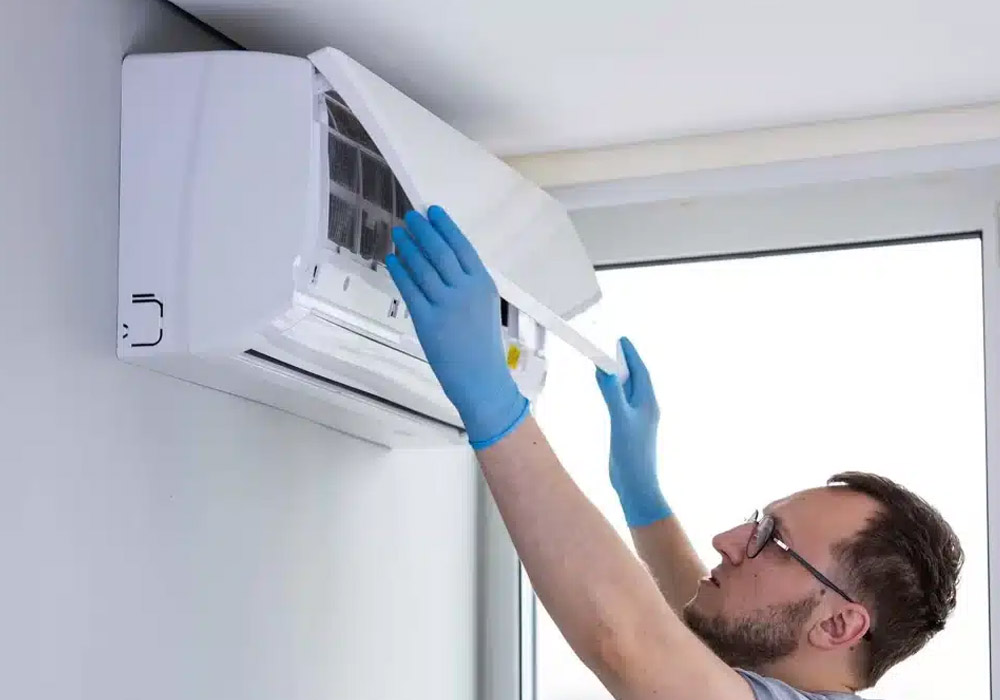
The appointment should begin with an inspection. A careful technician will walk the house to look at registers and the plenum area before any large equipment comes inside. They’ll lift a few grilles to check for buildup and look at the blower compartment if access allows. That first pass sets the scope.
An inspection camera can show conditions inside runs that you can’t see from the room. If the technician uses one, ask to see the screen with them. Before photos help you understand what needs attention and give you a record to compare after the work.
Those photos are worth keeping.
This is also when hidden issues surface. The technician may spot moisture in the drain pan or soft internal insulation that stays damp. Wet or moldy internal insulation cannot be effectively cleaned and should be replaced. The moisture source also needs to be corrected so the problem does not return. A clear explanation here is better than a quick pass with a brush.
If the pre-inspection finds light dust only, the technician should say so. If it finds heavy buildup or signs of pests, they should show you and explain options. You can then approve the original scope or adjust it. If you had recent work like drywall sanding or flooring replacement, mention it because fine construction dust can load filters and settle deep in returns. Take the time you need at this point.
Containment and cleaning in plain terms
You’ll likely see a large vacuum first, either truck-mounted outside or a portable HEPA-filtered unit inside. The hose connects to the duct system to hold it under negative pressure while cleaning is underway. That suction keeps loosened dust moving toward containment instead of into your rooms. The vacuum hums the whole time, and that sound is normal.
Suction alone doesn’t dislodge stuck-on debris. Technicians pair it with agitation tools that scrub or pulse inside the runs. Ask what method they plan for your ducts and how it changes with material. Sheet metal can take stiffer brushing, while flexible ducts need a gentler touch. Fiberglass duct board also needs care so the surface isn’t roughed up.
Why supply and return sides get different attention
Supply ducts deliver conditioned air to rooms, while return ducts carry air back to the equipment. Return grilles can collect lint and pet hair drawn in from living spaces. Both sides need attention in the agreed scope; a clean supply cover says little about the condition of the return path. Ask how the technician will reach each side and document the work.
When comparing local options, you can contact Miller Air Duct Cleaning Service, which serves Philadelphia and surrounding areas, to ask about the scope for your home. Request plain answers about containment and material handling from every provider you consider. If an answer is vague about access or cleanup, keep asking until it’s clear.
To reach deeper runs, the technician may open small access holes in trunk lines. Ask where those openings will be and how each will be closed. Metal patches with mastic sealant are common for this repair. You want a tight seal that doesn’t shed fibers into airflow.
Parts beyond the vents you should ask about
The system extends beyond the vents you can see. Ask what’s covered beyond the runs themselves. The blower housing and air handler fan move a lot of air, and dust can sit on blades and housing walls. The evaporator coil can also collect buildup that you can’t see without removing a panel.
What counts as cleaning and what counts as repair
Removing dust from accessible components may be included in the agreed cleaning scope. Repairing bent coil fins or failing electrical parts is a different task and may require an HVAC technician. Pan and drain-line work should also be specified rather than assumed. Ask which category each item on your estimate falls into and agree on what’s included so there are no surprises.
While covers are off, technicians often notice poorly sealed joints or thin insulation. Leaks at joints can waste energy and pull dust from attics or crawl spaces. Sealing and insulation upgrades are separate work from cleaning. It’s useful to get notes and photos while everything is open. If your system uses internal insulation, ask the technician to note any damp spots in the report so your HVAC company can follow up on moisture control separately from cleaning. Don’t expect duct cleaning alone to fix high bills, since equipment condition and home sealing matter too.
If better indoor air quality is your goal, keep expectations realistic. Cleaning removes buildup from the surfaces being treated, but that does not guarantee lower airborne dust levels throughout your home. It doesn’t prevent future buildup on its own and it isn’t a medical treatment. Ongoing filtration and controlling sources of dirt and moisture remain important after the visit.
Surprises, add-ons and how to stay in control
You may hear about add-on sprays or biocides during the visit. Ask what problem each product solves and whether it’s required for your situation. You don’t have to decide on the spot. A reputable company will leave the option open and put the price in writing.
Pricing should match the written scope you approved. If counts change after the inspection camera goes in, ask for an updated total before more work starts. Be wary of promises that cleaning will cure allergies or other health conditions. No duct service can make that guarantee.
How to pause and ask for options
If someone uses a free inspection as a reason to push an immediate full-system package, slow the conversation down. Ask for photos and a line-item breakdown, along with an explanation of what happens if you do only the base cleaning now and revisit extras later. Good technicians welcome that pause because it shows you’re paying attention to the details.
Final walkthrough and what happens next
The final walkthrough should cover the same areas as the first inspection. The technician should explain what was cleaned and review any before-and-after photos taken. Ask to see accessible sections and how newly created access openings were closed and sealed. A pile of debris alone doesn’t show that every agreed component was cleaned, so compare the work with the written scope.
Ask about filter type and MERV rating for your next change. Choose a filter type and rating compatible with your equipment; particle-capture performance and airflow resistance both matter. Ask how often to check the filter in the first few months after cleaning. Early checks tell you if dust is staying low.
Watch for visible debris at supply registers and hair buildup at return grilles. If dust reappears quickly on surfaces near vents, note which rooms and call to discuss. If one room always dusts faster than others, say so during the walkthrough so the technician can double-check that run and its seal. Keep your before and after photos with the invoice. Those records make the next conversation much shorter.
First appointments go best when you treat them as a two-way check. You provide access and history, while the technician provides containment and proof. When both sides do their part, you’ll know exactly what was done and what to watch for after the visit.