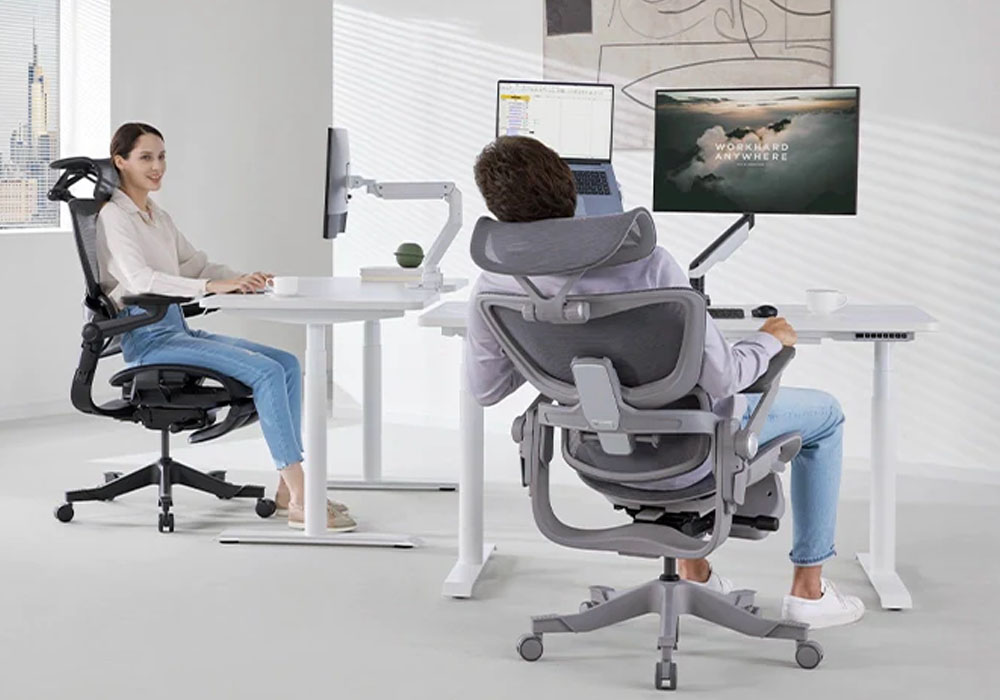
Many times, the most obvious changes have taken place. For example, those desks where you can sit or stand. Chairs providing lumbar support. It is possible that you have a subscription to a meditation application or have a fruit basket in your pantry. These aren’t useless efforts, but they deal with the part of wellness of your employees that can be seen, concrete measures that managers can describe while showing you around.
What these efforts don’t tackle is the air your employees are breathing every day.
It is very rare for indoor air quality to be part of a conversation about wellness, and that’s an issue. The air indoors at most offices is full of VOCs released from the furniture, the carpets, and the cleaning supplies. Quality of the ventilation systems can differ substantially. And, increasingly, there’s a new source of air contamination that the teams in charge of facilities have barely started to identify: people vaping in the office.
What Your Nose Won’t Tell You
The issue with e-cigarette aerosol is that it is not similar to cigarette smoke and quickly disappears. This can make it unnoticeable to those exposed and easier for people vaping inside to believe that they are not posing any risks as the aerosol is being released into the indoor air.
However, that’s not the case.
The secondhand aerosol generated by e-cigarettes contains nicotine, and unhealthy heavy metals such as lead and nickel, and fine particulate matter (PM2.5) that can penetrate deep into lung tissue. Compared to the secondhand smoke, which most individuals can easily recognize, vaped aerosol is almost odorless based on the product used. Co-workers who are situated near a bathroom or breakroom where vaping is occurring may fail to link their persistent headaches or throat discomfort to the vapor.
This becomes a sick building syndrome, a condition that is well described, in which occupants develop symptoms not linked to any single pathogen but to the cumulative degradation with time of the indoor air. It is harder to prove, harder to track, and harder to remedy when well established.
Why Smoke Detectors Don’t Solve This
From a facility management perspective, the instinct is often to say: we have smoke detectors, we’re covered. The reality is, standard smoke alarms aren’t designed to detect e-cigarette vapor. They are designed to sense byproducts of combustion – particles that are produced by something burning. Vaping doesn’t burn anything, so there are no particles or smells to detect. The aerosol simply passes through the smoke detector completely unnoticed.
This results in a real blind spot. Restrooms, server rooms, stairwells – any semi-private area where someone can quickly take a hit off their vape and walk out – are essentially unmonitored under a traditional system. For employers who have established smoke-free policies, this gap is not only a health concern but a compliance risk.
The most impacted employees, of course, are the non-vapers – the ones who have no choice in the matter of what they’re breathing in when they enter a shared space.
The Case For Environmental Monitoring
This is the point where we go from talking about lifestyle perks to talking about environmental engineering.
There’s modern sensor technology that has been tuned to solve exactly this problem. Vape detectors don’t work like smoke alarms. They sample the air chemistry constantly, detecting the compound signatures that are unique to e-cigarette aerosol as opposed to the vapors of a hot shower or the particulates in dry air on a windy day. They can operate in entirely enclosed spaces without the need for visual surveillance – which is pretty important if a lot of those spaces are bathrooms.
For facility managers worried this kind of technology is a bridge too far – there’s no camera, audio, or personally identifying information associated with the device – only environmental data. If you want to learn how detection works, the line between privacy-respecting air monitoring and surveillance becomes apparent fast. The detector knows what’s in the air. It doesn’t know who the user is.
And that’s the sweet spot. You’re monitoring the atmosphere, not your building’s occupants.
Clean Air Is A Business Problem, Not Just A Health One
According to Harvard T.H. Chan School of Public Health, employees in offices with superior ventilation and low levels of indoor pollutants scored 61% higher on cognitive function tests. This is not a small difference. This is the kind of difference that reveals itself in the quality of the output, the decisions that are made, and how long it takes people to complete complex work.
Bad air drives absenteeism and presenteeism – that is the name for when someone shows up to work but gets half as much done because they feel awful. Both things are hard to measure, but they are real costs. Companies that buy the kind of air monitoring that doesn’t just tell you when it’s too hot, too cold, too humid, etc., but also tracks the aerosol airborne in your office, are protecting all of that. They are also telling their employees something important about how they view their wellness.
What A Complete Wellness Environment Actually Looks Like
Biophilic design principles – natural light, plants, materials that don’t off-gas – form part of the picture. So does ventilation that meets or exceeds current standards. So do policies with real enforcement teeth.
But none of that works if the air in the restroom down the hall is being contaminated three times a day and nobody knows it.
Modern employee wellness has to include what’s invisible. That means treating air quality as a facility management priority, not an afterthought. The ergonomic chair helps someone’s back. Clean, monitored air protects their lungs, their focus, and their long-term health. One of those is a lot harder to recover from if you get it wrong.